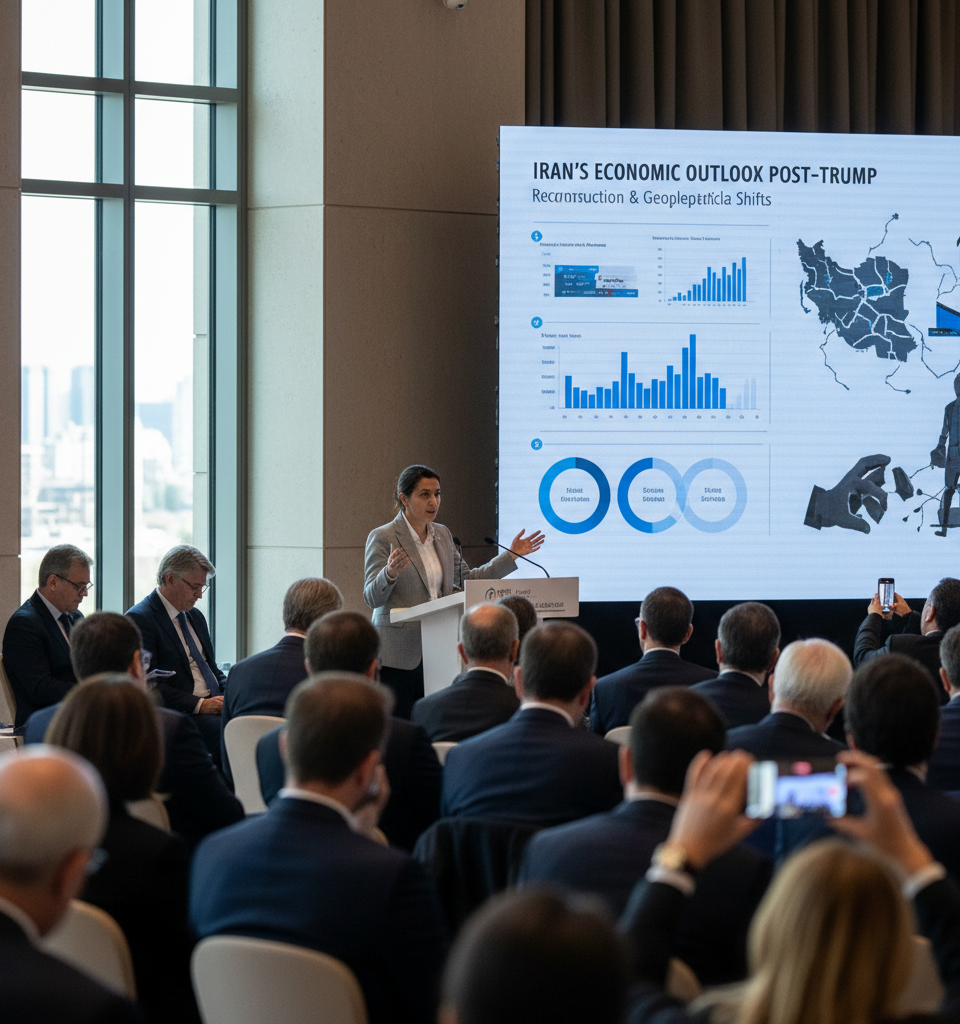
TEHRAN, IRAN – As the United States approaches a pivotal presidential election, many observers are scrutinizing the potential ripple effects on global geopolitics, particularly regarding Iran. However, a significant new analysis suggests that even a post-Trump landscape may not guarantee stability for the Iranian regime. According to renowned Middle East expert Dr. Ariane Tabatabai, a Senior Political Scientist at the RAND Corporation, the immense undertaking of reconstructing Iran's shattered economy post-sanctions could trigger an internal collapse, posing a more profound threat than any external pressure from Washington.
The Unprecedented Challenge of Rebuilding
The Islamic Republic has endured a period of severe economic hardship, largely attributed to crippling U.S. sanctions reimposed after the Trump administration's 2018 withdrawal from the Joint Comprehensive Plan of Action (JCPOA). This 'maximum pressure' campaign has decimated Iran's oil exports, which plummeted from over 2.5 million barrels per day (bpd) before sanctions to less than 300,000 bpd at their lowest point. Inflation has soared, the national currency has depreciated dramatically, and critical infrastructure projects have stalled. Dr. Tabatabai posits that addressing this systemic damage will necessitate a level of transparency and efficiency fundamentally at odds with the deeply entrenched patronage systems that have historically bound the regime's disparate factions together.
Patronage Under Pressure
For decades, the Iranian regime has relied on an intricate web of patronage, granting economic favors, government posts, and lucrative contracts to loyalists, revolutionary institutions, and various powerful factions, including the Islamic Revolutionary Guard Corps (IRGC) and the Bonyads (charitable foundations). This system, while fostering loyalty, has also bred widespread corruption and inefficiency. "The scale of reconstruction required will put pressure on the very patronage system that has helped hold the regime together," Dr. Tabatabai observed during a recent foreign policy forum. "The resources needed are so vast that continuing to distribute them through opaque, corrupt channels will be unsustainable and could ignite widespread public discontent."
Industry and Market Implications
Should international sanctions ease, the initial market response would likely be a surge in foreign investment, particularly in Iran's oil and gas sectors, estimated to require at least $150 billion in investment over the next decade to modernize and expand production capacity. Major European and Asian companies, previously hesitant due to sanctions, would likely seek to re-enter. However, the success of these ventures hinges on a stable and transparent business environment. The current system, characterized by arbitrary regulations, multiple exchange rates, and the pervasive influence of quasi-state entities, represents a significant deterrent. Without fundamental reforms, capital flight could persist, and investor confidence would remain fragile.
Expert Consensus on Internal Vulnerabilities
Other regional analysts echo Dr. Tabatabai's concerns. Dr. Trita Parsi, Executive Vice President of the Quincy Institute for Responsible Statecraft, has frequently highlighted the Iranian leadership's inability or unwillingness to address endemic corruption, arguing it's a structural feature of their governance. Furthermore, the Iranian public, weary of economic stagnation and perceived mismanagement, has shown increasing readiness to voice grievances, as seen in widespread protests over the past several years. The expectation of a 'peace dividend' post-sanctions, if not visibly realized through improved living standards, could fuel further unrest and directly challenge the regime's legitimacy.
The Road Ahead: Reform or Collapse?
The path forward for Iran is fraught with challenges. The regime faces a stark choice: embark on difficult but necessary economic reforms that would risk alienating powerful internal stakeholders, or cling to the existing patronage system, potentially leading to social upheaval and further economic decay. Future developments will largely depend on the outcome of the U.S. election and the subsequent diplomatic approach to Tehran. A return to the JCPOA, or a similar agreement, would provide much-needed capital injection but would simultaneously increase the pressure on the regime to demonstrate accountability. The coming years will be critical in determining whether Iran's leadership can navigate these internal economic pressures, a task potentially more formidable than weathering the storm of international sanctions.