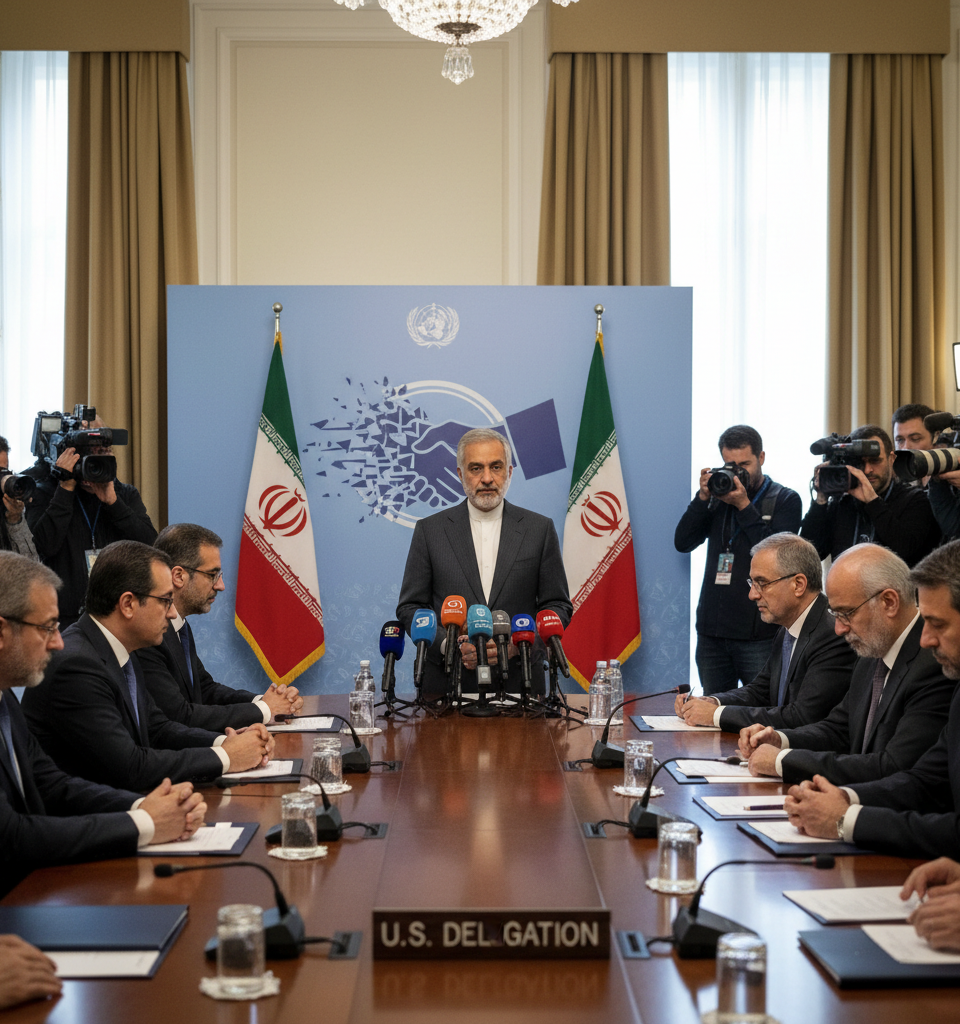
TEHRAN – High-stakes diplomatic efforts between Iran and the United States have reportedly faltered, with Iran's top negotiator attributing the stalemate directly to a fundamental lack of trust from the American side. Iranian officials, speaking in the aftermath of what they describe as unproductive talks, emphasized their commitment to the negotiation process while directly criticizing the U.S. delegation's inability to foster an atmosphere conducive to progress. This assertion marks a significant setback for international efforts aimed at resolving longstanding impasses.
The breakdown in trust, as articulated by the Iranian delegation, casts a long shadow over future diplomatic avenues. The negotiations, which had been anticipated with cautious optimism by various international observers, aimed to address critical geopolitical and nuclear proliferation concerns. The current state of relations between the two nations, already strained by decades of complex historical grievances and divergent regional interests, appears to have been further exacerbated by this latest development. The implications for regional stability and global energy markets are considerable, as ongoing tensions often lead to heightened volatility.
The Iranian Perspective on Trust Deficit
According to the Iranian negotiator, whose identity was not specifically disclosed in initial reports, the Iranian team approached the negotiations with a clear intent to achieve a breakthrough. However, this good-faith effort was reportedly met with an underlying skepticism and an unwillingness from the U.S. side to genuinely engage in trust-building measures. "While Iran had approached the negotiations in good faith, the U.S. team had failed to gain the Iranian delegation’s trust," stated an official close to the delegation. This sentiment suggests that the issues extended beyond mere policy disagreements, touching upon the very foundation of diplomatic conduct and mutual respect.
The lack of trust reportedly manifested in various ways throughout the discussions, potentially impacting the willingness of the Iranian side to make concessions or embrace proposed solutions. Details regarding specific instances or proposals that were hindered by this alleged trust deficit remain undisclosed. However, such an accusation points to deeper structural problems in the diplomatic relationship, indicating that mere technical negotiations might be insufficient without a prior establishment of robust confidence-building measures.
Broader Implications for Global Diplomacy
This announced failure carries significant weight beyond the immediate parties. For the international community, it represents a missed opportunity to de-escalate tensions in a volatile region. Analysts are quick to point out that diplomatic stalemates between major powers often have ripple effects on global security architecture and economic stability. Markets, particularly those sensitive to geopolitical risk like oil and gas, are likely to react to these developments, potentially showing increased volatility as the prospects of a resolution dwindle.
Furthermore, the Iranian assertion highlights a persistent challenge in international diplomacy: the critical role of trust in high-stakes negotiations. Without a foundation of perceived sincerity and common understanding, even well-intentioned efforts can falter. This situation may prompt other global actors to reconsider their approach to mediation and engagement with both the U.S. and Iran, potentially advocating for new frameworks or intermediaries to bridge the existing chasm of mistrust.
What Comes Next?
The immediate future of U.S.-Iran relations appears uncertain following these comments. While the Iranian side has attributed the failure to a lack of American trust-building, it does not necessarily signify an end to all diplomatic engagement. However, any resumption of talks would likely require a significant re-evaluation of strategies by both sides, potentially focusing more on pre-negotiation confidence-building exercises rather than jumping directly into substantive policy discussions. The international community will be closely watching for any signs of de-escalation or, conversely, an intensification of rhetoric and actions.
Both nations face considerable domestic and international pressures regarding their respective stances. The alleged breakdown in negotiations places renewed emphasis on diplomatic maneuvering and strategic communication in the coming weeks and months. The onus, it appears, is now on both Tehran and Washington to chart a new path forward, one that might necessitate addressing the underlying trust issues more explicitly before any tangible progress on critical matters can be achieved.