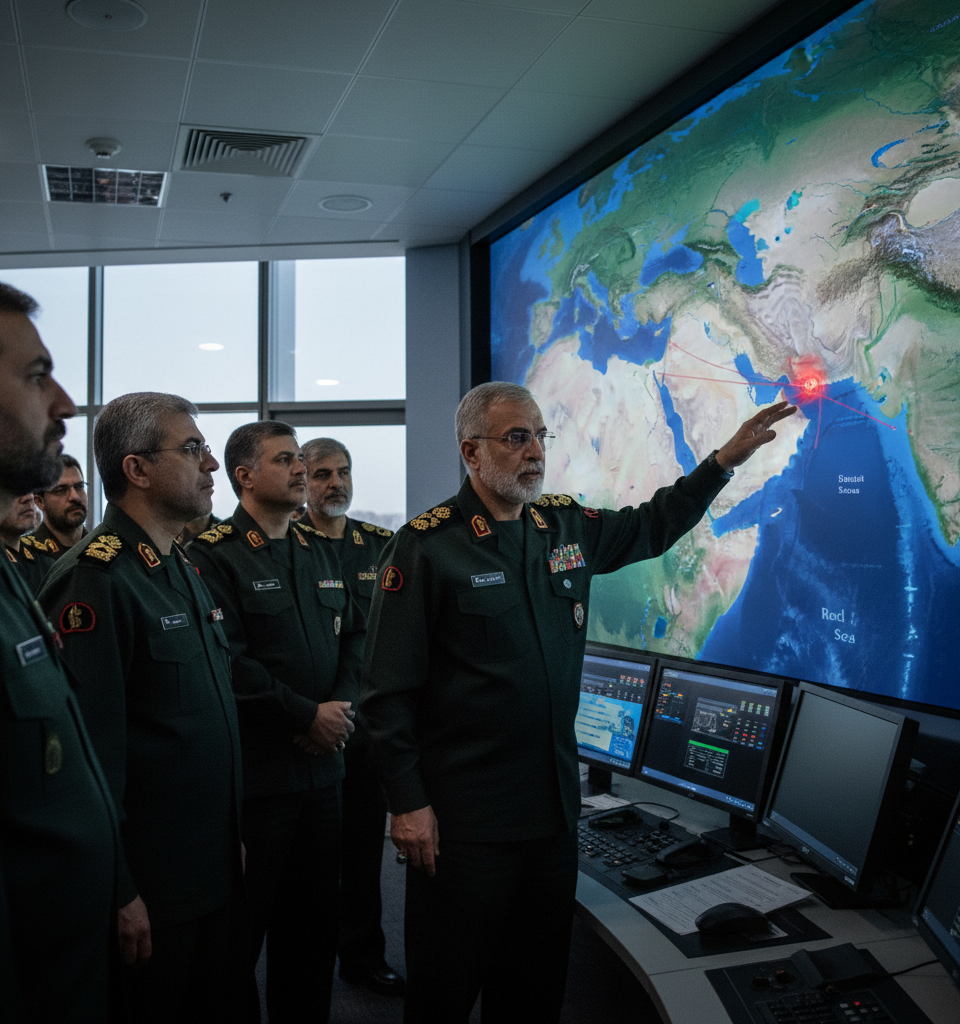
Tehran has formally set a new condition for the eventual reopening of the Strait of Hormuz, a critical chokepoint for a significant portion of the world's oil supply. This development comes alongside an explicit warning concerning the Red Sea route, suggesting an expansion of Iran's strategic calculus in managing regional maritime affairs. The pronouncements signal a hardening of Iran's position amid ongoing geopolitical complexities in the Middle East, with direct implications for international shipping and energy markets.
Geopolitical Flashpoint: Strait of Hormuz and Red Sea
For decades, the Strait of Hormuz has been a focal point of regional and international tension, its closure or disruption carrying severe global economic consequences. Approximately 20% of the world's petroleum liquids and a substantial volume of liquefied natural gas (LNG) pass through this narrow waterway daily. Iran's latest condition, while not explicitly detailed in the current statement, is understood to be tied to broader security and economic demands, likely stemming from its ongoing disputes with Western powers and regional rivals. The parallel warning regarding the Red Sea route, another crucial maritime passage connecting the Mediterranean Sea to the Indian Ocean via the Suez Canal, indicates a potential broadening of Iran's operational influence or its intent to project such influence across multiple strategic waterways.
The Red Sea, traditionally a busy corridor for trade between Europe and Asia, has also experienced heightened security concerns in recent years. Any increased instability or Iranian interventionability in this area would exacerbate existing anxieties among shipping companies, insurance providers, and global importers and exporters. The dual pronouncements from Tehran suggest a coordinated strategy aimed at leveraging its geographical position to exert pressure on a global scale.
Economic Repercussions and Maritime Security
These declarations are poised to send ripples through global energy markets and have significant implications for maritime security. Any perceived threat to the free flow of goods through either the Strait of Hormuz or the Red Sea typically results in immediate increases in crude oil and natural gas prices, and upward adjustments in shipping insurance premiums. Shippers may also consider longer, more costly alternative routes, such as circumnavigating Africa, which would inflate transportation costs and delivery times, ultimately affecting consumer prices worldwide.
Industry analysts are closely monitoring the precise nature of Iran's new condition for Hormuz and the specifics of its Red Sea warning. The ambiguity surrounding these statements provides Tehran with strategic flexibility but also contributes to market uncertainty. Energy traders and supply chain managers are already factoring in potential disruptions, with contingency plans being reviewed or developed to mitigate risks associated with increased instability in these vital maritime zones. Governments globally are also expected to react, with calls for de-escalation and guarantees of safe passage likely to intensify.
International Responses and Future Outlook
International bodies and major maritime powers are expected to respond to Iran's latest posture with a mix of diplomatic engagement and heightened vigilance. The United States, with its significant naval presence in the region, along with European allies, will likely reiterate commitments to ensuring freedom of navigation through international waters. The precise nature of Iran's demands for the reopening of Hormuz will be critical in shaping the international community's response, determining whether diplomatic avenues can be pursued or if a more confrontational stance becomes inevitable.
The situation remains fluid, with the implications extending far beyond the immediate region. The stability of global supply chains hinges on unimpeded maritime trade, and Iran's statements serve as a stark reminder of the persistent vulnerabilities. Over the coming weeks, attention will be focused on any further clarification from Tehran, as well as the initial reactions from key international players. The potential for a sustained period of elevated tension across these crucial maritime arteries poses a significant challenge to global economic stability and international relations.