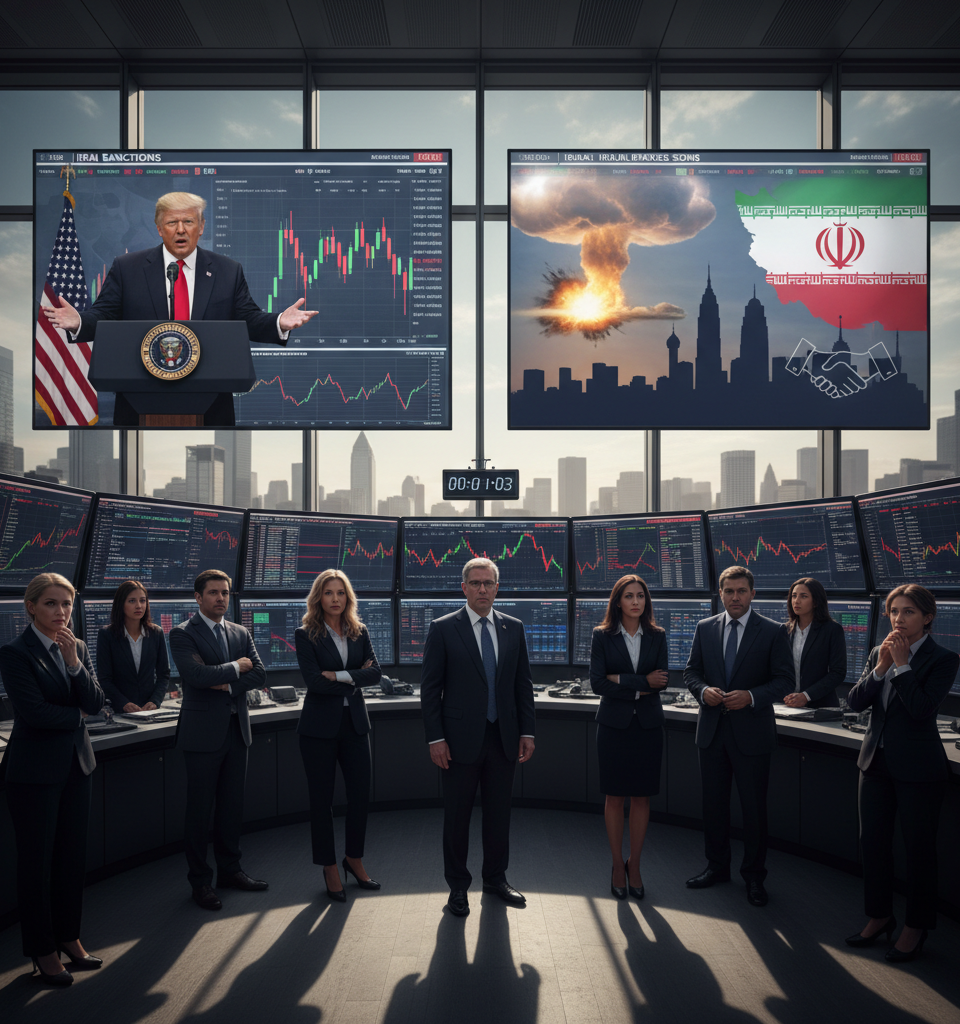
Global Markets Brace for Iran Showdown
Global financial markets face a critical juncture this week as President Donald Trump's ultimatum regarding the Iran nuclear deal approaches, forcing investors to position themselves for one of two starkly contrasting outcomes: a swift diplomatic resolution or a significant escalation of tensions. The uncertainty has triggered widespread anxiety across equities, commodities, and currency markets, with traders scrambling to interpret mixed signals emanating from Washington and Tehran.
The Geopolitical Stakes: A Decade of Tensions
The current standoff is rooted in decades of complex geopolitical dynamics and the 2015 Joint Comprehensive Plan of Action (JCPOA), commonly known as the Iran nuclear deal. President Trump withdrew the United States from the pact in 2018, reimposing stringent sanctions on Iran's economy, particularly its vital oil sector. This week's developments are seen by many as a culmination of these heightened tensions, with the potential to either de-escalate a protracted conflict or push the region closer to open confrontation. The implications extend far beyond the Middle East, threatening global economic stability and energy security.
Ultimatum, Sanctions, and Potential Talks
President Trump has repeatedly indicated a desire for a new, more comprehensive agreement with Iran, threatening even tougher sanctions if Tehran does not comply with U.S. demands. While the administration has maintained a tough public stance, discreet diplomatic back channels are reportedly being explored. Key figures, including Secretary of State Mike Pompeo, have conveyed a willingness to negotiate, albeit under conditions Iran has largely rejected. Meanwhile, Iran continues to enrich uranium beyond JCPOA limits, claiming its actions are a response to U.S. sanctions and a legitimate right under international law. Recent intelligence reports suggest a renewed Iranian push for regional influence, further complicating any potential diplomatic efforts.
Oil Markets on Edge: A Volatile Commodity
The most immediate and significant impact of the Iran crisis has been felt in global oil markets. Brent crude prices have seen fluctuations of 5-7% in recent weeks, reacting sharply to every pronouncement and rumor. An escalation could see prices surge well above $80 per barrel, impacting consumer spending and corporate bottom lines worldwide, while a diplomatic resolution could lead to a significant price correction. Shipping routes through the Strait of Hormuz, a critical chokepoint for global oil transit, remain a focal point of concern. Insurance premiums for vessels operating in the region have reportedly climbed by as much as 40% since the beginning of the year.
Broader Market Impact: Equities and Safe Havens
Beyond oil, the broader financial markets are showing signs of stress. Global equity indices, including the S&P 500 and the Euro Stoxx 50, have experienced mild corrections as investors de-risk portfolios. Safe-haven assets like gold and U.S. Treasury bonds have seen increased demand, with gold prices rising by approximately 3% over the past month. The Japanese Yen and Swiss Franc have also appreciated against major currencies, reflecting their status as preferred hedges during times of geopolitical uncertainty. Corporate earnings expectations are being tempered, with analysts flagging energy and transportation sectors as particularly vulnerable.
Expert Analysis: A Tightrope of Diplomacy
"The current situation is incredibly delicate," states Dr. Eleanor Vance, a senior geopolitical analyst atStratagem Global. "Both sides are posturing, but there are strong economic incentives for a de-escalation, especially for Iran. However, the domestic political constraints on both President Trump and Supreme Leader Khamenei make a clear path forward challenging." Other experts highlight the role of regional actors, such as Saudi Arabia and Israel, who have distinct interests that could either facilitate or obstruct any potential agreement, making the geopolitical chess game even more intricate.
What Lies Ahead: A Week of Watching Briefs
The coming days will be dominated by intense speculation and close monitoring of official statements and diplomatic maneuvers. Investors will be scrutinizing every piece of news for indications of a breakthrough or a breakdown. Key potential developments include a direct offer of talks from the U.S. to Iran, a formal response from Iran to U.S. demands, or further military posturing in the Persian Gulf. The market anticipates increased volatility and liquidity challenges, making cautious positioning paramount. The long-term implications for global energy policy and regional stability hinge on the outcomes of this pivotal week.