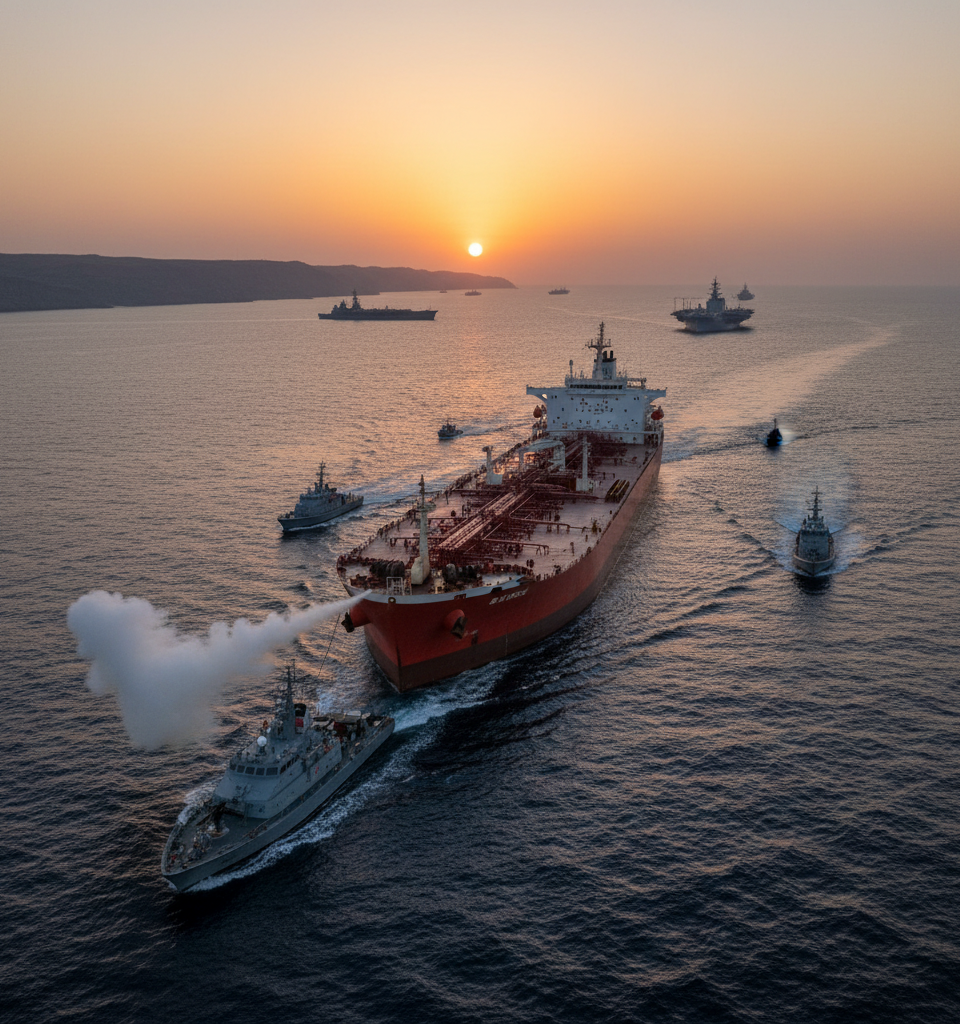
Strait of Hormuz – In a dramatic escalation of geopolitical tensions, Iranian naval forces reportedly fired upon a commercial tanker traversing the Strait of Hormuz in the early hours of Saturday morning. The incident occurred shortly after Tehran announced its intention to reimpose "strict control" over the vital shipping lane, a direct retaliatory measure against recent U.S. blockades severely impacting Iran's access to international ports. While immediate reports identified the vessel as a European-flagged crude oil tanker, details regarding the extent of damage or casualties remain unconfirmed, but the audacious act has sent shockwaves through global shipping and energy markets.
Geopolitical Tensions Reach Boiling Point in Critical Waterway
This incident is not an isolated event but rather the latest flashpoint in a simmering conflict between Iran and the United States, underscored by economic sanctions and strategic maneuvers. The Strait of Hormuz, a narrow choke point between the Persian Gulf and the open ocean, is arguably the world's most critical oil transit pathway, through which approximately one-fifth of global oil consumption, or about 21 million barrels per day, flows. Iran has long used the threat of disrupting traffic in the strait as leverage against international pressure. The reimposition of "strict control" by Iran, following what it describes as an "illegal and economically devastating" U.S. blockade on its ports, signals a dangerous shift from rhetoric to direct action, imperiling international maritime law and trade.
Incident Specifics and International Reactions
Initial reports, corroborated by satellite monitoring data and commercial shipping intelligence, suggest the targeted tanker was navigating the international shipping lane within the strait when the attack occurred. Unconfirmed sources indicate that a warning shot was initially fired across the vessel's bow before direct engagement. While specifics regarding the type of projectile used (e.g., naval artillery, rocket-propelled grenade) are still emerging, the intent to deter and disrupt was unequivocally demonstrated. Global powers, including the United States, United Kingdom, and the European Union, have swiftly condemned the action, calling it a "reckless and destabilizing act." U.S. Fifth Fleet, based in Bahrain, has reportedly increased its presence in the region, conducting enhanced surveillance and preparedness drills.
Global Energy Markets Brace for Impact
The immediate aftermath of the tanker incident saw a significant spike in crude oil prices. Brent crude futures jumped by over 4% in early trading, nearing $95 per barrel, while West Texas Intermediate (WTI) futures also saw a similar surge. Insurance premiums for vessels operating in the Persian Gulf and Strait of Hormuz are expected to skyrocket, potentially increasing shipping costs by 15-20% for some routes. This volatility poses a grave threat to the global economy, which remains sensitive to energy supply disruptions. Oil and gas companies with significant operations in the region are reassessing their logistical plans, with some considering rerouting vessels, a move that would add considerable time and expense to deliveries.
Expert Analysis: A Dangerous Precedent
Maritime security analysts and geopolitical experts are unified in their assessment that this incident sets a dangerous precedent. "This is a clear signal from Tehran that they are willing to translate their frustration with U.S. sanctions into direct action that impacts global commerce," stated Dr. Helene Cooper, a senior fellow at the Carnegie Endowment for International Peace. "The firing on a commercial vessel, regardless of damage, represents a significant escalation beyond previous seizures or harassment. It forces the international community to confront the prospect of kinetic conflict in one of the world's most vital waterways." Other experts highlight the risk of miscalculation, where a perceived defensive action by one party could be interpreted as an act of war by another, leading to a wider regional conflict.
The Path Forward: De-escalation or Further Conflict?
The coming days will be critical in determining whether this incident spirals into a larger confrontation or if diplomatic efforts can de-escalate the situation. The U.S. administration is under pressure to respond firmly but judiciously, balancing the need to protect international shipping with avoiding an all-out military conflict. International bodies, including the United Nations Security Council, are expected to convene emergency sessions to discuss potential resolutions. Meanwhile, shipping companies are being advised to exercise extreme caution, closely monitor navigational warnings, and potentially opt for armed security detachments. The Strait of Hormuz, once again, stands as a crucible for global geopolitics and energy security, with the world watching anxiously to see what next phase this perilous standoff will enter.
The potential for sustained disruption to oil flows could have cascading effects on consumer prices globally, affecting everything from gasoline at the pump to manufacturing costs. Businesses reliant on global supply chains are already bracing for impact, mindful of the fragility of international trade routes in the face of such volatile geopolitical events.