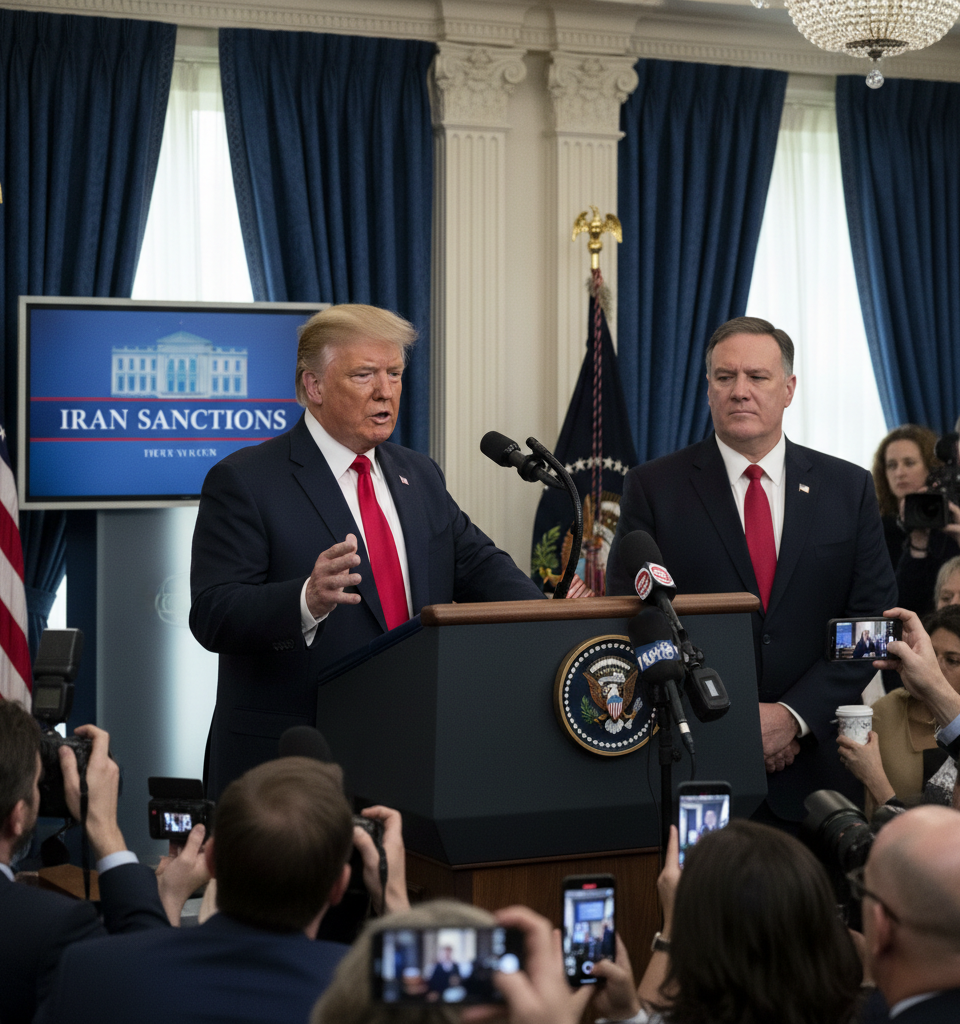
WASHINGTON D.C./TEHRAN – May 7, 2023 – Global financial markets are on heightened alert as the international community navigates a precarious standoff with Iran, triggered by a looming ultimatum from the Trump administration regarding its nuclear ambitions. Investors worldwide are entering a consequential period, scrambling to position their portfolios for binary outcomes: an imminent diplomatic breakthrough that could stabilize the region, or a further, potentially destabilizing, escalation of hostilities. The volatility is palpable, with crude oil prices fluctuating wildly and defense stocks seeing renewed interest, reflecting the profound uncertainty emanating from the geopolitical flashpoint.
A Decade of Distrust: The Historical Arc of US-Iran Relations
This current heightened tension is deeply rooted in decades of fraught relations between the United States and Iran, exacerbated by the 2015 Joint Comprehensive Plan of Action (JCPOA), widely known as the Iran nuclear deal. The Trump administration's unilateral withdrawal from the JCPOA in 2018 and subsequent reimposition of stringent sanctions aimed at crippling Iran's economy have been central to the current crisis. Tehran's retaliatory measures, including scaling back its commitments under the deal and increasing uranium enrichment, have steadily ratcheted up the pressure. The core issue remains Iran's nuclear program and its perceived threat to regional stability, particularly for allies like Israel and Saudi Arabia.
The Trump Ultimatum: Sanctions, Oil, and Diplomatic Maneuvers
The immediate catalyst for market anxiety is the impending deadline set by the Trump administration for Iran to cease its alleged nuclear proliferation activities and ballistic missile development. Senior US officials have indicated that a failure to comply could trigger an array of harsher economic sanctions, potentially targeting Iran's remaining oil exports, which currently hover around 500,000 to 700,000 barrels per day. Simultaneously, however, back channels and informal diplomatic signals suggest that a new, more comprehensive deal might be on the table, involving European intermediaries and potentially even direct talks with Tehran. This dual narrative of threat and potential dialogue is creating an unprecedented level of market indecision. Key figures, including Secretary of State Mike Pompeo and Iranian Foreign Minister Javad Zarif, have issued stark warnings while also leaving slight openings for negotiation.
Reshaping Global Commerce: Impact on Energy, Shipping, and Finance
The repercussions of this geopolitical drama are manifesting across crucial sectors. The energy market is particularly sensitive, with Brent crude futures experiencing swings of over 3% in intraday trading based on news snippets from the region. A full-blown confrontation could send oil prices soaring past $100 per barrel, impacting global inflation and economic growth. Shipping lanes through the Strait of Hormuz, a critical chokepoint for approximately 20% of the world's oil supply, are under intense scrutiny, with insurance premiums for vessels skyrocketing by an estimated 15-20% in recent weeks. Defence contractors like Lockheed Martin and Raytheon Technologies have seen their stock prices tick upwards, while emerging markets, particularly those reliant on oil imports, are bracing for significant capital outflows.
Expert Analysis: The Tightrope Walk Between Escalation and De-escalation
Analysts are largely divided on the most probable outcome. "The current situation is a high-stakes poker game where both sides are trying to project strength while keeping an eye on the exit ramp," states Dr. Eleanor Vance, a geopolitical strategist at Chatham House. "The economic pressure on Iran is immense, creating an incentive for a deal, but any miscalculation could easily spiral out of control. We see roughly a 55% chance of continued stalemate with sporadic low-level escalation, and a 45% chance of a breakthrough or significant conflict within the next six months." Investors are advised to maintain diversified portfolios, with a slight overweighting in commodities and defensive assets, a strategy echoed by major financial institutions.
What Lies Ahead: Diplomacy, Sanctions, and Potential Red Lines
The immediate future hinges on diplomatic efforts, particularly those spearheaded by European powers attempting to salvage parts of the JCPOA or broker a new agreement. Upcoming meetings at the United Nations and bilateral discussions will be closely watched. The Trump administration's "maximum pressure" campaign is expected to intensify if no progress is made, potentially targeting sectors previously untouched. Conversely, any verifiable steps by Iran to de-escalate tensions could open the door for initial sanctions relief. The stakes are undeniably high, with the stability of the Middle East and the health of the global economy hanging in the balance, creating an environment ripe for sudden pivots and unexpected developments. All eyes remain on the evolving diplomatic choreography and any potential 'red lines' that could be crossed by either side.