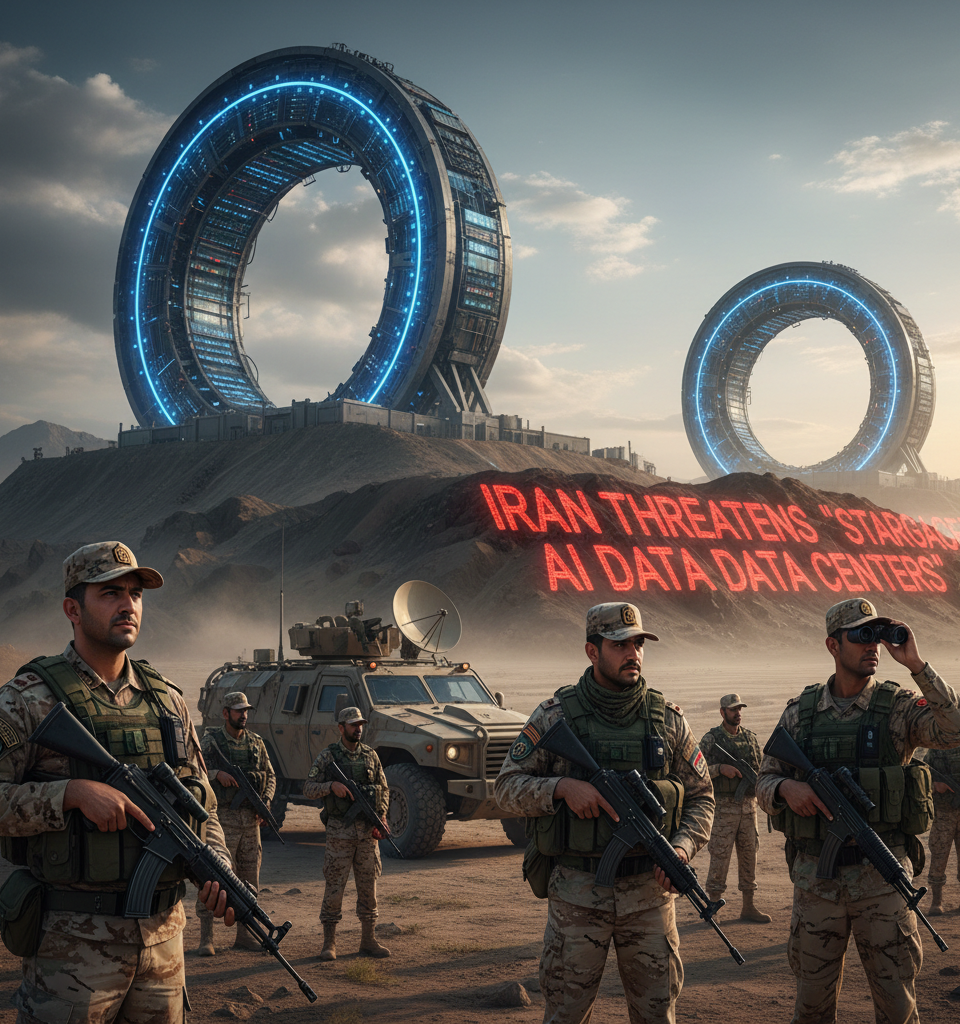
TEHRAN – In a move set to further destabilize the already fraught relationship between Tehran and Washington, Iran has threatened to launch missile strikes against U.S.-linked data centers. These facilities, ominously referred to as 'Stargate' data centers by Iranian officials, represent a new and potentially devastating target in an escalating conflict that has seen a concerning uptick in hostilities.
The pronouncement, made public today, May 19, 2026, indicates a strategic shift in Iran's threat posture, moving beyond conventional military targets to encompass vital digital infrastructure. This development underscores a deepening war between the United States and Iran, a conflict that appears to be broadening in scope and intensity. The targeting of data centers, often critical for intelligence gathering, communication, and economic operations, would mark a significant and aggressive escalation, potentially disrupting a wide array of U.S. and allied activities in the region and globally.
Shifting Sands of Conflict: From Sanctions to Cyber-Kinetic Threats
For years, the U.S.-Iran dynamic has been characterized by cycles of sanctions, proxy conflicts, and rhetorical clashes. However, recent events suggest a worrying progression towards direct, kinetic threats against strategic assets. The specific mention of 'Stargate' data centers implies a degree of intelligence gathering by Iran regarding U.S. digital infrastructure, or at the very least, a deliberate effort to create fear and uncertainty within critical sectors. While details about these 'Stargate' facilities remain sparse, the implication is that these are highly sensitive data hubs with significant U.S. affiliations.
This new threat could have profound implications beyond the immediate geographical conflict zones. Modern warfare increasingly blurs the lines between physical and virtual battlefields. Attacks on data centers could cripple logistical networks, disrupt financial systems, and impede command and control operations, thereby presenting a multi-faceted challenge to U.S. defense and economic stability. Such actions would likely be interpreted as a grave act of aggression, almost certainly provoking a robust retaliatory response from the United States.
Industry on Edge: Cybersecurity and Data Resilience Under Scrutiny
The revelation has sent ripples through the cybersecurity and technology sectors. Data center operators and cloud service providers with U.S. government contracts or significant presence in volatile regions are likely re-evaluating their physical and digital security protocols. The threat highlights the growing vulnerability of critical digital infrastructure to state-sponsored attacks, necessitating enhanced defensive measures and contingency planning. Investment in redundant systems, geographically dispersed data storage, and advanced threat intelligence will undoubtedly become even more paramount.
The global community is watching these developments with increasing alarm. International bodies and allied nations are likely to urge de-escalation, but the escalating rhetoric from Tehran suggests a willingness to push boundaries. The economic repercussions of such attacks could be substantial, affecting global supply chains, financial markets, and the broader digital economy, underscoring the interconnectedness of geopolitical stability and technological infrastructure.
What Lies Ahead: A Digital Front in an Age-Old Rivalry
The immediate future hinges on how both the U.S. and Iran respond to this latest development. The United States will face pressure to bolster defenses around its data infrastructure and to issue a strong deterrent message. Iran, meanwhile, may be testing the resolve of its adversary, gauging the potential for a new form of asymmetric warfare. This expansion of potential targets into the digital realm adds an unpredictable and dangerous dimension to a conflict already fraught with peril.
Analysts are suggesting that this threat serves multiple purposes for Iran: demonstrating its evolving military capabilities, retaliating against perceived U.S. aggression, and potentially coercing concessions. The coming weeks will reveal whether this threat remains rhetorical or if Iran is prepared to cross a new threshold in its long-standing rivalry with the United States, thereby opening a new and potentially calamitous digital front.