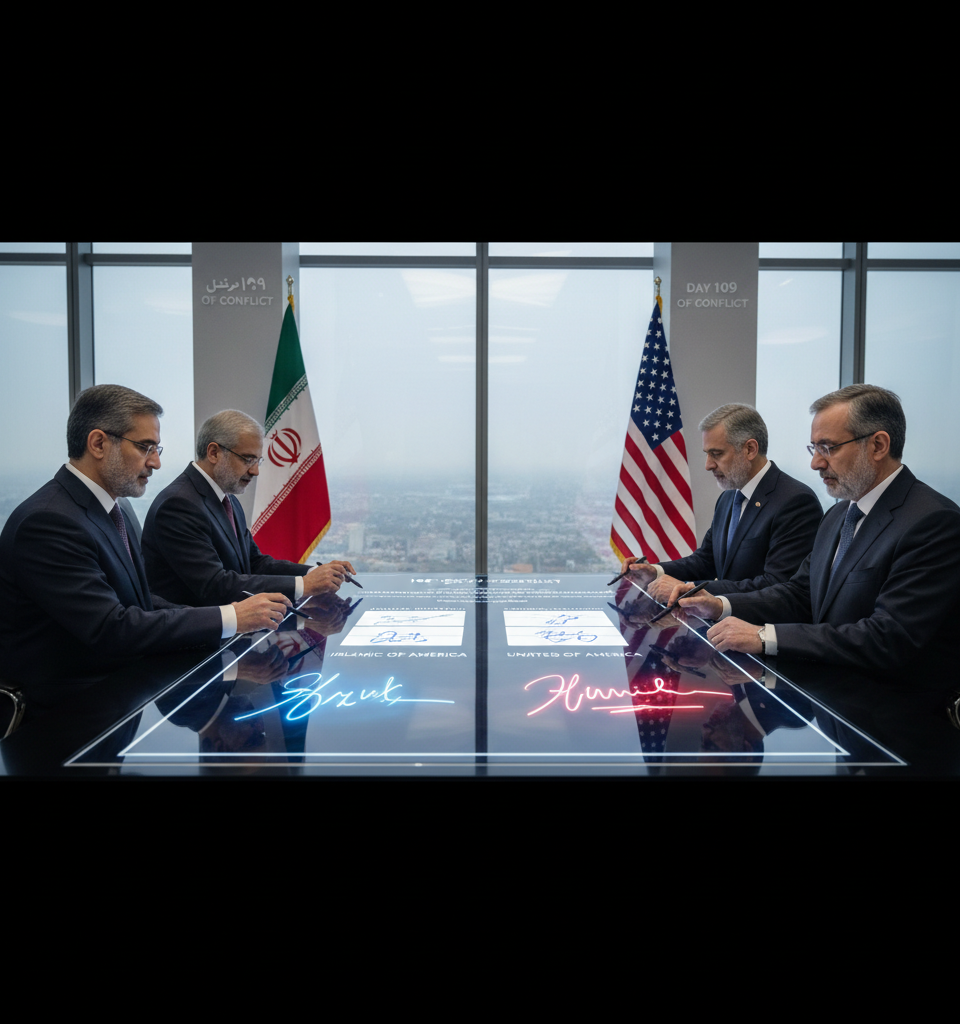
On Monday, June 16, 2026, the Islamic Republic of Iran's National Security Council confirmed the electronic signing of a Memorandum of Understanding (MoU) between Tehran and Washington. This significant development, occurring on the 109th day of the ongoing conflict, is designed to bring an end to fighting across all operational fronts, notably encompassing areas within Lebanon.
Context and Background
The signing of this MoU marks a pivotal moment in the protracted dispute between Iran and the United States. The conflict, which has persisted for over three months, has seen widespread implications across the Middle East. While the specifics of the hostilities have varied, the broader geopolitical tensions have created a volatile environment, impacting regional stability and international relations. The involvement of Lebanon as a specific area of cessation underscores the multifaceted nature of the conflict and the extensive reach of its consequences.
Key Details
The National Security Council's statement, delivered on Monday, was concise but impactful. It explicitly stated that the electronically brokered agreement would "end fighting on all fronts." The direct mention of Lebanon indicates that the memorandum aims to de-escalate tensions and cease military actions in that critical geopolitical theater. Details regarding the specific terms of the 'electronic signing' and the exact mechanisms for monitoring the cessation of hostilities were not immediately provided, leaving some aspects open to future clarification.
Industry and Market Impact
The news of an impending cessation of hostilities could have immediate and significant repercussions across global markets, particularly in the energy sector. Oil prices, which have likely experienced volatility throughout the 109 days of conflict, could see a stabilization or even a decline in anticipation of reduced geopolitical risk. Shipping routes, especially those in the Persian Gulf and Eastern Mediterranean, might experience a return to normalcy, mitigating insurance premiums and supply chain disruptions. Furthermore, diplomatic efforts across the globe, previously strained by the conflict, could see renewed impetus for broader cooperation and regional rebuilding initiatives.
What's Next
The immediate aftermath of this electronic signing will likely involve intensive diplomatic activity. Both Tehran and Washington will need to clarify the operational aspects of the MoU, including verification mechanisms and a definitive timeline for the cessation of hostilities on the ground. International bodies and regional powers will be keenly observing the implementation of the agreement, particularly regarding its impact on Lebanon and other affected areas. The coming days and weeks are expected to shed more light on the durability and practical application of this newly brokered understanding, as the world watches for tangible signs of de-escalation.