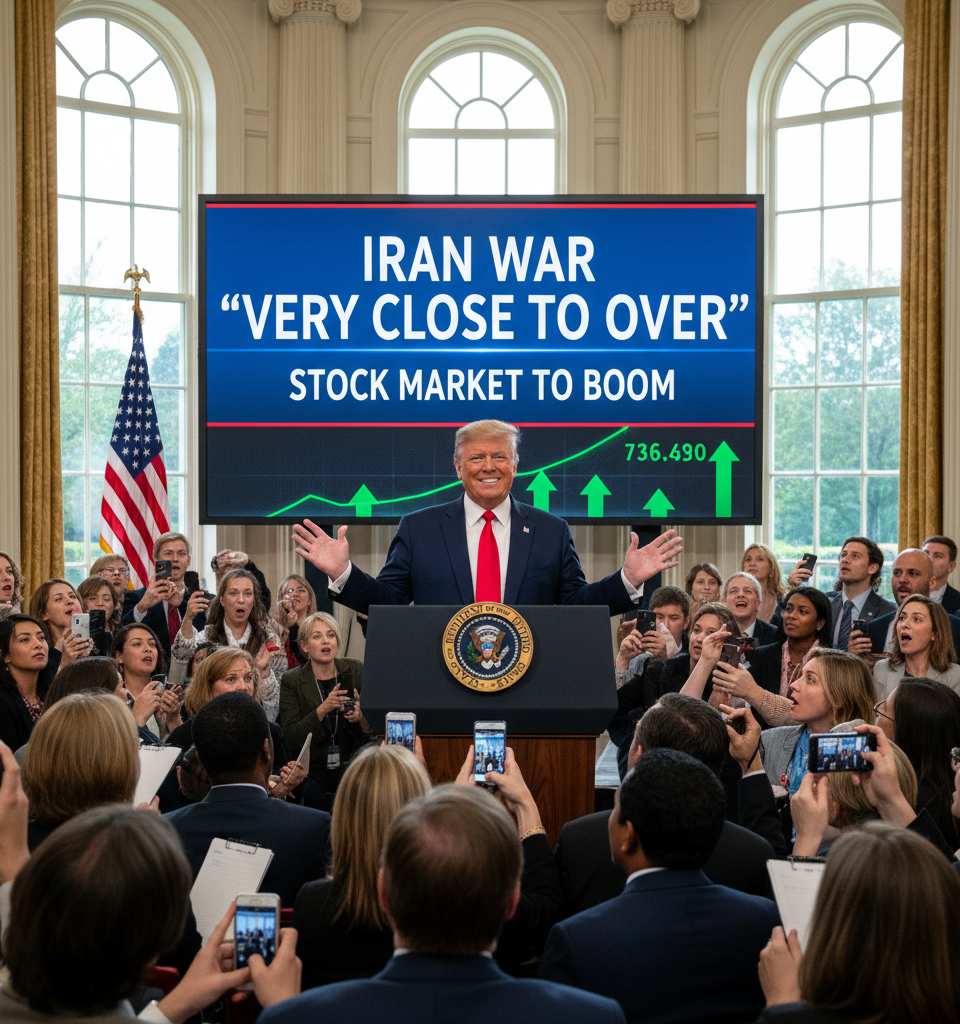
Former President Donald Trump has made a definitive declaration regarding the ongoing tensions with Iran, stating that the conflict is "very close to over." In remarks made today, May 19, 2026, Trump asserted that the United States has achieved a military victory over Iran, paving the way for what he anticipates will be a peace deal. This pronouncement carries significant weight, particularly given its potential ripple effects across global markets and geopolitical landscapes. His comments suggest a rapid amelioration of a protracted and often volatile international flashpoint, hinting at a new chapter in U.S.-Iran relations.
Trump's statement, delivered amidst a backdrop of persistent international discussions concerning the Middle East, suggests a dramatic shift in the trajectory of the U.S.-Iran dynamic. For years, the relationship between Washington and Tehran has been characterized by high-stakes rhetoric, economic sanctions, and occasional military encounters. A definitive end to this tension, as posited by Trump, would represent a significant geopolitical achievement and could fundamentally alter strategic alliances and power balances in the region. The assertion of a military victory, while not immediately detailed with specific engagements or timelines, implies a decisive resolution to previous standoffs.
Market Impact and Bullish Predictions
The former President's optimism extended beyond geopolitical matters, directly linking the anticipated end of the Iran conflict to a booming stock market. Trump explicitly stated that the market "is going to boom" in response to the perceived peace deal. This enthusiastic forecast aligns with historical patterns where reductions in global uncertainty and geopolitical risks often correlate with positive market sentiment and investment growth. Investors and analysts will undoubtedly be watching closely for any concrete developments that could corroborate this prediction, as a sustained period of market growth would have broad economic implications.
While the specifics of the alleged military victory and the imminent peace deal remain to be fully elaborated, Trump's statements imply a comprehensive resolution that transcends mere de-escalation. The framing suggests a decisive outcome that has fundamentally altered Iran's military capabilities or its strategic posture. Such an outcome, if verifiable, could pave the way for renewed economic engagement or the lifting of sanctions, further contributing to the potential for market revitalization. The global energy sector, in particular, would likely react significantly to any changes in the geopolitical stability of the Middle East.
Regional Repercussions and Future Diplomatic Avenues
The declaration of the Iran war being "very close to over" raises crucial questions about the future of diplomatic relations in the Middle East. Should a peace deal indeed materialize as Trump suggests, it would necessitate a re-evaluation of myriad regional agreements and security frameworks. Allies and adversaries alike would need to adapt to a potentially new political order, one where a significant source of regional instability has been neutralized. The details of any such peace deal – including terms, guarantees, and international oversight – will be paramount in determining its long-term viability and impact.
The emphasis on a military victory underscores a particular approach to diplomatic resolution, suggesting that American strategic initiatives have yielded a desired outcome. This perspective contrasts with approaches that prioritize multilateral negotiations or sustained de-escalation efforts without an overt declaration of victory. The implication is that a position of strength has been established, thereby facilitating the terms for a peaceful resolution. This could set a precedent for future international engagements, influencing how nations approach conflicts and their eventual conclusions.
Prospects for Economic Revival and Investment
Beyond immediate market reactions, the prospect of an end to the Iran conflict holds significant long-term economic implications. Reduced geopolitical risk in such a critical region could unlock substantial investment opportunities, particularly in sectors such as energy, infrastructure, and technology. Companies previously hesitant to commit resources due to uncertainty may find new incentives to explore ventures in a more stable environment. This potential economic revival would not only benefit the participating nations but could also inject fresh momentum into the global economy, providing a welcome boost in various sectors.
As the world awaits further details on the alleged conclusion of the conflict and the impending peace deal, the initial declarations from former President Trump have set a new tone for discussions surrounding U.S.-Iran relations. The convergence of military resolution and economic optimism forms a compelling narrative that demands close observation from international observers, policymakers, and market participants alike. The coming weeks and months will be crucial in determining the veracity and full scope of these pronouncements, as the global community gauges the true impact of a seemingly transformative moment in Middle East geopolitics and beyond.