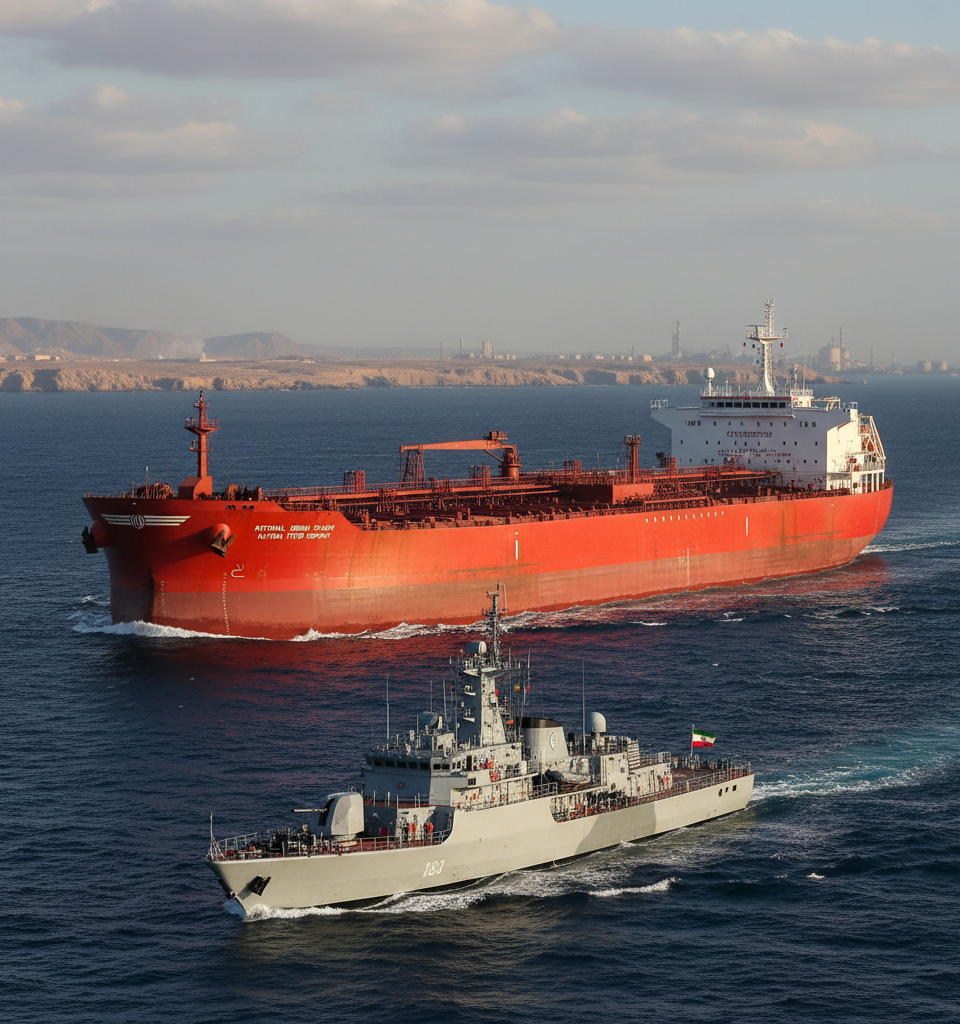
In a pointed statement that has sent ripples through global energy markets, Iran has warned that efforts to restrict its oil exports would lead to "significant costs for everyone," underscoring the interconnectedness of international security and energy trade. The declaration, emanating from senior Iranian officials, directly links the unimpeded passage of Iranian oil through the strategic Strait of Hormuz to the broader maritime security enjoyed by other nations in the region. This assertion coincides with a notable uptick in global crude oil prices, intensifying concerns over supply stability and geopolitical flashpoints.
Geopolitical Crossroads: The Strait of Hormuz The Strait of Hormuz, a narrow waterway connecting the Persian Gulf with the Arabian Sea and the open ocean, is arguably the world's most critical oil chokepoint.
Approximately one-fifth of the world's total petroleum liquids consumption and about one-quarter of global LNG trade transit through this strait daily. Iran's latest warning invokes the long-standing principle that its own economic lifeline – oil exports – cannot be severed without repercussions for the global shipping arteries it overlooks. This strategic leverage has historically been a cornerstone of Tehran's foreign policy, particularly in response to international sanctions targeting its energy sector.
Iran's Stance and Oil Market Dynamics
Iranian officials explicitly stated that the notion of restricting its oil exports while "expecting free security for others" through the Strait of Hormuz is inherently contradictory and unsustainable. This statement reflects a broader frustration with continued international sanctions, largely spearheaded by the United States, which have aimed to curtail Iranian oil revenues. Despite these pressures, Iran has consistently sought avenues to maintain its oil sales, with estimates suggesting its current production hovers around 3.4 million barrels per day (bpd), a significant recovery from earlier lows. The global crude benchmark, Brent, has recently surged past $90 per barrel, reaching multi-month highs, partly driven by supply concerns stemming from OPEC+ production cuts and rising geopolitical risks, including those emanating from the Middle East.
Broader Economic and Security Implications
The implications of Iran's warning are far-reaching. A direct confrontation or disruption in the Strait of Hormuz would not only send oil prices soaring potentially well over $100 per barrel but also threaten global commerce and supply chains. Such an event would severely impact energy-dependent economies worldwide, potentially triggering inflationary spirals and disrupting economic recovery efforts. For Gulf nations, whose economies are heavily reliant on oil exports via the Strait, the prospect of instability is particularly alarming, despite their strong defense ties with Western powers.
Expert Analysis on Escalating Tensions
Energy analysts are closely monitoring the situation. "Iran's message is unequivocally clear: any blockade of its exports will be met with a response that impacts global energy security," stated Dr. Helene Panzano, a senior geopolitical risk consultant specializing in the Middle East. "This isn't merely rhetoric; it's a strategic assertion of its sovereign rights and its role in regional security dynamics. We can expect markets to bake in a higher geopolitical premium for oil prices as long as these tensions persist and grow." Other experts point to the current tightness in global oil supply as amplifying Iran's leverage, making any disruption more impactful than in periods of oversupply.
Potential Scenarios and International Responses
Looking ahead, the international community faces a delicate balancing act. Responses could range from diplomatic overtures aimed at de-escalation to increased naval presence in the region to safeguard maritime routes. The United States and its allies, while committed to upholding freedom of navigation, will likely seek to avoid direct military confrontation. However, continued pressure from sanctions and Iran's unwavering stance could lead to a cycle of escalation. Sanctions relief, even partial, linked to specific concessions from Iran may be explored as a potential off-ramp, though this remains politically contentious in Washington and Tehran. The impending colder months in the Northern Hemisphere could further exacerbate energy demands, adding another layer of complexity to these already fraught geopolitical calculations. Ultimately, the situation underscores the intricate web of energy, economics, and security in the Persian Gulf. Any miscalculation could have profound and lasting global consequences, far beyond the shores of Iran and its neighbors.