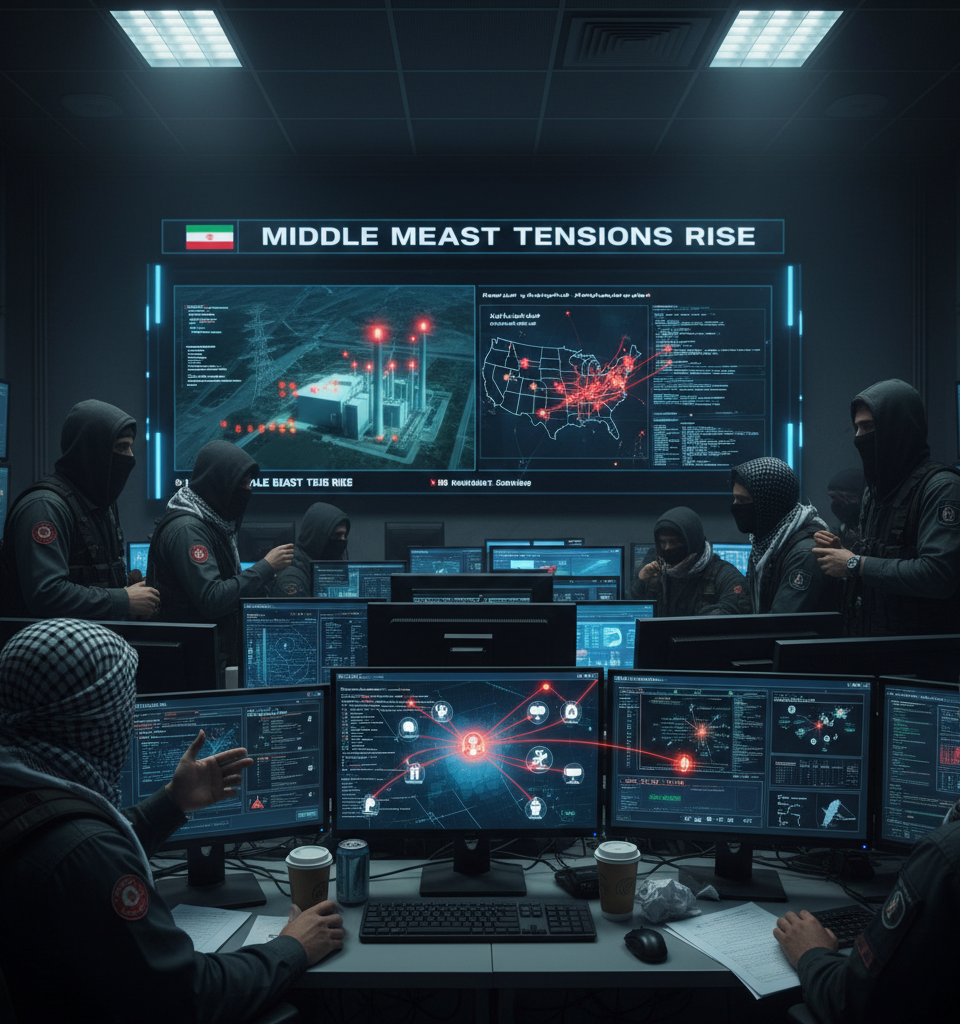
Washington D.C. – U.S. national security agencies have issued an urgent, joint advisory warning of a significant escalation in cyberattacks by Iranian-backed actors targeting American critical infrastructure. The Federal Bureau of Investigation (FBI), the National Security Agency (NSA), and the Cybersecurity and Infrastructure Security Agency (CISA) collectively highlighted that these malicious activities have intensified in direct response to the ongoing U.S.-Israel geopolitical tensions with Iran. The advisory, released this week, underscores a critical juncture in cyber warfare, where state-sponsored threats are directly influenced by global conflicts, posing immediate and long-term risks to vital American systems.
Context and Escalation of Threats
This alarming development is not an isolated incident but rather represents a marked intensification of a long-standing cyber skirmish between the U.S. and Iran. Historically, Iranian cyber units, notably those linked to the Islamic Revolutionary Guard Corps (IRGC), have engaged in various forms of digital espionage, data theft, and disruptive attacks. However, the current advisory points to a more aggressive posture, explicitly citing the U.S.-Israel war with Iran as a catalyst. This geopolitical backdrop transforms traditional cyber espionage into a potential tool for strategic disruption and retaliation, elevating the threat level significantly for sectors including energy, water, transportation, and healthcare.
Key Details and Modus Operandi
The joint advisory details various tactics, techniques, and procedures (TTPs) employed by Iranian state-sponsored groups. These include sophisticated phishing campaigns, exploitation of known vulnerabilities in widely used software and hardware, and the deployment of ransomware variants designed not just for financial gain but potentially for data destruction and operational disruption. The agencies specifically noted an increased focus on industrial control systems (ICS) and operational technology (OT) environments, which are foundational to critical infrastructure. Intelligence reports suggest these groups often leverage publicly available hacking tools alongside custom malware, demonstrating adaptability and a persistent reconnaissance effort to identify and exploit vulnerabilities within U.S. networks.
Industry-Wide Implications and Vulnerabilities
The implications for various industries are profound. The energy sector, for instance, faces potential blackouts or severe operational interruptions, while the water sector could experience contamination or supply disruptions. Attacks on the transportation sector could cripple logistics and supply chains, affecting economic stability. Healthcare, already reeling from previous ransomware attacks, could see patient data compromised and essential services halted. The advisory highlights that small to medium-sized businesses (SMBs) within critical infrastructure supply chains are particularly vulnerable, often lacking the robust cybersecurity defenses of larger enterprises, making them attractive entry points for adversaries.
Expert Insights and Strategic Responses
Cybersecurity experts emphasize the urgent need for a proactive and collaborative defense strategy. Dr. Evelyn Clarke, a senior cybersecurity analyst at Stratagem Global, stated, "What we're seeing is a direct mapping of kinetic conflict onto the cyber domain. Iranian actors are not just probing; they are actively seeking to establish persistent access and cultivate disruptive capabilities." She added that while attribution can be challenging, the patterns of attack align with known Iranian state-sponsored groups. Experts recommend bolstering multi-factor authentication (MFA), regular patching of systems, employee cybersecurity training, and developing comprehensive incident response plans. The advisory itself is a call to action for organizations to review and strengthen their cyber defenses immediately.
Future Outlook and Defensive Measures
Looking ahead, U.S. agencies anticipate these cyber hostilities will continue, and potentially intensify, as geopolitical tensions remain elevated. The long-term strategy involves not only defensive measures but also strengthening international cybersecurity partnerships and potentially proactive cyber operations. CISA has reiterated its commitment to providing resources and guidance to critical infrastructure operators, urging them to implement the recommendations outlined in the joint advisory. Furthermore, there's an ongoing push for Congress to pass legislation that better supports cybersecurity funding and mandates stricter security controls for critical infrastructure entities, acknowledging that this is a persistent and evolving threat that demands a comprehensive national response.
Call to Action for Critical Infrastructure Operators
In light of the heightened threat, CISA, FBI, and NSA strongly advise all critical infrastructure organizations to:
- Implement Multi-Factor Authentication (MFA) across all systems, especially for remote access and cloud services.
- Patch Vulnerabilities Promptly: Prioritize patching known exploited vulnerabilities, particularly those affecting internet-facing systems.
- Segment Networks: Use network segmentation to limit lateral movement by attackers.
- Conduct Incident Response Drills: Regularly test and update incident response plans to ensure readiness.
- Educate Employees: Provide ongoing cybersecurity awareness training to identify phishing attempts and other social engineering tactics.
- Maintain Immutable Backups: Ensure critical data is regularly backed up and stored offline to facilitate recovery from ransomware attacks.