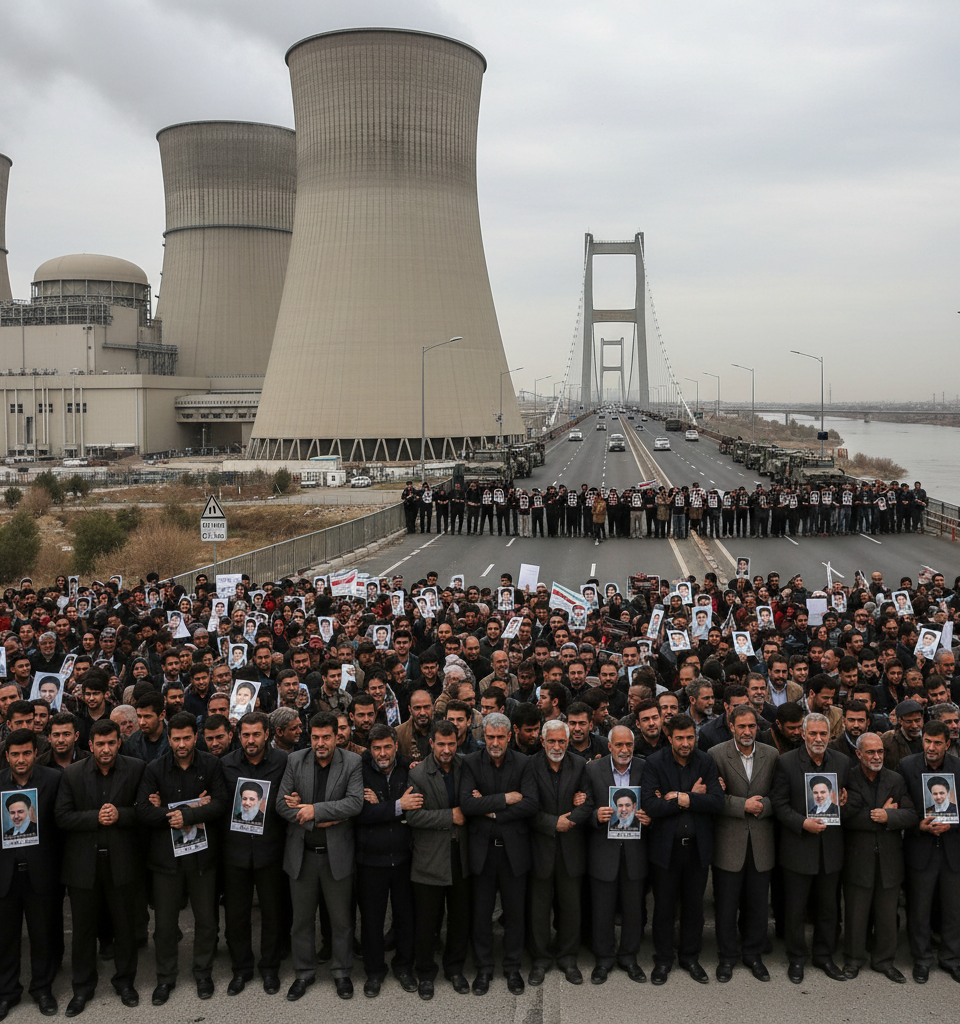
Tehran, Iran – January 6, 2020 – In an unprecedented show of national solidarity and defiance, thousands of Iranian citizens have reportedly formed human chains across the country's vital infrastructure, including strategic bridges and power generation facilities. This mass mobilization, widely publicized through state media, comes directly in response to recent threats from United States President Donald Trump, who vowed to target 52 Iranian sites, including cultural and civilian infrastructure, should Iran retaliate for the U.S. drone strike that killed General Qassem Soleimani. The demonstrations aim to symbolically protect these sites and underscore the populace's resolve against external aggression.
A Nation on Edge: The Context of Escalation
The current atmosphere in Iran is thick with tension and a pervasive sense of national grievance. The killing of General Soleimani, a revered military figure and architect of Iran's regional influence, on January 3rd in Baghdad, has been widely condemned across the Iranian political spectrum and among its populace as an act of state terrorism. This event marks a critical juncture in the long-standing, often volatile, relationship between Washington and Tehran. The U.S. has justified the strike as a defensive measure to prevent imminent attacks on American personnel, while Iran views it as a flagrant violation of international law and a direct assault on its sovereignty. The human chain initiative, encouraged by government and religious authorities, serves as both a symbolic protest and a preparation for potential conflict, drawing parallels to wartime civilian defense efforts.
Details of the Civilian Mobilization
Reports from Iranian state television and social media channels depicted large crowds, often exceeding several hundred individuals at each location, linking arms at various strategic points. While specific numbers are difficult to verify independently, images showed significant gatherings at major urban bridges, such as the Si-o-se-pol bridge in Isfahan, and near visible power plant complexes. Participants, ranging from young adults to the elderly, chanted anti-U.S. slogans and held portraits of General Soleimani and Supreme Leader Ayatollah Ali Khamenei. The gatherings, though symbolic, intend to convey a powerful message of unity and resistance, suggesting that any attack on Iranian infrastructure would be seen as an attack on its people.
Geopolitical Repercussions and Economic Fallout
The escalating tensions are sending shockwaves through global markets, particularly impacting crude oil prices, which surged by over 4% in early trading following the Soleimani assassination, reaching over $68 per barrel for Brent crude. Energy analysts warn that any direct conflict or disruption to shipping lanes in the Persian Gulf, a crucial chokepoint for global oil supply, could send prices soaring further, potentially triggering a global economic downturn. Furthermore, defense industry stocks have seen an uptick, while investor confidence in emerging markets, especially those reliant on stable oil prices, has waned significantly. The threat to civilian infrastructure also raises concerns among humanitarian organizations about potential breaches of international law and the broader impact on regional stability.
Expert Voices on the Crisis
International relations experts and security analysts are largely in agreement that the situation is exceptionally volatile. Dr. Emily Thorne, a Middle East policy specialist at the Council on Foreign Relations, stated, "This civilian mobilization, while symbolic, reflects the depth of anger and nationalistic fervor within Iran. It signals a society bracing for impact, making any U.S. military action fraught with unpredictable consequences, including increased regional proxy conflicts and cyber warfare." Others, like Dr. Mark Jensen, a geopolitical risk consultant, emphasize the communication breakdown: "The risk of miscalculation is astronomically high. Neither side appears to have a clear off-ramp, and the rhetoric from both Washington and Tehran is only fueling an already dangerous fire."
The Unfolding Path: What Lies Ahead
The immediate future remains highly uncertain. Iran has vowed "harsh retaliation" for Soleimani's death, though the nature and timing of this response are still unclear. Analysts speculate that Iran's response could range from cyberattacks to missile strikes against U.S. assets in the region or through its proxy forces. The U.S., for its part, has deployed additional troops to the Middle East, bolstering its defensive posture. The international community, including the United Nations and numerous European nations, is urging de-escalation and a return to diplomacy, however, the channels for such dialogue appear increasingly constricted. The human chains serve as a grim reminder that the civilian population will bear the brunt of any further escalation, underscoring the urgent need for a diplomatic resolution to prevent broader conflict.
International Calls for De-escalation Intensify
As the crisis deepens, leaders worldwide have intensified calls for restraint. The European Union has convened emergency meetings, with High Representative for Foreign Affairs Josep Borrell emphasizing the importance of preserving the Iran nuclear deal, albeit significantly weakened, as a critical diplomatic tool. Meanwhile, Russia and China have condemned the U.S. action and echoed calls for de-escalation, fearing widespread destabilization of the Middle East, a region already grappling with multiple intractable conflicts. The global ripple effects of this standoff are testament to the interconnectedness of international security and the profound implications of military actions in a highly sensitive geopolitical landscape.