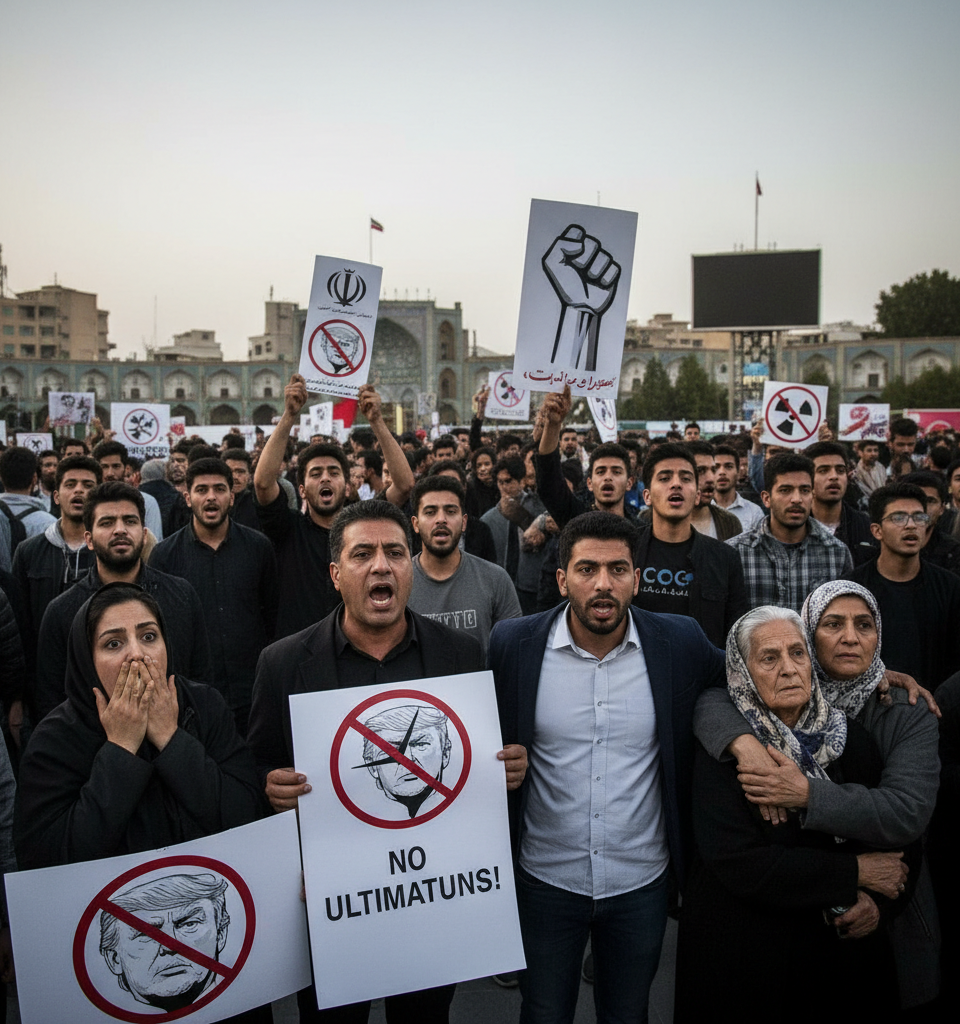
TEHRAN – As the May 19, 2026, deadline approaches, Iranians are bracing for potential devastating attacks threatened by President Trump should the nation fail to reopen the Strait of Hormuz. The impending ultimatum has elicited a palpable sense of apprehension and indignation across the country, with citizens publicly questioning the moral compass of American foreign policy and the perceived departure from established international norms. The high-stakes standoff could recalibrate regional dynamics and test the resilience of the Iranian populace under immense geopolitical pressure.
Escalating Tensions and the Strait's Strategic Importance
The current crisis is rooted in a prolonged period of strained relations between Washington and Tehran, intensified by the Trump administration's hawkish stance. The Strait of Hormuz, a narrow passage connecting the Persian Gulf with the open ocean, is a critical chokepoint for global oil shipments. Approximately one-fifth of the world's total oil supply passes through this waterway daily, making its closure or disruption an event with far-reaching economic consequences. Iran's historical threats, and at times actual actions, regarding the Strait's accessibility have consistently served as a powerful leverage point in its diplomatic engagements, particularly during periods of heightened sanctions or military pressure. The current demand for immediate reopening underscores the Trump administration's resolve to exert maximum pressure on the Islamic Republic.
Iranian Public Reacts to Trump's Ultimatum
Across Iranian cities, the looming threat has sparked a wave of public discourse. While some express deep concern over the potential for military confrontation and its human cost, a prevailing sentiment of defiance is also evident. Many Iranians, accustomed to decades of external pressure and sanctions, view the ultimatum not as a means to achieve compliance but as a direct challenge to national sovereignty. Questions regarding the trajectory of American values have surfaced repeatedly in public comments and social media discussions. Citizens are bewildered by what they perceive as a stark contrast between America's historically self-proclaimed role as a beacon of democracy and its current aggressive posture, which many interpret as a disregard for international law and human life. This sentiment is widespread, cutting across various demographic segments of Iranian society.
Global Economic Implications of a Strait Closure
Should Iran maintain its stance and the Strait of Hormuz remain closed, or should military action ensue, the global economic fallout would be immediate and severe. Energy markets would likely experience extreme volatility, with crude oil prices surging as supply routes are disrupted or perceived to be at risk. This would translate into higher fuel costs for consumers worldwide, potentially impacting inflation rates and global economic growth. Beyond oil, international shipping and insurance industries would face unprecedented challenges, with increased premiums and rerouting costs altering supply chains for numerous commodities. The interconnectedness of global economies means that a conflict in such a vital transit point would reverberate far beyond the Middle East, potentially triggering a broader economic downturn.
Regional Instability and International Response
The unfolding situation also carries profound implications for regional stability. Neighboring countries, heavily reliant on the Strait for their own trade and energy exports, would be directly impacted by any military escalation or prolonged disruption. The potential for a wider regional conflict, involving other international actors with vested interests in the stability of the Persian Gulf, cannot be discounted. The international community, while perhaps divided on the specifics of U.S. policy towards Iran, largely recognizes the critical importance of keeping the Strait of Hormuz open for global commerce. Diplomatic efforts, though not explicitly mentioned as ongoing in the immediate context, would undoubtedly intensify behind the scenes to de-escalate tensions and prevent a full-blown military confrontation that could have catastrophic consequences for the global economy and regional peace.
The Path Forward: Uncertainty and Resolve
As the deadline approaches, the immediate future remains highly uncertain. Iran faces a critical decision point: accede to Trump's demands and potentially lose face on the international stage, or refuse and risk a military confrontation with a formidable adversary. The prevalent public sentiment suggests that a full capitulation is unlikely without significant concessions from the international community, which are not currently on the table. The coming days are expected to be characterized by heightened diplomatic maneuvering, military posturing, and anxious anticipation from global markets and political observers. How both sides navigate this perilous moment will determine the immediate trajectory of U.S.-Iran relations and the stability of one of the world's most vital maritime arteries.