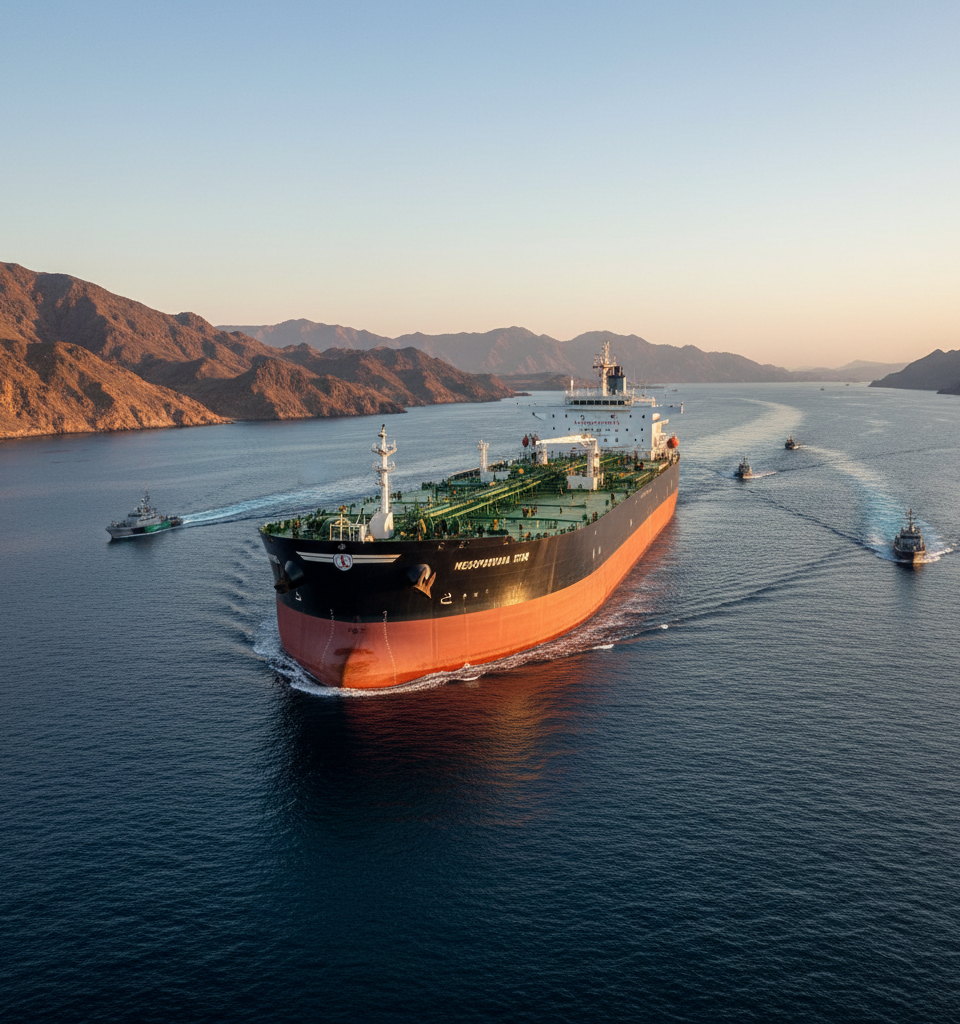
A Suezmax oil tanker, laden with approximately one million barrels of Iraqi crude, successfully navigated the Strait of Hormuz through a northerly route within Iranian territorial waters on Sunday morning. This atypical maritime maneuver, confirmed by vessel-tracking data compiled by Bloomberg and observed by regional maritime authorities, has drawn considerable attention from geopolitical analysts and energy market watchers. The vessel's decision to eschew the conventional international shipping lanes underscores the complex operational considerations and persistent strategic tensions within the Persian Gulf.
Historical Context and Strategic Significance of the Strait
The Strait of Hormuz, a narrow waterway connecting the Persian Gulf with the Arabian Sea and the open ocean, is a vital chokepoint for global energy supplies, with an estimated one-fifth of the world's oil passing through it daily. Its strategic importance has historically made it a flashpoint for international disputes, particularly between Iran and Western powers. While a general right of innocent passage is recognized under international law, the consistent use of designated international transit corridors has been the norm to avoid territorial incursions and minimize potential for conflict. This latest passage through Iranian waters, while not unprecedented, is nevertheless a notable deviation from established patterns, especially given the history of heightened tensions in the region.
Key Details of the Transit and Vessel Specifications
The tanker, identified as the MT Stjerneborg (though some reports may vary in vessel naming due to tracking nuances), departed from Iraq's Basra oil terminals. Suezmax vessels, capable of carrying roughly one million barrels of oil, are a standard class for long-haul crude shipments. The northern route taken by the tanker effectively places it for a prolonged period within waters claimed and actively monitored by the Iranian Revolutionary Guard Corps (IRGC) and other Iranian maritime forces. While specific communications between the vessel and Iranian authorities have not been publicly disclosed, such a transit would typically necessitate some level of coordination or at least tacit acknowledgment of Iranian maritime control, even if officially unrecognized by the flag state or ship operator as requiring active permission.
Industry and Market Impact: Navigating Uncertainty
From an industry perspective, this development introduces another layer of complexity to risk assessments for shipping companies operating in the Persian Gulf. While perhaps offering a marginally shorter route or avoiding busier southern lanes, the decision to transit Iranian waters could be perceived as a calculated risk given past incidents, including vessel seizures and harassment by Iranian forces. For the broader oil market, any perceived increase in geopolitical risk in the Strait of Hormuz can trigger price volatility. However, without further context or repeat occurrences, this single incident is unlikely to have a sustained impact on global crude prices, which are currently influenced more by OPEC+ policies and global demand fluctuations.
Expert Perspectives on Regional Implications
Maritime security analysts are closely scrutinizing the incident. Dr. Alistair Finch, a senior fellow at the Institute for Geopolitical Studies, commented, "This passage is less about a new shipping route and more about signals. It could be an operational decision by the shipping company, or it could be subtly facilitated by Iranian authorities to assert their territorial claims or even to signal a degree of regional accommodation with Iraq, especially in light of ongoing energy infrastructure projects between the two nations." Other experts suggest it might be an attempt by the vessel's operators to avoid potential issues in the more congested international lanes further south, or simply a miscalculation. The lack of an official statement from Iran or Iraq regarding the unusual routing leaves much open to interpretation.
Unanswered Questions and Future Implications
The primary unanswered question revolves around the motivation behind this specific routing. Was it a deliberate strategic choice by the vessel's operator or owner, possibly sanctioned or encouraged by Iraqi interests, or was it a one-off operational decision based on factors such as weather, traffic, or transit efficiency? Future developments will likely focus on whether this becomes a more routine occurrence for Iraq-linked tankers, potentially indicating a softening of relations or new understandings regarding maritime passage with Iran. The international community, particularly naval forces tasked with safeguarding freedom of navigation in the Arabian Gulf, will be monitoring subsequent transits closely for any indication of a shift in established patterns or challenges to international maritime law. Any sustained alteration to customary navigation practices could have significant implications for regional security and global energy trade.