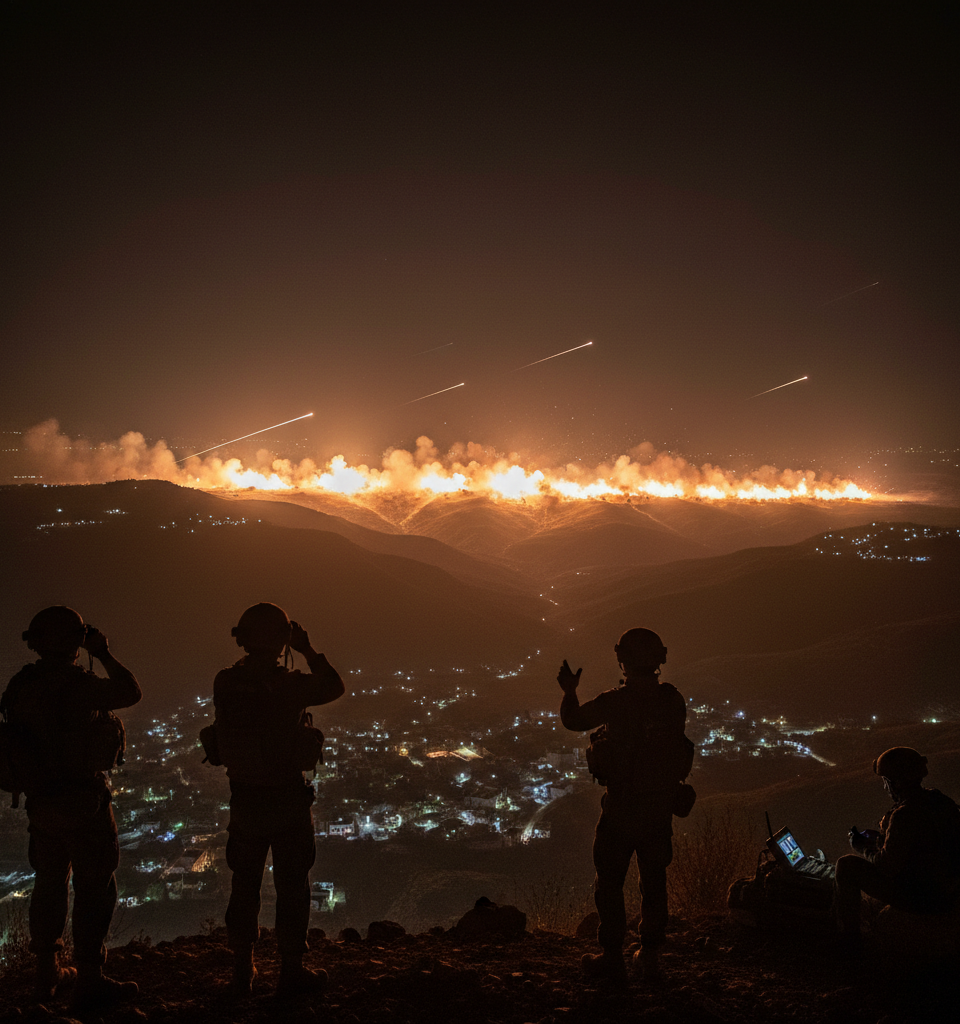
TEL AVIV / BEIRUT – In a significant escalation of cross-border hostilities, Israel launched an unprecedented barrage of over 100 airstrikes into southern Lebanon on, targeting what it identified as Hezbollah command centers and military sites. The Israel Defense Forces (IDF) declared the ten-minute operation as the "largest wave" of air strikes since the current conflict intensified, marking a dramatic intensification of strategic engagement against the Iran-backed militant group.
Context of Escalation: A Deepening Regional Conflict
This rapid-fire assault unfolds against a backdrop of escalating tensions between Israel and Hezbollah, which has seen near-daily exchanges of fire since the October 7th attacks by Hamas in southern Israel. Historically, both parties have maintained a fragile deterrence since the 2006 Lebanon War, but the current conflict has severely eroded this understanding. The precision and overwhelming scale of this recent operation underscore Israel's stated objective to significantly degrade Hezbollah's military capabilities and push its forces further away from the northern Israeli border, ostensibly to ensure the safety of its border communities.
Operational Details and Strategic Objectives
The IDF confirmed that its air force struck over 100 distinct targets within a ten-minute window, primarily focused on the areas of Aitaroun, Bint Jbeil, and Yaroun in southern Lebanon. These targets reportedly included advanced observation posts, rocket launching pads, weapons depots, and subterranean infrastructure believed to be integral to Hezbollah's command and control network. While casualty figures from the Lebanese side were not immediately available, the swiftness and intensity of the strikes suggest a deliberate strategy aimed at overwhelming Hezbollah's defenses and severely disrupting their operational capacity. Israeli military sources emphasized that the attacks were a direct response to recent Hezbollah aggressions, including rocket fire and anti-tank missile launches into northern Israel.
Broader Geopolitical and Economic Repercussions
The immediate impact of such a broad-scale attack reverberates throughout the volatile Middle East. The intensified conflict poses significant risks to regional stability, potentially drawing in other state and non-state actors. Economically, the increased uncertainty could further depress investor confidence across the region, particularly impacting energy markets and supply chains reliant on routes through the Levant. Analysts are closely watching for any impact on global oil prices, given the region's importance to energy production and transit. The escalating violence also threatens to derail ongoing international diplomatic efforts aimed at de-escalation and humanitarian aid delivery to conflict zones.
Expert Analysis: A Shift in Israeli Strategy
Military strategists and regional experts view this operation as a potential shift in Israel's tactical approach, moving from targeted retaliatory strikes to a more comprehensive offensive posture. Dr. Elias Haddad, a senior analyst at the Institute for Near East Policy, noted, "The sheer volume and compressed timeframe of these strikes indicate a clear intent to inflict maximum damage and disruption in the shortest possible window. This isn't just a response; it's a strategic message aimed at recalibrating the rules of engagement with Hezbollah and, by extension, Iran." Others suggest it could be a precursor to a larger ground operation, though Israeli officials have not confirmed such intentions.
The Path Forward: Unpredictability and Diplomatic Challenges
The immediate future remains highly volatile. Hezbollah's response to this unprecedented assault will be critical in determining the next phase of the conflict. The international community, led by the United Nations and various Western powers, is expected to intensify diplomatic efforts to prevent a full-scale regional war. However, given the deep-seated animosities and strategic objectives of the involved parties, the prospects for a swift de-escalation appear dim. The coming days will likely see continued military maneuvering and intense political negotiations as all sides jockey for position in an increasingly unstable landscape. The humanitarian consequences for civilian populations in both northern Israel and southern Lebanon are also a paramount concern, with aid organizations bracing for increased displacement and suffering.