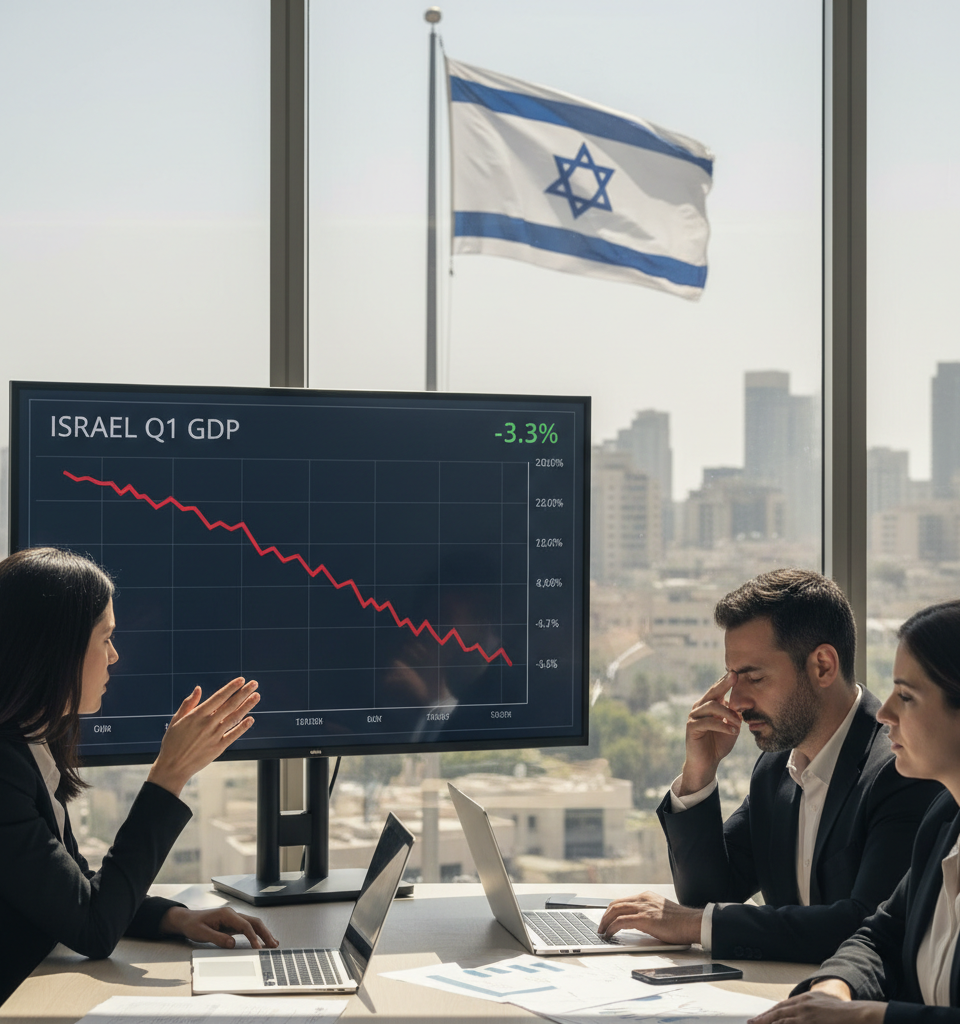
Israel's economy contracted by an annualized 3.3% in the first quarter of 2024, a sharp reversal from the robust growth seen in previous periods and a direct consequence of the protracted conflict in Gaza. The preliminary data, released by the Central Bureau of Statistics this week, underscores the profound impact of the ongoing hostilities on consumer spending, investment, and the labor market, pushing the nation into an unexpected economic downturn.
Context of Conflict and Economic Strain
This economic contraction is a stark indicator of the broader challenges facing Israel. The war, which escalated dramatically in October 2023, has led to a significant mobilization of reservists, disrupting the workforce across various sectors, particularly within the crucial tech industry and construction. Businesses have grappled with labor shortages, supply chain disruptions, and a palpable decline in both domestic and international confidence. The economic toll extends beyond direct military expenditures, encompassing lost productivity, decreased tourism, and a general atmosphere of uncertainty that stifles economic activity. This marks a significant departure from Israel's recent economic trajectory, which had been characterized by strong growth and innovation, particularly in its high-tech sector, prior to the outbreak of hostilities.
Key Economic Indicators and Underlying Factors
The 3.3% annualized GDP contraction for Q1 2024 was primarily driven by a substantial 26.9% decrease in private consumption, reflecting a cautious consumer sentiment and reduced purchasing power. Government spending, however, surged by an annualized 76.3%, largely due to increased military outlays related to the conflict. Fixed asset investment also plummeted by an annualized 30.6%, signaling a deferral or cancellation of capital projects amidst the uncertainty. Exports of goods and services, a vital component of Israel's economy, saw a decrease of 22.9%, while imports fell by 20.9%, highlighting a broader slowdown in international trade. These figures paint a clear picture of an economy under duress, where domestic demand has waned and external trade has been hampered.
Impact on Industries and Markets
The ripple effects of the conflict are pervasive across multiple sectors. The tourism industry has been particularly devastated, with international travel largely halted, impacting hotels, airlines, and related services. The construction sector, heavily reliant on Palestinian laborers, has faced severe manpower shortages, leading to project delays and increased costs. Even the resilient high-tech sector, a cornerstone of Israel's economic prowess, has felt the pinch, with start-ups reporting difficulties in securing funding and retaining talent due to the military call-ups. Financial markets have also reacted cautiously, with the Tel Aviv Stock Exchange experiencing volatility and the shekel depreciating against major currencies, although it has shown some stabilization more recently. The ongoing geopolitical instability presents a significant headwind for foreign direct investment.
Expert Analysis and Outlook
Economists broadly concur that the Q1 contraction is a direct consequence of the war, with many anticipating continued economic challenges as long as the conflict persists. Bank of Israel Governor Amir Yaron, while acknowledging the severe impact, has expressed cautious optimism about a potential rebound once hostilities cease and normalcy returns, though the timeline remains uncertain. Analysts from leading financial institutions have revised down their growth forecasts for the year, with some predicting overall annual GDP growth to be significantly lower than pre-war projections, potentially ranging from 1% to 2%. They emphasize the importance of government spending support and a robust recovery plan to mitigate the long-term economic damage. The consensus is that a sustained period of peace and stability will be crucial for a full economic recovery.
Future Implications and Government Response
The Israeli government faces the dual challenge of managing the ongoing conflict while also formulating strategies for economic recovery and long-term resilience. Discussions around potential fiscal stimulus, targeted aid for affected businesses, and measures to re-engage the workforce are likely to intensify. The Bank of Israel has already intervened to maintain liquidity and support the financial system, and further monetary policy adjustments could be on the horizon.
The duration and intensity of the conflict will be the principal determinants of how swiftly and effectively the Israeli economy can rebound. Rebuilding international investor confidence and revitalizing key export sectors will be paramount in the post-conflict period to restore the nation's economic momentum and ensure sustainable growth. The upcoming months will be critical in assessing the true extent of the damage and the effectiveness of the policy responses implemented.