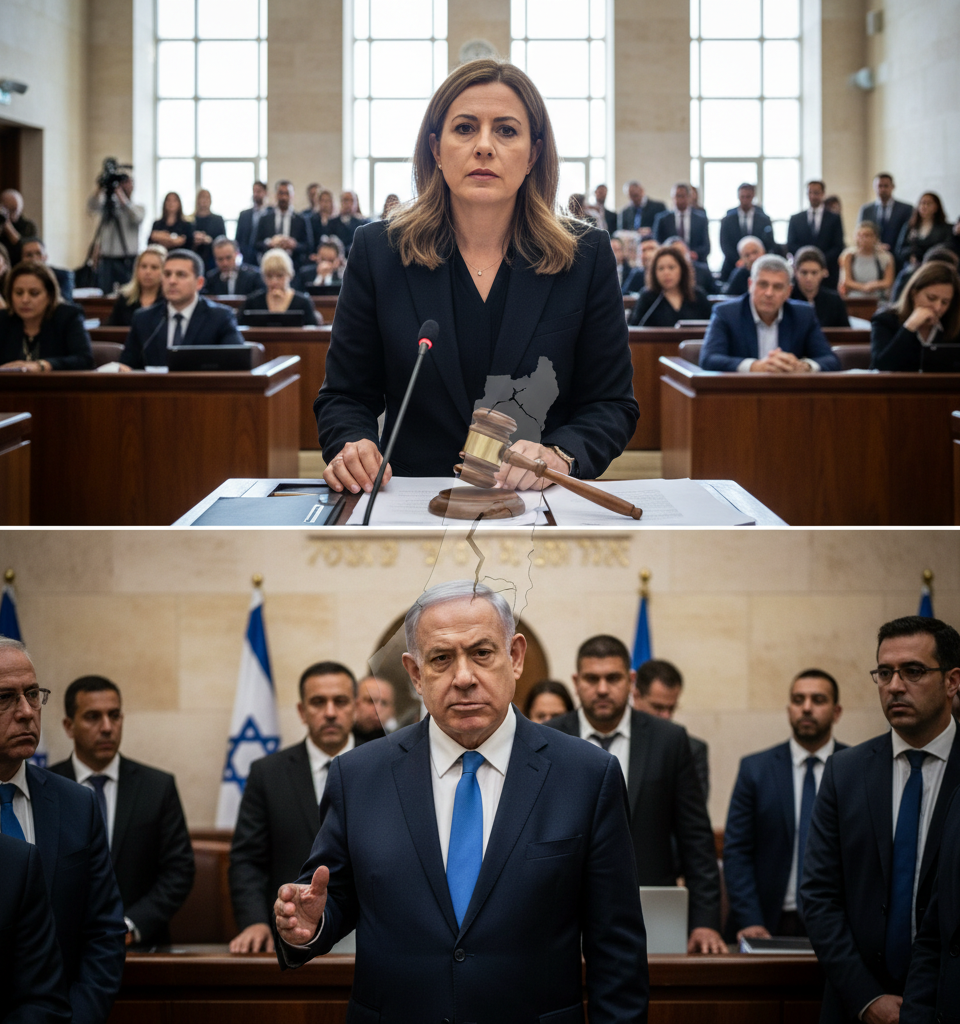
TEL AVIV – With geopolitical tensions simmering but a direct confrontation with Iran momentarily averted, Israel's fractious political arena has pivoted sharply inward. A seismic legal and constitutional showdown is unfolding, as Attorney General Gali Baharav-Miara has taken a decisive stand against Prime Minister Benjamin Netanyahu’s right-wing government, specifically challenging the expansive powers granted to National Security Minister Itamar Ben-Gvir. This pivotal court battle, currently before Israel's Supreme Court, centers on Ben-Gvir's radical influence over the police force and has re-ignited fundamental debates about the separation of powers and the future of Israeli democracy.
The Unraveling of Norms: A Minister's Unprecedented Powers
This dispute didn't emerge in a vacuum. It represents the latest flashpoint in a protracted constitutional crisis that has gripped Israel for over a year, intensified by the Netanyahu government's judicial overhaul attempts and the subsequent widespread public protests. At its core, the current challenge concerns amendments passed in December 2022 to the Police Ordinance, which significantly expanded the National Security Minister's authority over the Israel Police. Crucially, these changes granted Ben-Gvir, a figure with a history of extremist views and convictions, direct control over policymaking, command instructions, and even operational directives to the police commissioner. The Attorney General argues these amendments fundamentally undermine the operational independence of law enforcement, transforming the police into a political instrument rather than an independent body upholding the law for all citizens.
Key Players and Legal Arguments
Attorney General Baharav-Miara's petition to the Supreme Court alleges that the legislative changes are unconstitutional, threatening the delicate balance between the executive and law enforcement branches. Her arguments hinge on the premise that Ben-Gvir's extensive powers, particularly his ability to issue binding instructions to the police, blur the lines of authority and could lead to politically motivated policing, eroding public trust and the rule of law. The government, represented by the Prime Minister's office and Ben-Gvir himself, staunchly defends the amendments, asserting that they merely allow the elected government to implement its mandate more effectively and hold the police accountable to the public's representatives. They contend that the Attorney General is overstepping her boundaries, attempting to dictate government policy rather than merely offering legal counsel.
Broader Societal and Security Implications
Beyond the immediate legal ramifications, this battle carries profound implications for Israeli society and its security apparatus. The perceived politicization of the police force under Ben-Gvir's authority could exacerbate internal tensions, particularly concerning protests and the handling of the Palestinian minority within Israel. Critics fear that a police force loyal to a specific political agenda, rather than the law, could lead to disproportionate responses to dissent or selective enforcement of justice. Moreover, such internal instability, coupled with external threats, could further strain international relations and Israel's standing as a democratic nation.
Expert Perspectives on Constitutional Erosion
Legal scholars and political analysts are largely echoing the Attorney General's concerns. Professor Suzie Navot, a constitutional law expert at the Striks School of Law, stated, “This is not merely about a minister's authority; it's about whether Israel remains a state governed by the rule of law or descends into a system where power is concentrated without adequate checks and balances.” Many point to the potential for similar erosion in other democratic institutions if the Supreme Court fails to intervene decisively. The perceived weaponization of state institutions for political ends is a frequently cited concern, threatening the fabric of Israel's democratic norms established over 75 years.
The Economic and International Repercussions
The ongoing political instability, underscored by this court case, has tangible economic and international repercussions. Long-term political uncertainty deters foreign investment, with recent reports indicating a slight downturn in tech sector investments compared to previous years, although precise figures directly attributable to this specific court case are difficult to isolate. Internationally, allies, particularly the United States and European Union, have expressed concerns about the health of Israeli democracy. A perception of institutions being undermined could lead to diplomatic challenges and potentially impact security assistance or trade agreements, as democratic values often underpin these relationships. The High Court's ruling, therefore, will be scrutinized not just within Israel but globally.
What Lies Ahead: A Pivotal Supreme Court Decision
The Supreme Court's deliberations are underway, with a decision expected in the coming weeks or months. Should the court side with the Attorney General, it could further deepen the rift between the judiciary and the executive, potentially leading to renewed government attempts to curb judicial power. Conversely, a ruling in favor of the government could be seen as a significant victory for Netanyahu's coalition, empowering ministers like Ben-Gvir and potentially setting a precedent for increased political interference in traditionally independent state bodies. Regardless of the outcome, this legal battle is poised to be a landmark decision with lasting consequences for Israel's governance, civil liberties, and its identity as a democratic nation. The path forward remains uncertain, but the stakes for Israel's fundamental character have rarely been higher.