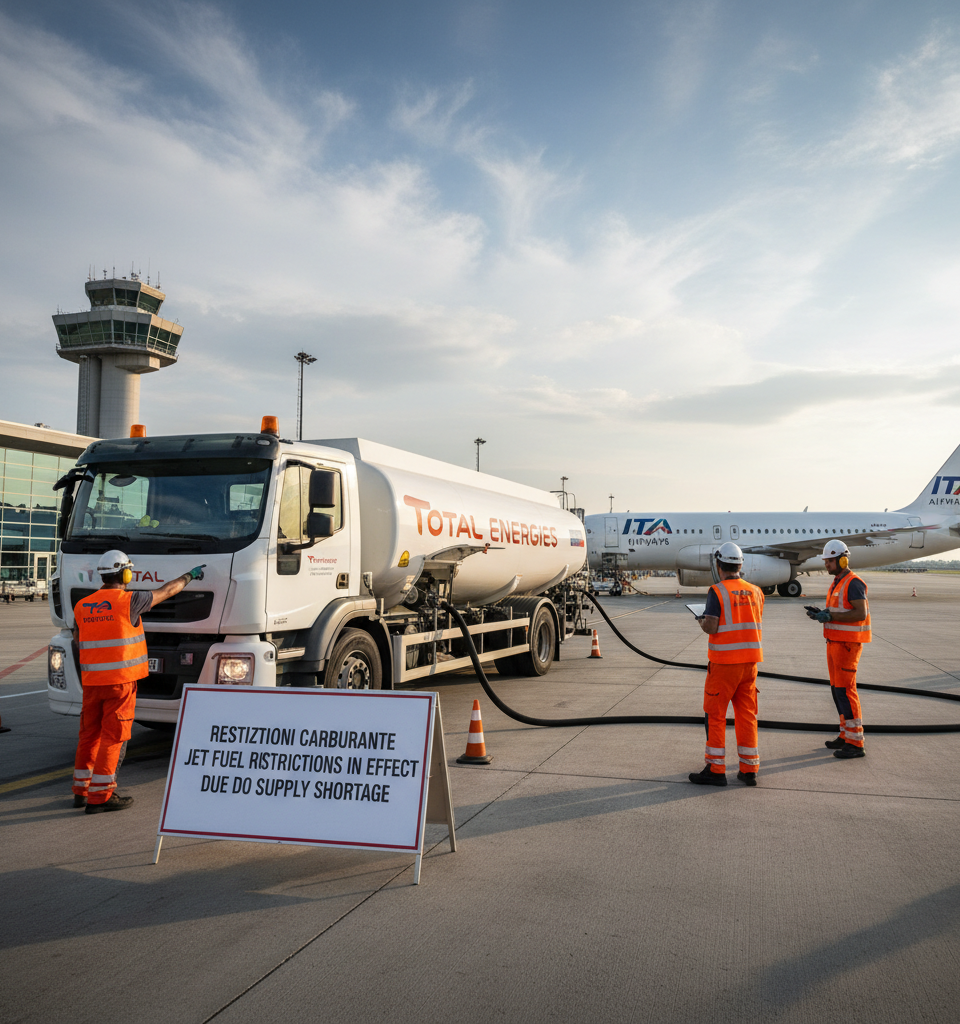
ROME, ITALY – In an unprecedented move, several key Italian airports, including Bologna, Milan Linate, Treviso, and Venice, have implemented immediate and stringent restrictions on jet fuel uplift for departing flights. The drastic measure, effective immediately, comes in response to an anticipated supply gap, prompting aviation authorities to prioritize fuel allocation to maintain essential air travel operations while mitigating potential disruptions. The precise duration of these restrictions remains unclear, sending a ripple through Italy's bustling tourism and business travel sectors.
This development underscores the fragility of global energy supply chains, particularly in a post-pandemic landscape experiencing heightened demand and ongoing geopolitical instability. While individual supply chain issues are not uncommon, a coordinated restriction across multiple significant international gateways points to a broader systemic challenge. Italy, a major European aviation hub, relies heavily on consistent fuel supplies, and any disruption can have far-reaching economic consequences, impacting not just airlines but also tourism, logistics, and trade.
Under the new directives, airlines operating at the affected airports are now subject to specific limitations on the amount of jet fuel they can uplift. While exact percentages vary by airport and potentially by airline, initial reports suggest limitations could be as high as 50% of an aircraft's full tank capacity, forcing airlines to plan for refueling stops at other airports or to significantly reduce their flight loads. An official statement from Assaeroporti, the Italian airports association, acknowledged the "temporary imbalance" in fuel availability, linking it to "logistical challenges and increased demand." Details on how long these restrictions will be in place, and the specific triggers for their implementation, have not been fully disclosed, breeding uncertainty among carriers.
From an industry perspective, this situation could trigger a cascade of operational adjustments. Airlines will face increased costs due to additional refueling stops, potential flight delays, and the need to re-route aircraft. This could, in turn, lead to higher ticket prices for consumers as airlines pass on these additional expenses. For low-cost carriers operating on tight margins, the impact could be particularly severe. Global aviation body IATA has previously warned about the vulnerability of the industry to supply chain shocks, and this incident serves as a stark reminder of that reality, especially as the summer travel season approaches.
viation analysts are closely monitoring the situation. "This isn't just a minor logistical hitch; it signals deeper issues within the European energy infrastructure," commented Dr. Elena Rossi, an energy market specialist at the University of Milan. "While specifics are scarce, it's likely a combination of higher-than-forecast demand, compounded by a bottleneck in refining capacity or distribution networks. The coordinated nature suggests a preemptive move to conserve dwindling supplies rather than a reactive measure after a full-blown crisis."
The immediate future will likely see airlines scrambling to adjust their schedules and fuel procurement strategies. Discussions between airline operators, airport authorities, and fuel suppliers are expected to intensify, aiming to quickly identify and rectify the root causes of the supply gap. The Italian government, through its Ministry of Infrastructure and Sustainable Mobility, may also intervene to facilitate fuel deliveries or implement emergency measures to ensure continuity of service.
Looking ahead, this incident could prompt a broader re-evaluation of fuel resiliency plans across European airports. Investments in alternative fuel sources, enhanced storage capabilities, and diversified supply routes might become priority discussions. While a full-scale aviation crisis is not yet imminent, the limitations imposed serve as a potent warning about the critical need for robust and reliable energy supply chains to support the ever-growing demands of global air travel. The coming weeks will reveal the true extent of the disruption and the efficacy of the measures taken to safeguard Italy's crucial air connectivity.
Potential Economic Repercussions
The ripple effect of these fuel restrictions extends beyond immediate operational challenges. Italy's vital tourism sector, a cornerstone of its economy, could face significant headwinds if flight disruptions become prolonged or widespread. Airlines might choose to reduce frequencies to Italy or adjust aircraft types, potentially impacting tourist arrivals and associated revenues for hotels, restaurants, and local businesses. Early estimates suggest that a sustained 10% reduction in inbound flights during peak season could equate to hundreds of millions of euros in lost revenue for the Italian economy.
Government Oversight and Future Policy
The Italian government's response will be crucial in mitigating the crisis. Beyond immediate logistical solutions, this event may push for a more strategic national energy security policy specifically addressing aviation fuel. Debates around increasing national refining capacity, negotiating more favorable long-term supply contracts, or even exploring strategic fuel reserves could gain traction in the coming months. The incident highlights the intricate link between energy policy and economic stability, particularly for a nation as reliant on international air travel as Italy.