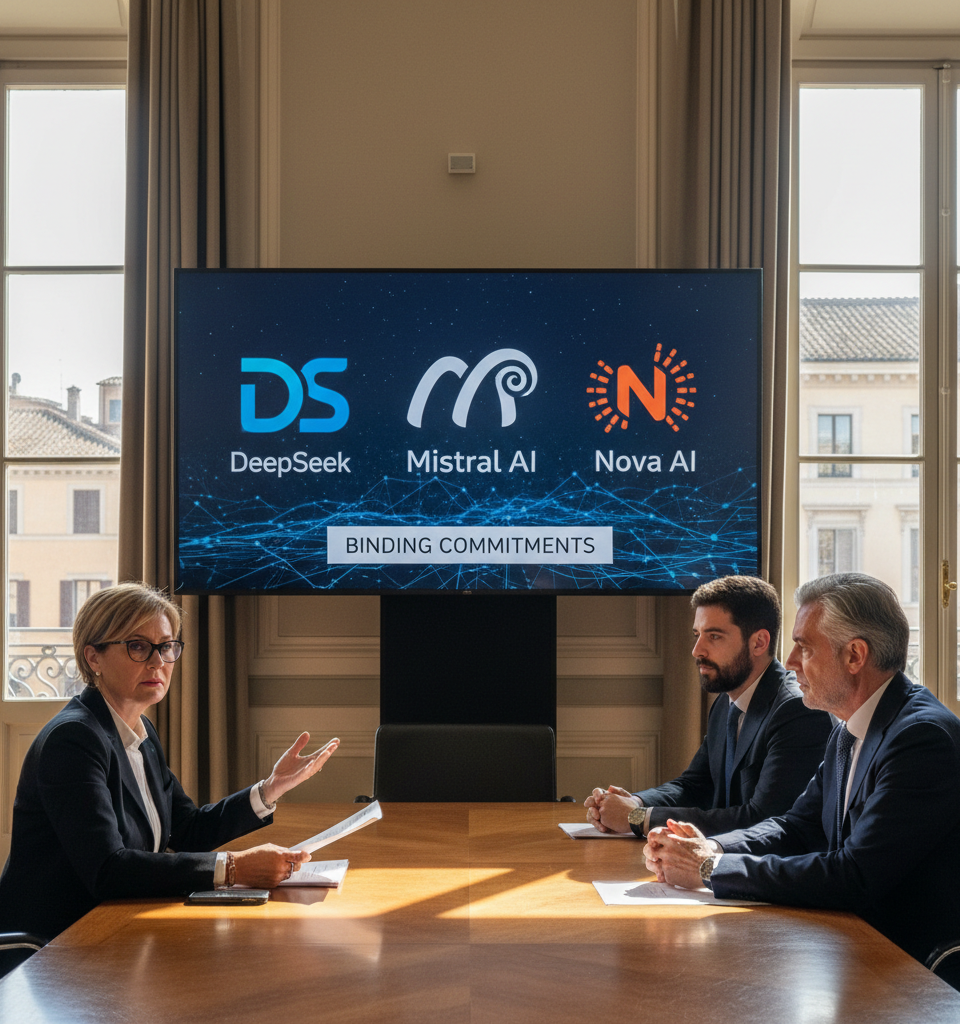
The Italian Competition and Consumer Protection Authority (AGCM) has announced the closure of its investigations into three prominent artificial intelligence large language model (LLM) providers: China’s DeepSeek, France’s Mistral AI, and San Francisco-based Nova AI. The regulator accepted legally binding undertakings from each company, establishing a novel precedent for how AI developers must transparently address and disclose the phenomenon of ‘hallucinations’ in their generative AI outputs. This move marks a significant step in consumer protection within the rapidly evolving AI landscape, with a 120-day window for compliance before potential financial penalties are levied.
The Evolving Landscape of AI Regulation
This development underscores a growing global trend among regulators to grapple with the multifaceted challenges posed by generative AI, particularly concerning accuracy, bias, and consumer trust. The AGCM's action is particularly notable as it shifts from theoretical discussions to concrete, enforceable guidelines for AI transparency. The inherent tendency of LLMs to generate plausible but factually incorrect information, known as 'hallucinations,' has been a central concern for policymakers and end-users alike, highlighting the urgent need for clear disclosure mechanisms. This initiative follows Italy's previous, albeit temporary, ban on OpenAI's ChatGPT in March 2023 over data privacy concerns, showcasing the nation's proactive stance on AI governance.
Specifics of the Binding Commitments
The binding commitments accepted by the AGCM detail a comprehensive set of requirements for DeepSeek, Mistral AI, and Nova AI. While the specific terms for each company may vary slightly, the overarching goal is to ensure users are adequately informed about the limitations of AI-generated content. Key elements include prominent disclaimers regarding the potential for inaccurate or biased outputs, easy-to-understand explanations of how AI models generate information, and clear instructions on how users can report errors.
Furthermore, the commitments likely outline the implementation of internal systems for continuously monitoring and improving output accuracy, along with public-facing reports on these efforts. The 120-day grace period allows the companies to implement the necessary technical and procedural changes, after which non-compliance could result in substantial fines, potentially reaching millions of euros under Italian consumer protection laws.
Industry Repercussions and Benchmarking
This regulatory intervention is expected to have a ripple effect across the global AI industry, setting a de facto benchmark for what constitutes ‘adequate’ transparency regarding AI hallucinations. Other AI developers and service providers, regardless of their operational base, will likely observe these Italian requirements closely, anticipating similar mandates from other jurisdictions. The economic impact could include increased investment in AI safety and explainability features, potentially leading to higher development costs for new AI products. However, it could also foster greater consumer confidence and adoption, ultimately benefiting the industry through responsible innovation. Early adopters of these transparency standards may gain a competitive advantage by demonstrating a commitment to ethical AI practices.
Expert Analysis on Regulatory Impact
Legal and AI ethics experts are largely praising the AGCM’s proactive approach. Dr. Elena Gabrielli, a prominent AI law specialist, commented, “The AGCM’s move provides much-needed clarity and establishes a foundational principle: AI developers bear responsibility for informing users about the inherent limitations of their sophisticated models. This isn’t about stifling innovation but about building trust and ensuring the responsible deployment of powerful technology.” She added that “the binding nature of these commitments is particularly significant, as it moves beyond mere recommendations to enforceable legal obligations.” Analysts also suggest that this could inspire tighter regulations in the European Union, especially as the EU AI Act continues its implementation phase, which also addresses transparency and risk management for high-risk AI systems.
The Path Forward for AI Transparency
The implications of these closures extend beyond the trio of companies involved. The AGCM’s framework is likely to serve as a blueprint for similar regulatory actions worldwide, pushing for greater accountability and user awareness in the nascent AI sector. Over the next year, observers will be watching to see how effectively DeepSeek, Mistral AI, and Nova AI integrate these changes, and whether their compliance sets a new industry standard that allows for both innovation and consumer protection.
Future developments may include the establishment of standardized labeling systems for AI-generated content, more sophisticated mechanisms for error reporting, and potentially, expanded regulatory oversight to cover a broader range of AI applications and their associated risks. The commitment to regular audits and public reporting on adherence to these transparency measures will be crucial in maintaining the integrity of this regulatory victory.