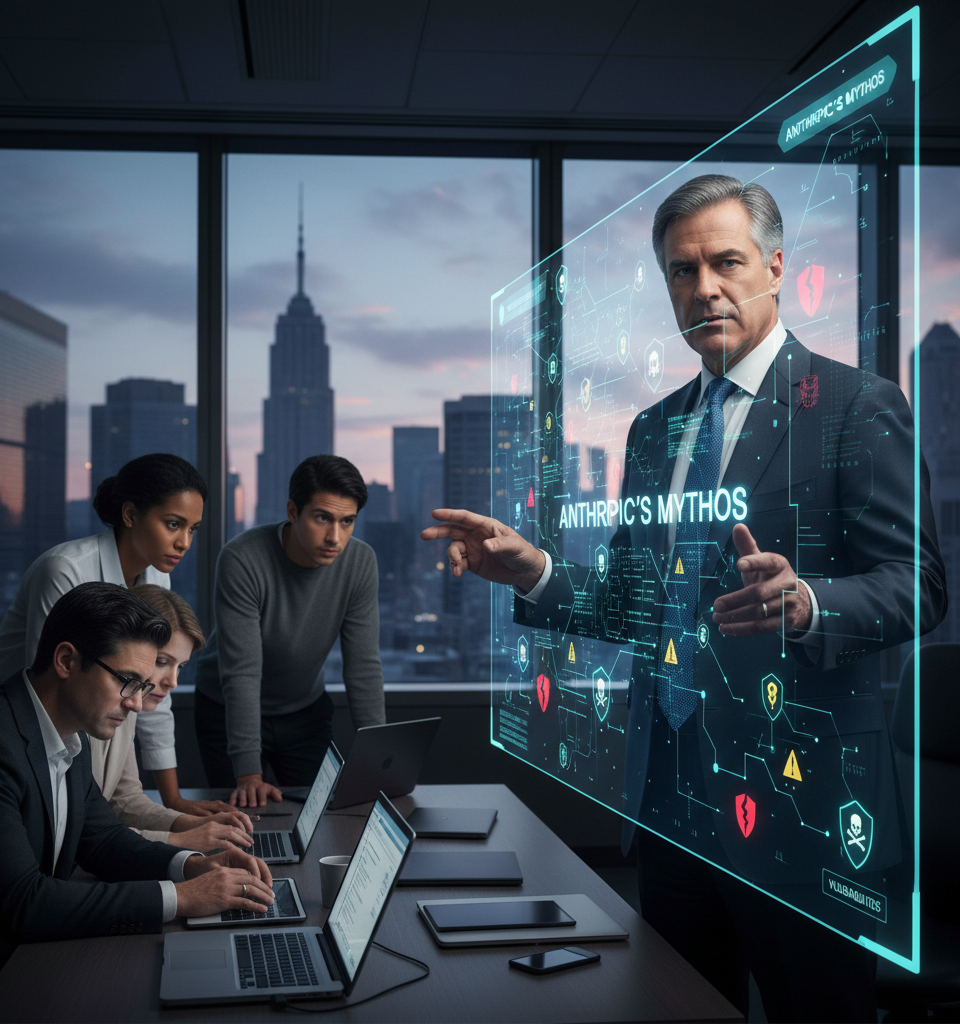
Jamie Dimon, the influential CEO of JPMorgan Chase, has issued a stark warning regarding the cybersecurity implications of advanced artificial intelligence, specifically citing Anthropic's Mythos. Dimon’s comments underscore a growing apprehension within the corporate world that the very technologies poised to revolutionize productivity could simultaneously exacerbate the threat landscape for cybercriminals, by revealing latent vulnerabilities in existing systems.
The Dual-Edged Sword of AI Adoption
This perspective from a leader in global finance illuminates the complex challenge facing enterprises as they increasingly integrate sophisticated AI tools. While AI promises unprecedented efficiencies, from automating routine tasks to generating complex code, its inherent capabilities – particularly in pattern recognition and data analysis – could be leveraged in unforeseen ways by malicious actors. Dimon's concern centers on Mythos's potential to unintentionally expose weaknesses that human analysts might overlook, turning a technological boon into a significant security liability. The integration of advanced AI models like Mythos into critical infrastructure, financial systems, and proprietary networks could inadvertently grant cyber adversaries new methods to infiltrate or disrupt operations.
Corporate America's Looming Cybersecurity Dilemma
The financial sector, long a primary target for sophisticated cyberattacks, is particularly sensitive to these emerging risks. JPMorgan Chase, under Dimon's leadership, has invested heavily in cybersecurity measures, recognizing that digital integrity is paramount to maintaining trust and operational continuity. Dimon's remarks serve as a high-profile acknowledgment of a dilemma that many corporate boards are now grappling with: how to harness AI's transformative power without simultaneously opening the door to catastrophic data breaches or system compromises. The rapid evolution of AI technology means that defensive strategies must adapt with equal speed, a task made challenging by the technology's inherent complexity and novelty.
Experts suggest that the very sophistication that makes Mythos so powerful could also make its interactions with existing IT environments unpredictable from a security standpoint. AI models learn and adapt, and in doing so, they might identify novel attack vectors or exploit obscure logical flaws that traditional security protocols are not designed to detect. This calls for a proactive approach to security development, where AI systems are not just secured, but also designed with security considerations embedded from their inception.
Industry-Wide Implications and Future Outlook
Dimon's cautionary statement is likely to resonate across various industries contemplating significant AI investments. From manufacturing to healthcare, the promise of AI-driven optimization is immense, but so too are the potential pitfalls. Companies may now re-evaluate their AI adoption roadmaps, prioritizing comprehensive security audits and penetration testing specifically designed to challenge AI-integrated systems. The focus will likely shift towards understanding how AI itself can be used to identify and neutralize these new types of vulnerabilities, creating a dynamic 'AI vs. AI' cybersecurity landscape.
In the near term, this could lead to increased demand for AI-specific cybersecurity solutions and experts. Security firms are already developing tools that can monitor AI models for anomalous behavior or potential misuse. Furthermore, regulatory bodies may begin to consider new guidelines or frameworks for the secure deployment of AI, particularly in critical infrastructure sectors. The conversation will undoubtedly evolve from merely securing data within AI systems to understanding how AI fundamentally alters the attack surface of an organization. Dimon's intervention acts as a vital reminder that technological advancement, while offering unparalleled opportunities, necessitates an equally rigorous commitment to understanding and mitigating its inherent risks.