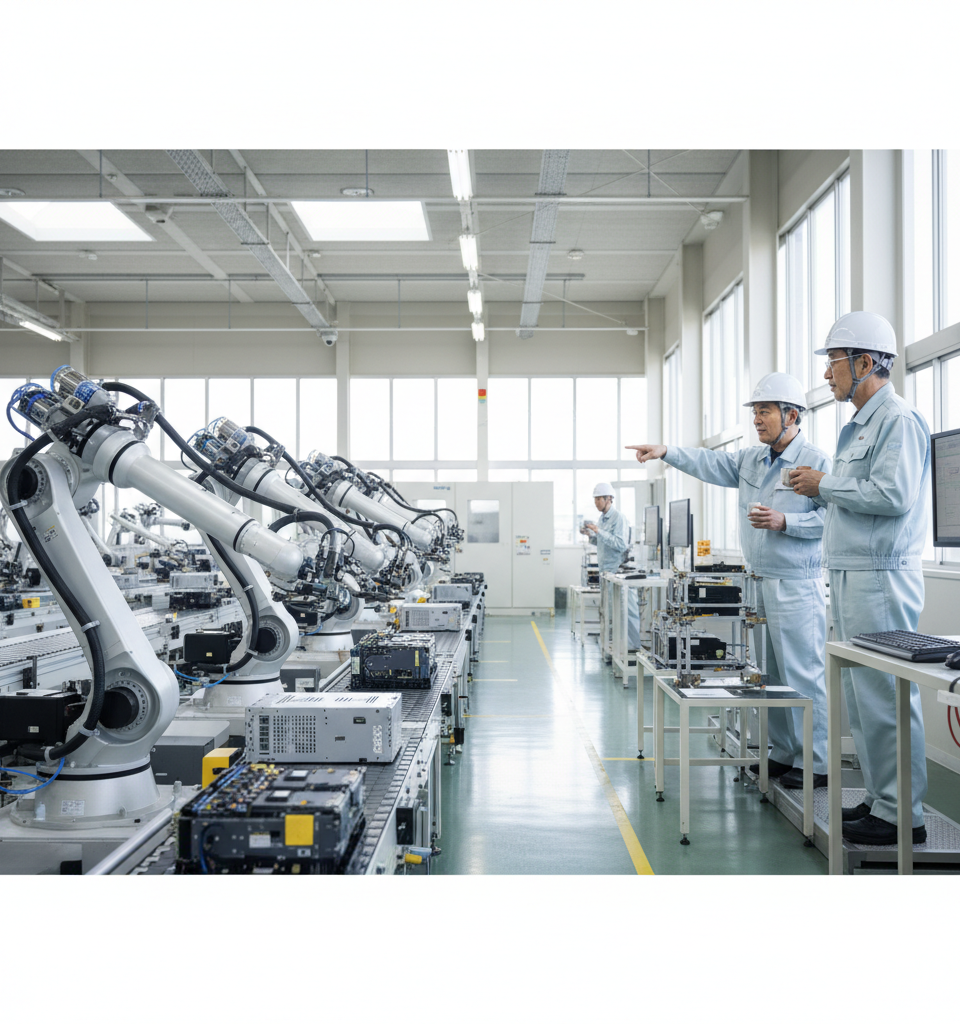
TOKYO, JAPAN — Faced with an escalating demographic crisis and a dwindling workforce, Japan is aggressively pursuing a national strategy to establish itself as the undisputed global leader in robotics by 2040. This bold initiative, highlighted by government and industry leaders, aims to integrate advanced robotic solutions into sectors struggling with severe labor shortages, particularly in roles often deemed undesirable by human workers. The urgency of this transition underscores a critical juncture for the world's third-largest economy, where an aging populace is dramatically reshaping industrial and social landscapes.
The Demographic Imperative: Why Japan Needs Robots Now More Than Ever
Japan’s demographic trajectory presents a stark reality: its population is not only shrinking but also aging at an unprecedented rate. According to the National Institute of Population and Social Security Research, nearly 30% of Japan's population is aged 65 or older, a proportion projected to rise significantly in the coming decades. This demographic shift has created a critical imbalance, leading to a severe scarcity of young, working-age individuals. Industries from manufacturing and logistics to healthcare and agriculture are experiencing acute labor shortfalls, prompting a national consensus that automation is not merely an option but a strategic imperative for economic survival and continued prosperity. The phrase, "No one's raising their hand," encapsulates the pervasive challenge facing employers across the archipelago.
Strategic Investments and Technological Advancements
To achieve its 2040 robotics dominance goal, the Japanese government, in close collaboration with leading corporations like Fanuc, Yaskawa Electric, and SoftBank Robotics, is channeling significant investments into research and development, as well as the deployment of autonomous systems. These efforts encompass a wide range of applications, from sophisticated industrial robots on factory floors to service robots assisting the elderly and autonomous vehicles for transportation. Specific government initiatives include substantial tax incentives for companies investing in automation, direct funding for robotics startups, and the establishment of dedicated innovation hubs. For instance, the Ministry of Economy, Trade and Industry (METI) has outlined a roadmap that aims to increase the market size of industrial robots in Japan by 25% by 2030, projecting a total domestic market value exceeding ¥10 trillion (approximately $65 billion USD).
Redefining Industry and Market Dynamics
The widespread adoption of robotics is poised to profoundly reshape Japan's industrial landscape. While concerns about job displacement are present, the primary focus remains on filling existing, critical gaps that human labor cannot or will not address. Industries such as construction, which faces a projected shortage of over 1 million workers by 2040, are actively deploying automated digging and assembly robots. Similarly, the logistics sector, grappling with a shortage of truck drivers and warehouse staff, is integrating autonomous delivery vehicles and robotic sorters. This seismic shift is also creating new markets for robotics component suppliers, software developers, and maintenance services, fostering an entirely new ecosystem of economic activity.
Expert Perspectives on Japan's Robot Revolution
"Japan's approach is not about replacing human workers for the sake of efficiency alone; it's about existential necessity," states Dr. Kenji Yoshida, a robotics ethicist and economist at Tokyo University. "The demographic crunch means these jobs would simply go undone otherwise. The success of this strategy hinges on careful policy that supports workers transitioning to supervisory or maintenance roles, rather than simply displacing them." Analysts at major consulting firms like McKinsey & Company project that while 7-10% of existing Japanese jobs could be automated by 2030, the creation of new roles in robotics development, integration, and oversight could largely offset these losses, provided adequate training programs are implemented.
Addressing Challenges: Ethical Considerations and Public Acceptance
Despite the clear economic rationale, the path to a robot-driven future is not without its challenges. Ethical considerations surrounding artificial intelligence, data privacy, and the long-term societal impact of widespread automation require careful navigation. Public acceptance is also crucial; while Japanese society tends to be more open to robotics than some Western nations, concerns about the quality of care provided by robots in elder care, for example, persist. The government and industry are investing in public awareness campaigns and user-friendly robot designs to foster greater trust and acceptance, aiming for a symbiotic relationship between humans and machines.
The Future of Work: A Global Model?
Looking ahead, Japan's bold embrace of robotics could serve as a critical case study for other industrialized nations facing similar demographic pressures, such as Germany, Italy, and even China. Future developments will likely include more sophisticated human-robot collaboration, advancements in AI-powered decision-making for autonomous systems, and the ubiquitous presence of robots in daily life, moving beyond industrial applications into homes and public spaces. The nation's ability to successfully navigate this transformation will not only secure its economic future but also define a new paradigm for how societies can leverage technology to overcome profound demographic shifts, potentially setting a global precedent for the future of work and population management. The year 2040 will not just mark a deadline, but a potential turning point in global industrial history.