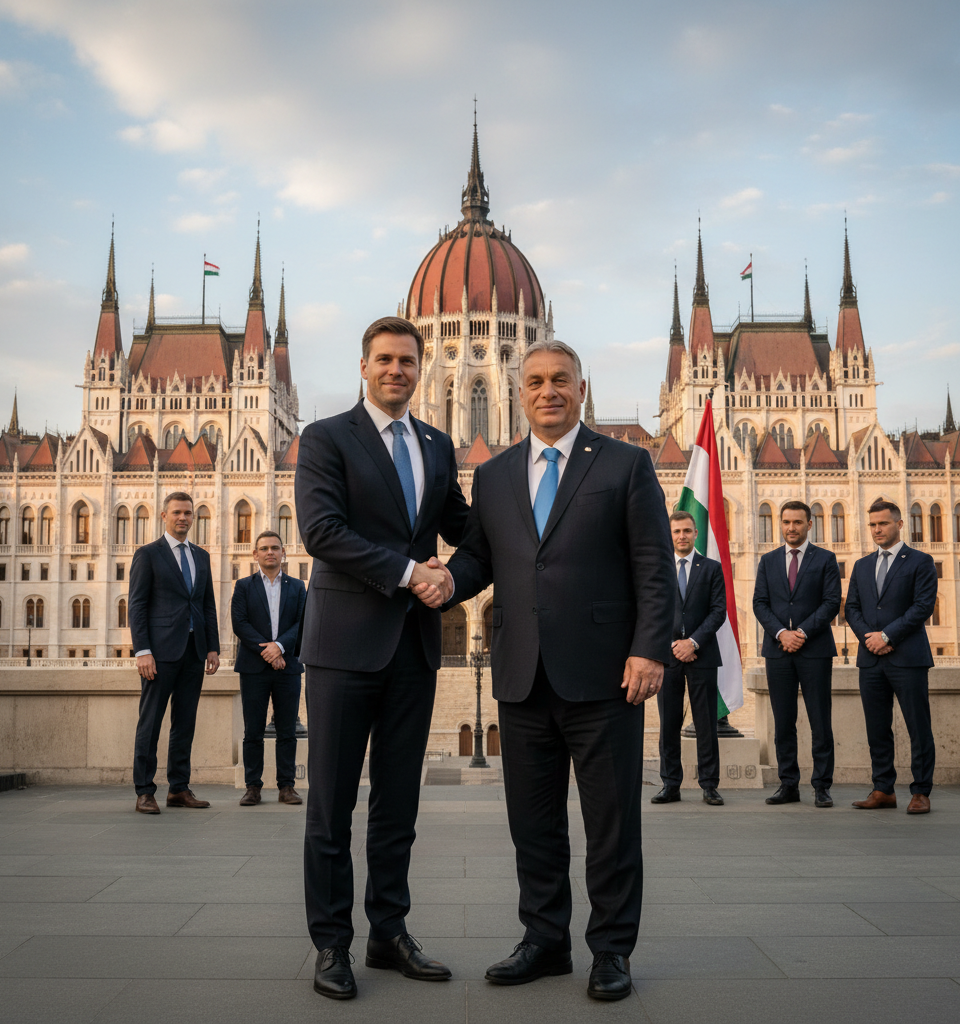
BUDAPEST, HUNGARY – U.S. Vice President JD Vance is slated to embark on a high-stakes visit to Hungary later this week, a diplomatic maneuver widely interpreted as a significant endorsement for Hungarian Prime Minister Viktor Orban ahead of a pivotal electoral contest. The trip, confirmed by sources within the U.S. State Department and Hungarian government, highlights a burgeoning, albeit controversial, relationship between elements of the American political establishment and Orban's often-criticized administration. This visit directly challenges the narrative that pressure on Orban solely emanates from Moscow, suggesting a more complex web of international support.
Geopolitical Realignments and Historical Context
This visit arrives at a critical juncture for both nations. For Hungary, it precedes a hotly contested election where Orban's Fidesz party faces a formidable opposition promising a realignment with liberal democratic principles. For the U.S., it signals a potential shift in foreign policy priorities, moving beyond traditional European allies to embrace leaders like Orban who advocate for national sovereignty and often express skepticism towards multilateral institutions. Historically, U.S.-Hungarian relations have been characterized by fluctuating degrees of cooperation and tension, particularly concerning democratic backsliding and human rights. Vance's visit marks a clear departure from previous administrations' more critical stances towards Orban's illiberal policies, suggesting a new focus on geopolitical advantage over ideological alignment.
Key Details and Statements
While the official agenda remains somewhat under wraps, discussions are expected to encompass economic cooperation, energy security, and regional stability, particularly in the context of the ongoing conflict in Ukraine. A senior U.S. official, speaking on background, stated, "This visit is about strengthening bilateral ties and discussing shared challenges, from economic growth to counteracting malign foreign influence." The visit's timing is critical, occurring just weeks before Hungary's election on. Prime Minister Orban, known for his 'illiberal democracy' rhetoric, has often been a contrarian voice within the European Union, fostering closer ties with nations like Russia and China. This American outreach could bolster his domestic standing and provide a counter-narrative to criticisms from Brussels and other Western capitals.
Regional and Market Impact
The implications of Vance's visit extend beyond bilateral relations, potentially reshaping the dynamics within Central and Eastern Europe. A stronger U.S.-Hungary alliance, implicitly or explicitly, could embolden other nationalist or populist leaders in the region, potentially leading to further fragmentation within the EU. Economically, closer ties could translate into increased American investment in Hungary, particularly in sectors like energy and technology, potentially valued at hundreds of millions of dollars. For instance, U.S. companies already contribute significantly to Hungary's GDP, with over $9 billion in direct foreign investment recorded in 2022. However, concerns remain among some European leaders about the long-term impact of supporting a government that has been criticized for undermining judicial independence and media freedom, potentially impacting EU funding disbursements, which in 2023 saw delays of approximately €22 billion due to rule-of-law concerns.
Expert Perspectives on the Strategic Calculus
Analysts are divided on the efficacy and wisdom of such an overt show of support. Dr. Evelyn Farkas, a former Deputy Assistant Secretary of Defense for Russia, Ukraine, and Eurasia, commented, "While strategic partnerships are crucial, aligning too closely with leaders accused of democratic erosion can undermine America's standing as a champion of democracy globally." Conversely, Dr. John Mearsheimer of the University of Chicago suggests that, "In an era of great power competition, calculated alliances, even with ideologically disparate partners, are essential for securing national interests." The prevailing view is that the primary motivation is geo-strategic, aiming to prevent deeper Hungarian alignment with adversaries and to secure a potentially sympathetic voice within the EU and NATO, especially concerning energy policy and defense spending, where Hungary has consistently met the NATO 2% GDP target for defense expenditures since 2021.
Future Implications and Upcoming Developments
The immediate aftermath of Vance's visit will be closely watched for any shifts in Hungarian election polling data and rhetoric from the Orban government. Should Orban secure another term, the relationship forged during this visit could solidify into a more enduring partnership, potentially influencing future U.S. foreign policy toward the broader Visegrád Group (V4). Beyond the election, the implications for transatlantic unity and the future direction of NATO will be paramount. Further high-level engagements are anticipated if the current political trajectory continues, potentially including increased military cooperation or joint economic initiatives, underscoring a new chapter in U.S.-Hungarian relations that prioritizes pragmatic alliances over traditional ideological conformity.