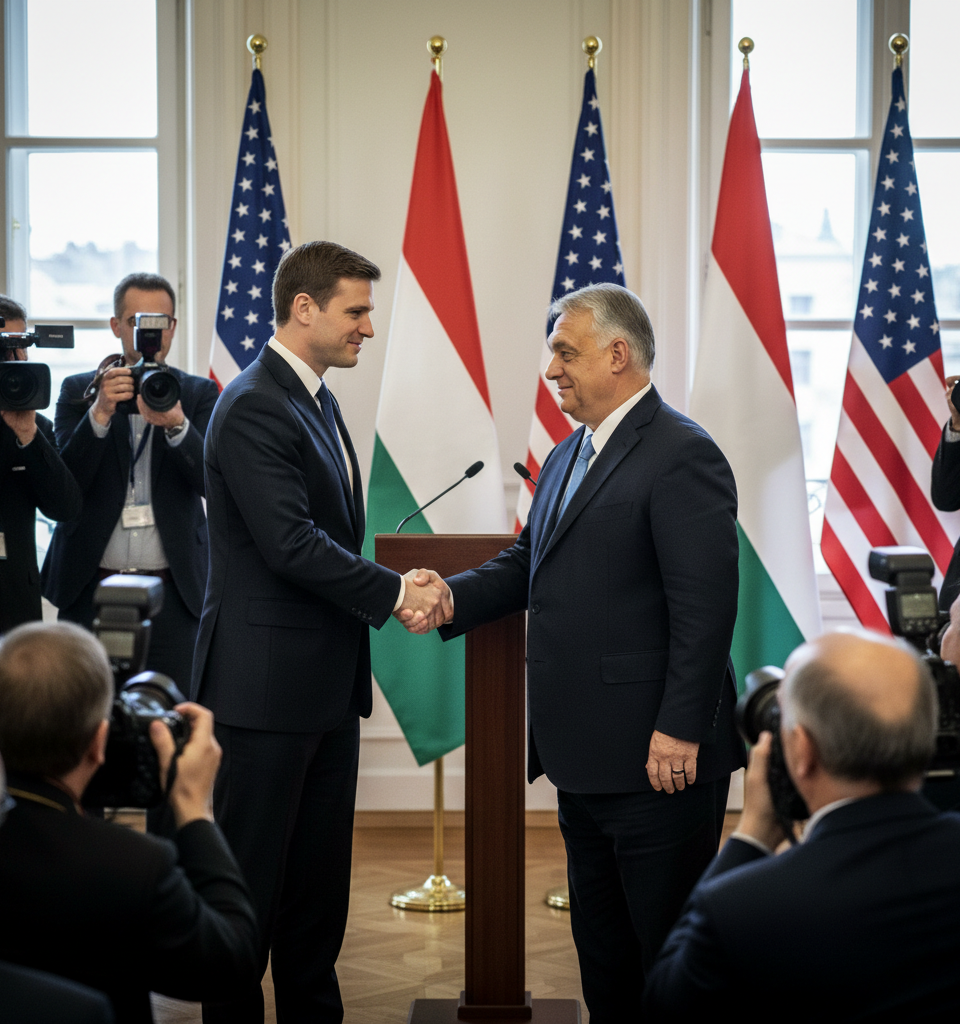
BUDAPEST, HUNGARY – In a move sending ripples across transatlantic alliances, U.S. Vice President JD Vance arrived in Budapest this week, offering a highly visible show of support for Hungarian Prime Minister Viktor Orbán. The visit comes at a particularly fraught moment, with Orbán facing a challenging electoral landscape and having recently intensified his rhetoric against the European Union, famously stating that the bloc poses a greater threat to Hungary's sovereignty than Russia. Vance's presence is widely interpreted as a direct endorsement of Orbán’s increasingly nationalist and illiberal policies, signaling a growing alignment between conservative factions in the U.S. and Central Europe.
The Geopolitical Chessboard: Hungary's Pivot and Western Concern
Orbán's administration has long been a contrarian voice within the EU, often clashing with Brussels over rule of law, migration, and democratic norms. His recent remarks, however, mark a significant escalation, positioning Hungary as a potential wedge within a united Europe, particularly concerning the ongoing conflict in Ukraine. This strategic pivot has drawn sharp criticism from Western capitals, who view Orbán's stance as undermining collective security and democratic principles. Vance's visit, therefore, takes on a broader geopolitical significance, suggesting a potential future U.S. foreign policy direction that could challenge established European alliances.
Key Players and Contentious Policies
The upcoming Hungarian election, anticipated to be held within the next 12 months, is shaping up to be a pivotal contest for Orbán's Fidesz party, which has dominated Hungarian politics for over a decade. Recent polling data indicates a tightening race, with the opposition – a coalition of diverse parties – gaining momentum. Orbán's campaign has heavily focused on national sovereignty, anti-immigration rhetoric, and a challenging narrative against EU sanctions on Russia. Vance’s vocal support, echoing sentiments of national identity and skepticism towards multilateral institutions, provides Orbán with a powerful external validation, potentially galvanizing his conservative base.
Impact on Transatlantic Relations and EU Cohesion
This high-profile endorsement by a sitting U.S. Vice President is expected to further strain relations between Washington and parts of the EU. European officials, already wary of Hungary's increasingly closer ties with Russia and China, are observing Vance's visit with concern. Analysts suggest it could embolden other illiberal leaders within the bloc and complicate efforts to present a united front on critical international issues, including support for Ukraine and adherence to democratic values. The visit also highlights a fissure within the broader conservative movement, with some factions prioritizing nationalist interests over traditional Western alliances.
Expert Perspectives: A Shift in Diplomatic Priorities?
Dr. Anja Schmidt, a senior research fellow at the European Council on Foreign Relations, notes, "Vance's visit is less about traditional diplomacy and more about ideological camaraderie. It signals a potential shift in U.S. foreign policy under a future Republican administration, prioritizing alliances with like-minded nationalist leaders over established liberal-democratic partnerships. This could have profound implications for NATO and the future of EU integration." Meanwhile, Dr. István Kovács, a political analyst based in Budapest, suggests, "For Orbán, Vance's visit is a propaganda coup. It legitimizes his anti-EU stance on the international stage and sends a clear message to Hungarian voters that he has powerful allies abroad, despite criticisms from Brussels."
The Road Ahead: Elections, Alliances, and Ideological Battlegrounds
The immediate future will see intensified political campaigning in Hungary, with both the ruling Fidesz party and the opposition coalition vying for public support. Globally, observers will be closely watching the ripple effects of Vance's visit on transatlantic relations, particularly as the U.S. prepares for its own presidential election cycle. The Budapest encounter underscores a growing ideological battleground within Western democracies, where notions of sovereignty, international cooperation, and democratic governance are being redefined. The outcome of the Hungarian election, influenced in part by such high-level international endorsements, could set a precedent for similar political alignments across Europe and potentially reshape the contours of global alliances for years to come.
Economic Implications of Divergent Paths
Hungary's increasingly independent foreign policy and its clashes with the EU have not been without economic consequences. While some pro-government economists cite improved trade relations with specific non-EU partners, the country has also faced scrutiny over its use of EU structural funds, with billions of euros withheld or frozen due to rule of law concerns. For instance, in December 2022, the European Commission froze access to approximately 22 billion euros in cohesion funds for Hungary. Vance’s support, while politically impactful, does not directly address these financial pressures, and Orbán's continued divergence from EU norms could further complicate Budapest's access to crucial European funds and investment.