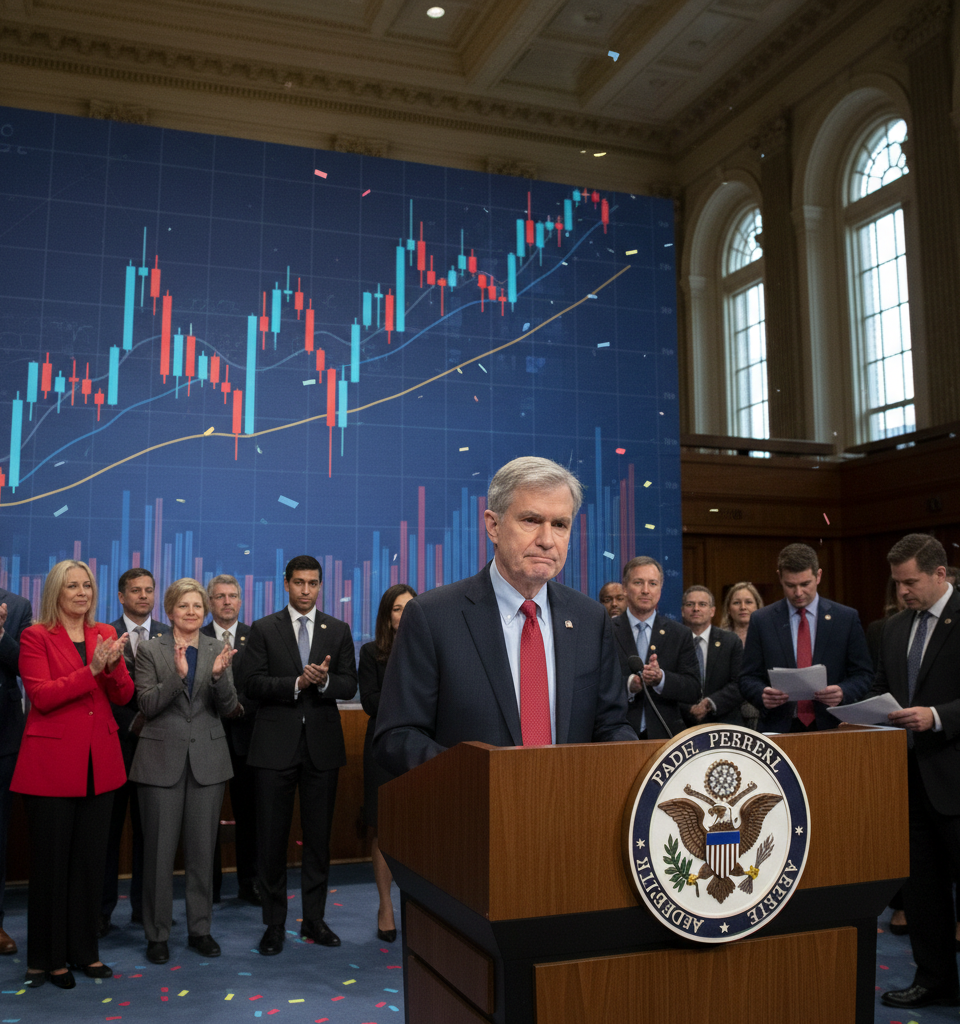
Federal Reserve Chair Jerome Powell is preparing to step down from his position this week, concluding a tenure that has been among the most tumultuous and consequential in the institution's history. Appointed in 2018, Powell navigated the central bank through a period characterized by a robust pre-pandemic economy, an abrupt and severe COVID-19 recession, and a subsequent recovery fraught with persistent inflation. His departure marks the end of an era defined by extraordinary monetary policy measures and a significant recalibration of the Fed's approach to its dual mandate of maximum employment and price stability.
His time at the helm of the world's most powerful central bank will be scrutinized by economists and historians for decades. Powell inherited an economy experiencing steady growth and low unemployment, but the calm was shattered by the onset of the COVID-19 pandemic in early 2020. This abrupt shock necessitated an immediate and aggressive response, pushing the Fed into uncharted territory. The decisions made under his leadership, particularly the rapid deployment of emergency lending facilities and the drastic cut to interest rates, stabilized financial markets and prevented a deeper economic catastrophe, yet also laid the groundwork for future inflationary pressures.
Key details of Powell's tenure include the dramatic reduction of the federal funds rate to near-zero percent in March 2020, where it remained for an extended period. The Fed also embarked on an enormous program of quantitative easing, expanding its balance sheet by trillions of dollars to support market functioning and stimulate economic activity. By its peak, the Fed's balance sheet surpassed $9 trillion.
A significant shift in the Fed's policy framework occurred in August 2020, with the adoption of an average inflation targeting approach, signalling a greater tolerance for periods of above-target inflation to ensure a robust labor market. 1%** in June, 2022, prompted a rapid series of rate hikes starting in March 2022, raising the federal funds rate from essentially zero to over 5% within 16 months.
The broader financial markets and American households felt the profound impact of Powell's policies. Businesses initially benefited from ample liquidity and low borrowing costs, which facilitated a swift economic rebound from the pandemic lows. However, the subsequent tightening cycle, a direct response to persistent inflation, led to increased borrowing costs for consumers and businesses, contributing to slowing economic growth and volatility in equity and bond markets. The housing market, for instance, saw mortgage rates climb rapidly, cooling a previously red-hot sector. Globally, the Fed's aggressive monetary tightening rippled through international markets, strengthening the U.S. dollar and placing pressure on emerging economies.
Expert Perspectives on Powell's Legacy
Economists and market analysts offer varied perspectives on Powell's legacy. Many acknowledge the initial success in averting an economic collapse during the pandemic, crediting his decisive actions and calm demeanor. However, some critics argue that the Fed was too slow to recognize and respond to the rising inflation, allowing it to become deeply entrenched. For example, prominent economists like Larry Summers frequently criticized the Fed's initial “transitory” inflation narrative. Others, however, defend the gradual approach, pointing to job market resilience and the complexity of distinguishing between temporary supply-side shocks and demand-driven inflation. The consensus largely recognizes the immense pressure under which Powell operated and the difficult trade-offs inherent in central banking.
What Lies Ahead for the Federal Reserve
Looking ahead, the Federal Reserve faces significant challenges, regardless of who occupies the chair. The battle against inflation is ongoing, with the Fed committed to bringing it back down to its 2% target. The balance sheet reduction, known as quantitative tightening, is continuing, aiming to unwind some of the extraordinary measures taken during the pandemic. Future policy decisions will heavily rely on incoming economic data, particularly regarding inflation, employment, and wage growth. The next Fed chair will inherit an economy still navigating the complexities of post-pandemic recovery and the delicate task of achieving a soft landing, where inflation is curbed without triggering a severe recession. The institution's credibility and its independent stature will remain crucial as it confronts future economic uncertainties.
Challenges and Achievements Under Powell
Throughout his tenure, Powell faced a series of multifaceted challenges. Beyond the economic crises, he skillfully navigated political pressures from multiple administrations and maintained the Fed's independence in a charged political climate. His commitment to clear communication and transparency was a hallmark of his leadership, often engaging in regular press conferences and congressional testimonies to explain the Fed's policy rationale. While the ultimate judgment on his full legacy will unfold over time, his leadership during arguably one of the most turbulent periods in modern economic history has undoubtedly left an indelible mark on the Federal Reserve and the global economy. His efforts to address systemic risks and promote financial stability were also significant, although often overshadowed by the more immediate crises.