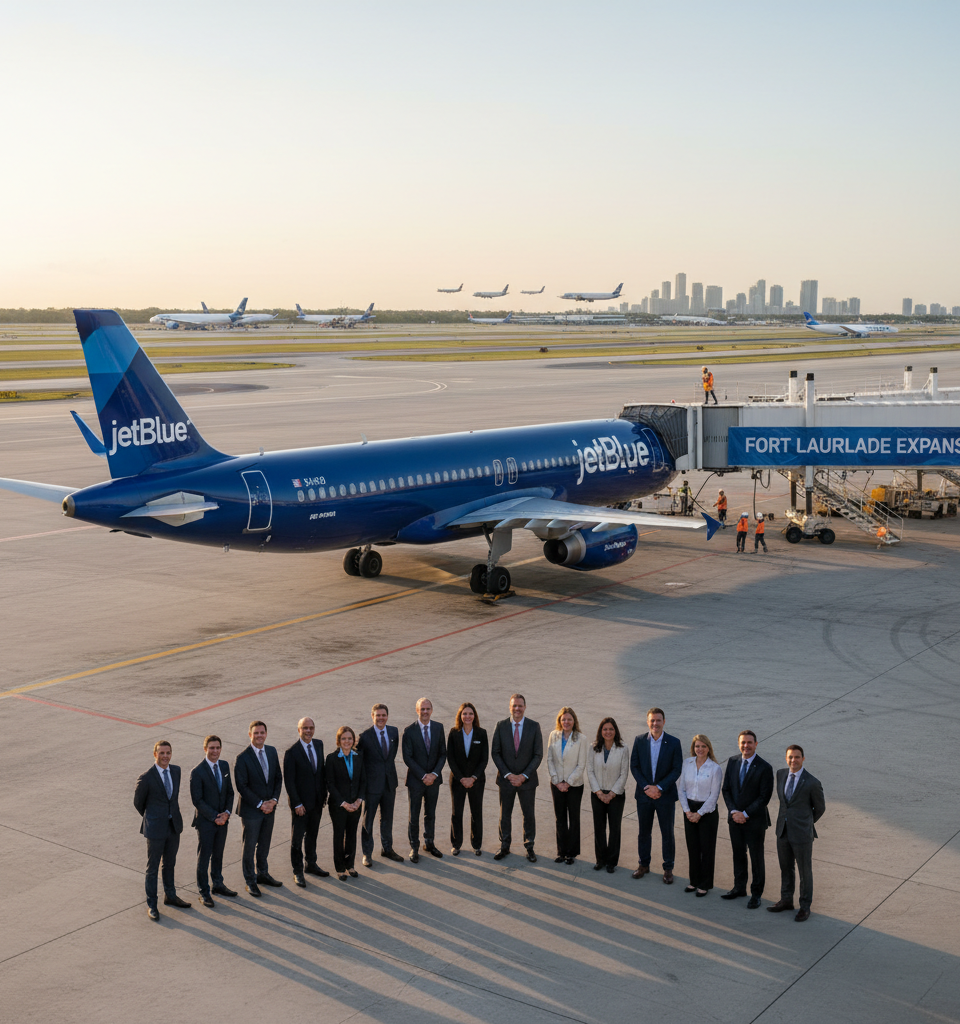
JetBlue is poised to substantially increase its operational footprint at Fort Lauderdale-Hollywood International Airport (FLL), with plans encompassing the introduction of a new airport lounge and the strategic development of FLL into a key international hub. This marked escalation in investment and service offerings signals a clear intent to elevate Fort Lauderdale's status within JetBlue’s network, creating a robust alternative to traditionally dominant regional aviation centers.
Contextualizing the Expansion
The airline's move comes amidst a highly competitive South Florida aviation market, where Miami International Airport (MIA) has long served as a stronghold for American Airlines. JetBlue’s decision to commit significant resources to FLL reflects a calculated effort to carve out a larger share of both the lucrative leisure and growing international travel segments in the region. This strategy aims to leverage Fort Lauderdale’s appeal to passengers seeking potentially lower-cost options and a less congested experience compared to its larger Miami counterpart.
Key Strategic Initiatives
At the forefront of this expansion is the establishment of a state-of-the-art airport lounge at FLL, a critical amenity designed to enhance the passenger experience and attract premium travelers. While specific details regarding the lounge's capacity and features remain forthcoming, its inclusion underscores JetBlue's commitment to offering a more comprehensive and competitive service package. Furthermore, the airline is strategically positioning FLL to become a more prominent international gateway. This involves the potential launch of new international routes and increased frequencies on existing ones, aimed at diversifying revenue streams and expanding its global reach from South Florida. The focus on international expansion at FLL is a direct challenge to the traditional dominance of MIA in the international travel market for the region.
Industry and Market Impact
This aggressive push by JetBlue is expected to intensify competition across the South Florida aviation landscape. For travelers, this could translate into more diverse flight options, potentially more competitive fares, and an improved airport experience at FLL. For American Airlines, the enhanced JetBlue presence at Fort Lauderdale may necessitate a re-evaluation of its own strategies in the region, particularly concerning pricing and route offerings out of MIA. The increased capacity and international connectivity from FLL could shift passenger flows and market shares, impacting economic activity and tourism patterns throughout South Florida.
The Competitive Landscape
JetBlue’s choice of Fort Lauderdale as a focal point for expansion is not without its challenges. Miami International Airport, with its extensive network and established position as a global hub, represents a formidable competitor. American Airlines has cultivated a deep-rooted presence and customer loyalty at MIA over many years, making it a difficult incumbent to dislodge. JetBlue's success will hinge on its ability to differentiate its offerings, attract new business, and effectively manage the operational complexities associated with rapid expansion in a high-demand market. The new lounge and international gateway status are crucial elements in this differentiation strategy, aiming to provide a compelling value proposition to travelers.
Outlook and Future Implications
The coming months will be critical for JetBlue as it rolls out these new initiatives at Fort Lauderdale. The success of the airport lounge and the performance of new international routes will be closely watched indicators of the strategy’s effectiveness. Should JetBlue successfully establish FLL as a viable and vibrant international gateway, it would not only solidify its standing in South Florida but also potentially inspire other airlines to reconsider their strategic allocation of resources in highly competitive regions. This sustained investment could redefine the competitive dynamics of air travel in one of the United States' most active aviation markets, offering passengers more choices and potentially forcing competitors to innovate their own services.