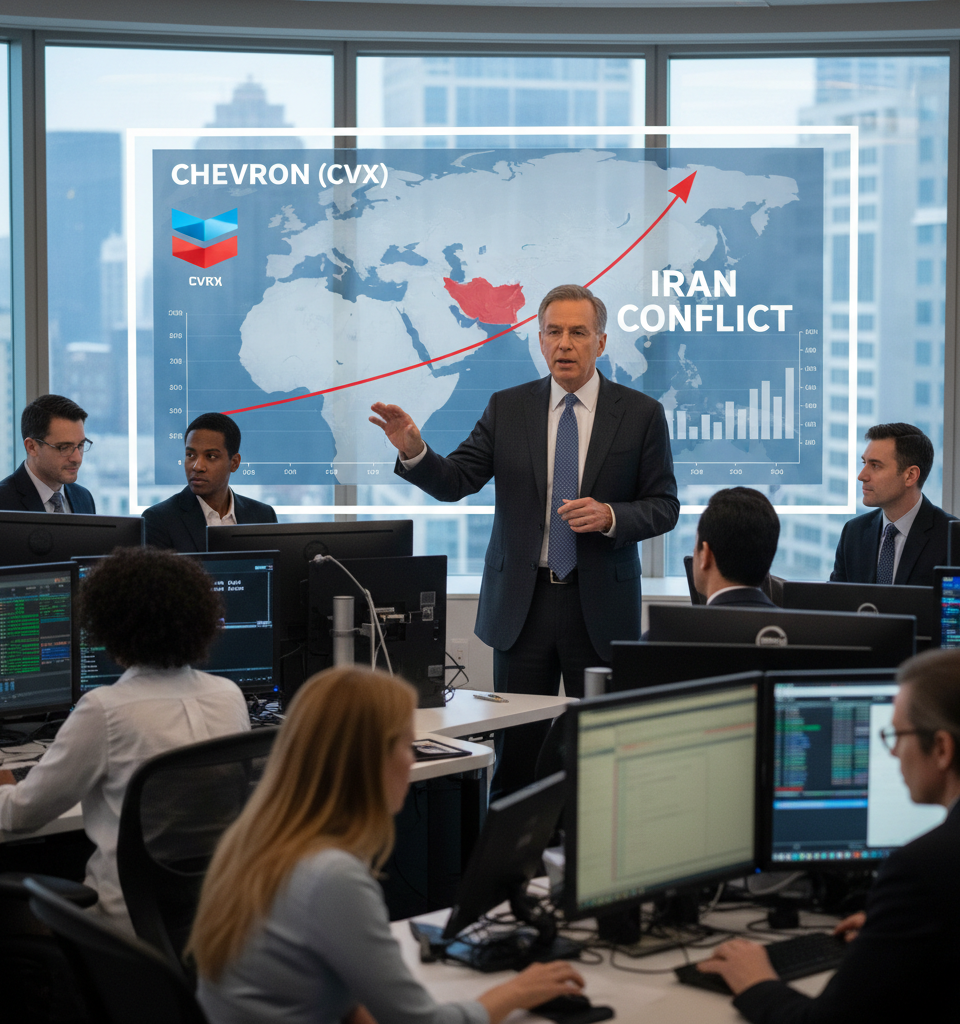
Financial analyst and host of CNBC's "Mad Money," Jim Cramer, has once again publicly connected the trajectory of Chevron Corporation (CVX) stock to the persistent geopolitical backdrop of the Iran conflict. This recurring linkage by Cramer highlights the continuous perception within certain financial circles that Middle Eastern instability remains a primary driver for the valuations of major oil supermajors like Chevron.
Cramer's consistent emphasis on this nexus underscores a broader market sentiment where the pricing of crude oil, and consequently the profitability and stock performance of integrated energy companies, is deeply intertwined with geopolitical events. The Strait of Hormuz, a critical chokepoint for global oil shipments, is routinely cited as a flashpoint, making any escalation in the region a significant concern for energy investors and analysts alike. This perspective suggests that while fundamental company performance is vital, external, unpredictable geopolitical factors can exert substantial, even overriding, influence on stock movements in the energy sector.
Geopolitical Undercurrents and Energy Markets
The ongoing geopolitical landscape in the Middle East, particularly involving Iran, has historically been a significant determinant of global oil prices. Threats to shipping lanes, potential disruptions to oil production, or sanctions impacting the flow of crude can send ripples through the market, often leading to price spikes. Chevron, as one of the world's largest publicly traded energy companies with vast global operations, is inherently exposed to these geopolitical risks. Its revenues and profits are directly tied to the price of oil and gas, making the stability of supply lines and production regions paramount to its financial health.
Cramer's repeated highlighting of this connection serves as a reminder to investors that while they may focus on quarterly earnings and production figures, the broader geopolitical climate is an equally, if not more, critical factor for energy sector investments. This is particularly true for companies with significant upstream operations and exposure to international markets. The perceived risk premium embedded in oil prices due to regional tensions directly impacts Chevron's bottom line and, by extension, its stock valuation.
Investor Sentiment and Market Volatility
The commentary from influential figures like Jim Cramer often sways investor sentiment, particularly among retail investors. His consistent linking of CVX to the Iran conflict can amplify market sensitivity to news emerging from the region. Any perceived escalation or de-escalation of tensions could trigger swift reactions in Chevron's stock price, independent of the company's operational performance. This phenomenon underscores the psychological aspect of market dynamics, where expert opinions can serve as a catalyst for volatility.
For investors holding or considering Chevron stock, Cramer's analysis suggests a need to monitor geopolitical developments involving Iran as closely as they would corporate financial reports. The implicit message is that the stock's performance may not solely reflect Chevron's operational efficiency or strategic initiatives but will also act as a barometer for Middle Eastern political stability. This adds an external layer of complexity to investment decisions concerning major oil and gas players.
Broader Industry Implications
Cramer's repeated assertions are not just specific to Chevron but speak to a broader truth about the entire energy sector. Other major players like ExxonMobil, Shell, and BP also face similar exposures to geopolitical risks in oil-producing regions. The collective performance of these companies often moves in tandem with global oil prices, which are themselves highly susceptible to geopolitical events. Thus, the Iran conflict serves as a proxy for the kind of macroeconomic and geopolitical factors that can dictate the fortunes of the global energy industry.
Looking ahead, the ongoing emphasis on the Iran conflict suggests that unless a significant de-escalation or resolution occurs, this geopolitical factor will likely remain a dominant narrative influencing energy stock valuations. Investors will continue to weigh the potential for supply disruptions against the backdrop of global energy demand and the broader economic outlook. The intertwining of energy security with international relations ensures that companies like Chevron will always be at the forefront of such analyses, with their stock prices reflecting the intricate dance between global politics and commodity markets.