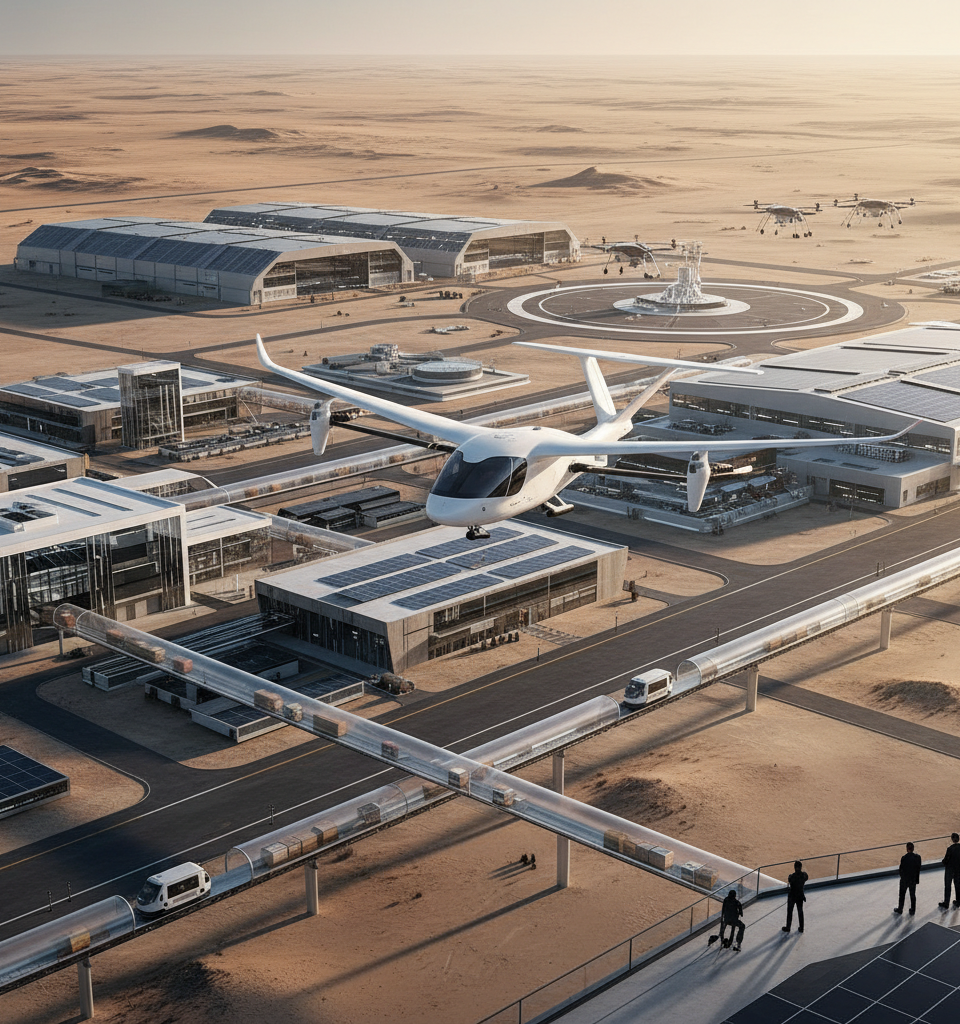
The successful 3,100-mile autonomous flight by Joby Aviation's aircraft carries direct implications for global supply chain automation, potentially reducing operational costs and accelerating cross-border cargo movement. This development could reshape logistics for businesses reliant on rapid, long-distance transport.
Joby Aviation has advanced its position in the autonomous aviation sector with a remarkable achievement: an aircraft fitted with its proprietary autonomy technology successfully traversed the United States. The 3,100-mile journey was completed without a human pilot ever taking control, marking a pivotal moment for the company and the broader industry as of its completion.
Context & Background
This autonomous flight represents a significant expansion of Joby Aviation's strategic focus. While widely known for its development of electric vertical takeoff and landing (eVTOL) aircraft intended for urban air mobility (UAM) – commonly referred to as air taxis – this long-range, unpiloted flight suggests a much broader ambition. The aerospace industry has been investing heavily in automation, seeking to enhance safety, reduce operational costs, and open new applications for aviation. Joby's demonstration positions it as a key player not just in passenger transport but also in potential cargo or specialized mission roles requiring extended range and minimal human intervention.
Key Details of the Autonomous Journey
The aircraft, equipped with Joby's advanced autonomy stack, covered a substantial 3,100 miles across the continental United States. The critical detail is that no human pilot was involved in controlling the aircraft at any point during this extensive journey. This highlights the maturity and robustness of Joby's autonomous systems, demonstrating their capability for complex, long-duration flight operations. The specific type of aircraft used for this particular autonomous flight leveraged the company's core aviation technology, adapted for the long-distance, uncrewed mission.
Industry and Market Impact
This milestone is expected to resonate across several sectors. For the aviation industry, it validates the accelerating progress in autonomous flight systems, potentially paving the way for regulatory advancements and wider adoption. Beyond air taxis, the successful demonstration opens possibilities for autonomous cargo transport, inspection services, and other applications that benefit from long-range, pilotless operations. For logistics and e-commerce, automated long-haul air transport could offer faster delivery times and potentially lower costs compared to traditional methods, especially for urgent or high-value goods. The reduction in reliance on human pilots could also address future labor shortages in the aviation sector.
What's Next: Future Implications
Looking ahead, this successful autonomous flight is likely to spur further development and testing in Joby Aviation's autonomy division. The company's immediate focus remains on bringing its eVTOL air taxi service to market, with certification processes underway. However, this autonomous long-range flight clearly signals Joby's intent to explore and capitalize on the broader capabilities of its technology. Future applications could include autonomous regional cargo services, military applications, or even eventually long-distance passenger travel as the technology matures further and regulatory frameworks adapt to autonomous operations. The data gathered from this 3,100-mile flight will be crucial for refining the autonomy software and hardware, pushing the boundaries of what unpiloted aircraft can achieve.