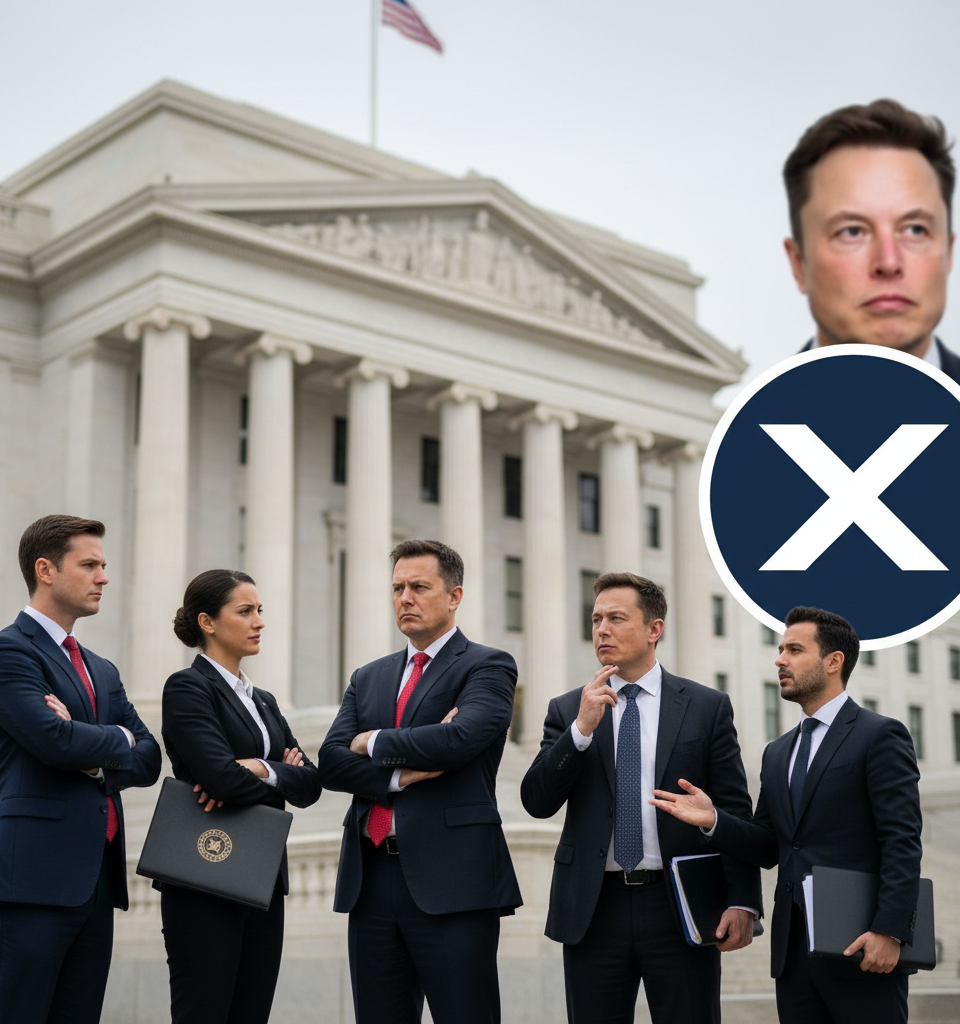
The United States Department of Justice (DOJ) has formally informed French judicial authorities that it will not facilitate their investigation into Elon Musk's social media platform, X (formerly Twitter), nor assist in compelling an interview with Musk. This refusal comes in the wake of a raid conducted by French police on X's Paris offices earlier this year as part of a broader inquiry into content moderation and regulatory compliance. The DOJ's stance highlights potential jurisdictional complexities and diplomatic friction, underscoring the challenges of cross-border enforcement against global tech giants.
International Scrutiny and Digital Sovereignty
This development is set against a backdrop of increasing international pressure on major social media platforms regarding content moderation, data privacy, and the spread of misinformation. France, like many European Union member states, has been particularly assertive in holding tech companies accountable under new digital services regulations. The French investigation into X stemmed from concerns over the platform's handling of specific content and its adherence to local laws, which often diverge from U.S. legal frameworks. The DOJ's decision effectively limits the reach of French legal proceedings and raises questions about the extent of international cooperation in regulating digital ecosystems.
Specific details surrounding the French investigation, while not fully disclosed, are understood to involve alleged breaches of national laws pertaining to online content, hate speech, and potentially the dissemination of illegal material. French law enforcement had reportedly sought assistance from the DOJ via Mutual Legal Assistance Treaties (MLATs), standard protocols for international judicial cooperation. However, the DOJ’s refusal suggests either a lack of legal grounds under U.S. law, a perceived overreach by French authorities, or a policy decision to protect U.S. entities from foreign judicial actions that may conflict with American legal principles. Sources close to the matter, who spoke on condition of anonymity, indicated that the DOJ's response emphasized that U.S. law does not obligate individuals or companies to comply with foreign investigative requests that do not align with domestic legal protections or if insufficient grounds are presented for such assistance.
Broader Implications for Tech Regulation
The implications of the DOJ's decision resonate widely across the technology sector. It could embolden other U.S.-based tech companies facing similar foreign investigations, potentially creating a precedent where the U.S. government acts as a shield against overseas regulatory actions. Conversely, it could frustrate European regulators, who are increasingly keen to assert digital sovereignty and enforce their laws on global platforms operating within their borders. This situation underscores a growing transatlantic divide on technology governance, with Europe advocating for stricter controls and the U.S. often prioritizing free speech and market-driven solutions. The outcome could influence the enforceability of the EU's Digital Services Act (DSA) and Digital Markets Act (DMA) on U.S. tech firms, potentially leading to more direct regulatory clashes rather than cooperative enforcement.
Industry analysts and legal experts have offered varied perspectives. "The DOJ's move signals a robust defense of U.S. corporate interests and legal principles, potentially setting a higher bar for international legal assistance requests," commented Dr. Eleanor Vance, a professor of international law at Georgetown University. "It also highlights the inherent tension between national sovereignty and the global, borderless nature of the internet." Others point out that this refusal could be seen as an implicit endorsement of the current operational methods at X, or at least a reluctance to intervene in what might be viewed as politically charged foreign investigations. The decision complicates the already challenging task of ensuring accountability for powerful online platforms.
What Lies Ahead
Looking ahead, French authorities will likely need to reassess their strategy for investigating X. They may pursue alternative legal avenues within France, potentially imposing fines, restricting services, or seeking direct injunctions if they can demonstrate sufficient legal grounds under French and EU law. The refusal by the DOJ does not necessarily halt the French investigation but significantly impedes its ability to gather evidence or compel testimony from U.S.-based individuals or entities related to X's operations. This could lead to a protracted legal battle, with X potentially facing more direct action solely under French jurisdiction.
Further, this incident could prompt a re-evaluation of international legal assistance frameworks, particularly concerning digital platforms. It may also spur European nations to develop more robust, independent mechanisms for enforcing their digital regulations, reducing their reliance on cooperation from non-EU countries. The episode reinforces the notion that regulating global tech companies is not simply a matter of national law but a complex geopolitical and legal challenge demanding coordinated, yet often clashing, international efforts. The spotlight remains firmly on X as it navigates both regulatory pressures and fluctuating user sentiment globally.