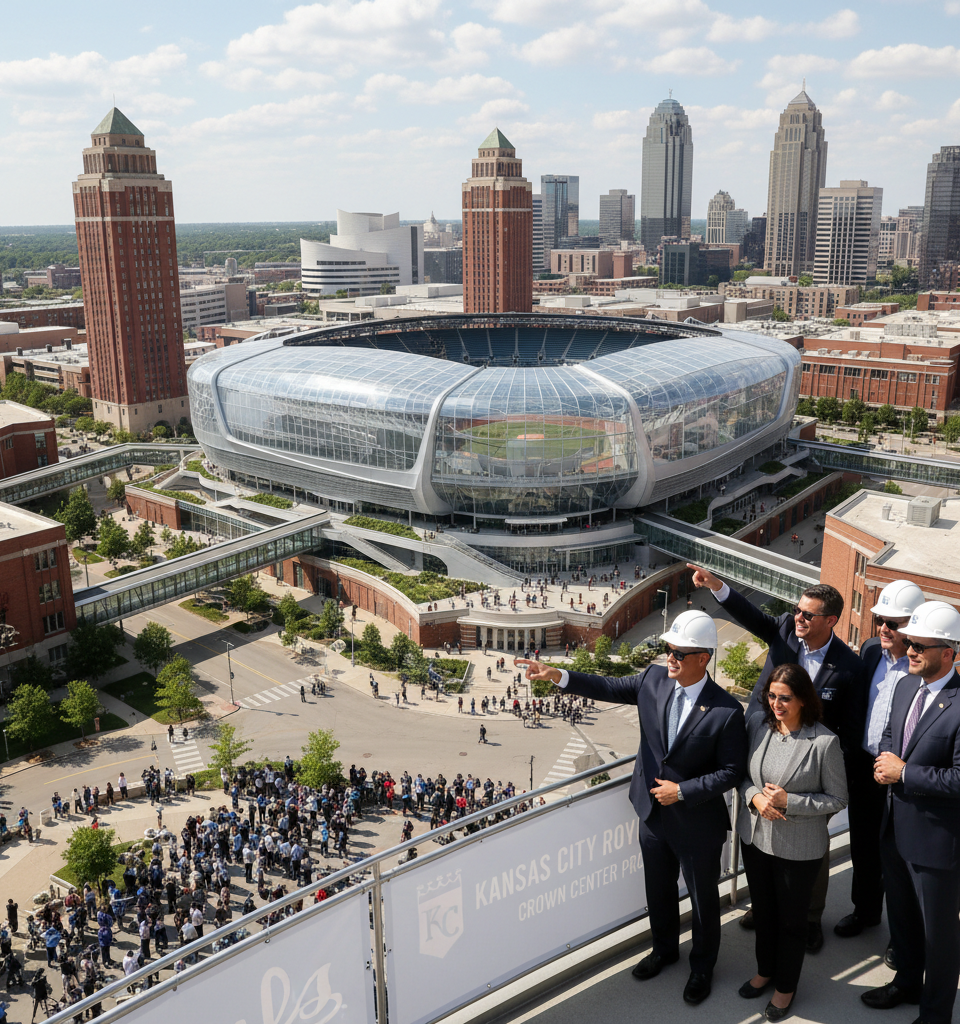
The Kansas City Royals, a Major League Baseball franchise, announced on Wednesday their definitive plan to construct a new $2 billion stadium complex on the Crown Center campus in downtown Kansas City, Missouri. This landmark decision culminates months of speculation and negotiations, solidifying the team's long-term commitment to the city while ushering in a significant urban development project., the proprietor of Crown Center.
This agreement carries profound weight for Kansas City, addressing the critical question of the Royals' future location. For decades, the team has played at Kauffman Stadium, a beloved but aging facility located outside the city center. The move to Crown Center signifies a strategic shift towards downtown revitalization, aiming to create a vibrant, year-round entertainment district that extends beyond game days.
This aligns with a broader national trend of professional sports teams relocating to urban cores to foster economic growth and enhance fan engagement, moving away from suburban stadion-only experiences. 9 billion**, a figure that reflects modern stadium amenities, advanced technology, and high-quality construction. The total investment, encompassing ancillary developments like retail, residential units, and public spaces, is projected to reach approximately $2 billion.
Hallmark Cards Inc. played a crucial role in facilitating this agreement, offering the land within its iconic Crown Center development. While specific designs are still in preliminary stages, the emphasis is on creating a walkable, integrated district. The team and its partners anticipate securing the necessary public funding contributions for infrastructure and public amenities, which are traditionally part of such large-scale developments.
Industry and Market Impact
The move is expected to generate a substantial economic impact for Kansas City. Beyond direct construction jobs and ongoing operational employment, the development aims to attract new businesses, increase tourism, and bolster property values in the surrounding areas. The integration of a major sports venue into a mixed-use urban environment is a proven model for sustained economic growth, drawing visitors beyond the typical baseball season. For the MLB, this represents another instance of a franchise committing to a downtown location, reinforcing the league's push for more urban, accessible ballparks that cater to a broader demographic and offer diverse entertainment options.
Expert Perspectives Urban planning experts and economic development analysts largely view this move as a positive development for Kansas City. Dr. Sarah Jenkins, an urban economist at the University of Missouri-Kansas
City, commented, "The Crown Center location offers an unparalleled opportunity to leverage game-day activity into a more consistent stream of economic vitality. The key will be the quality of the surrounding mixed-use development – ensuring it's not just a stadium but a true destination." Others emphasize the importance of public-private partnerships in making such ambitious projects viable, noting the significant private investment from the Royals and Hallmark as a strong indicator of commitment. However, some analysts caution that the success hinges on meticulous planning to address potential traffic congestion and ensure equitable community benefits.
What's Next The immediate next steps involve extensive community engagement and the crucial process of securing public funding. The
Royals will present their funding plan to local governmental bodies, likely seeking commitments for infrastructure improvements and potentially a portion of the stadium costs through mechanisms such as sales tax revenues or special taxing districts. Design and environmental impact assessments will also commence. The team aims to break ground within the next few years, with a potential opening targeted for the 2028 or 2029 MLB season, assuming all approvals and financing are secured. This multi-year process will involve continuous dialogue with stakeholders, residents, and businesses to ensure a project that benefits the entire metropolitan area.