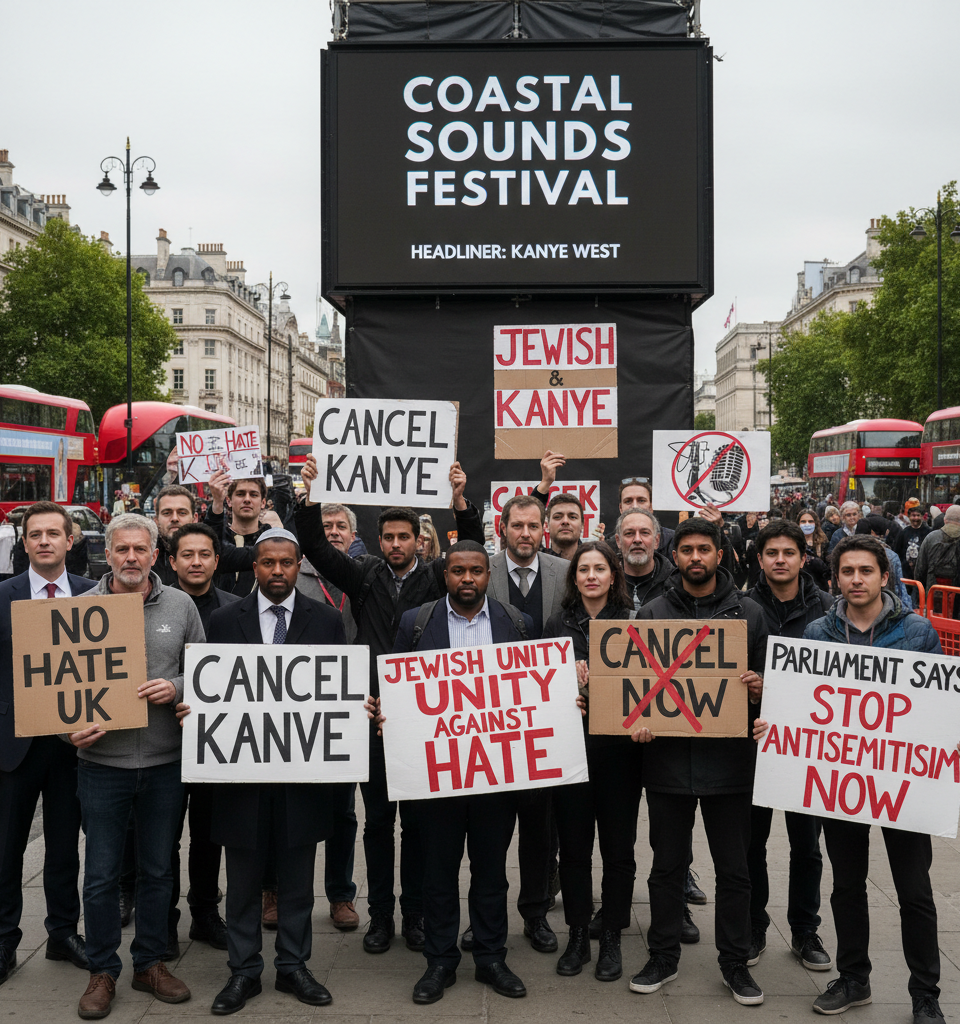
LONDON — Organizers of a major upcoming music festival in London are facing intense public and political scrutiny following the announcement of Kanye West, also known as Ye, as a headline act. A coalition of Jewish community organizations, supported by influential Members of Parliament, has launched a concerted campaign urging the festival to withdraw its invitation to the controversial rapper. This burgeoning controversy centers on West's documented history of antisemitic comments and incendiary rhetoric, raising serious questions about the festival's commitment to inclusivity and its responsibility to protect marginalized communities.
The calls for West's cancellation are not new; indeed, they are rooted in a pattern of increasingly extreme public statements and actions by the artist over the past several years. His remarks on social media and in interviews have led to significant professional repercussions, including the termination of lucrative partnerships with brands like Adidas and Gap, which together had an estimated annual value exceeding $1.5 billion. The current backlash underscores a broader societal reckoning with the platform afforded to celebrities who espouse hate speech, weighing the principles of artistic freedom against the imperative to condemn and prevent the normalization of antisemitism.
The campaign against West's London performance has garnered significant traction. The Campaign Against Antisemitism (CAA), a prominent UK watchdog group, was among the first to voice its strong disapproval, issuing a public statement that described West as a "well-known antisemite." This sentiment was echoed by several MPs, including figures from both the ruling Conservative and opposition Labour parties, who have reportedly written to festival organizers directly. Sources close to the CAA indicate that they have compiled a dossier detailing West's various antisemitic outbursts, intending to present it as compelling evidence for his unsuitability to perform at a mainstream public event. The financial implications for the festival, should they proceed with West, are considerable, with potential sponsorship withdrawals and boycotts looming.
The music industry, particularly the festival circuit, is increasingly grappling with its role in platforming artists whose views contradict widely accepted ethical standards. This situation highlights a growing tension between commercial interests and social responsibility. Festivals, often seen as cultural touchstones, are under increasing pressure from audiences, sponsors, and even other artists to ensure their lineups reflect values of diversity and respect. While the estimated global music festival market was valued at approximately $2.8 billion in 2023, high-profile controversies such as this can significantly impact ticket sales, sponsorship revenues, and brand reputation, potentially leading to multi-million dollar losses.
Industry analysts suggest that the festival's decision will set a critical precedent. "This isn't just about a single performance; it's about the entertainment industry's stance on hate speech," commented Dr. Eleanor Vance, a cultural studies expert specializing in media ethics at the University of Westminster. "If a major festival allows an artist with such a clear history of antisemitism to perform, it sends a troubling message about what is permissible. Conversely, a firm stance against it could reinforce the industry's commitment to social justice, even at a financial cost." Dr. Vance noted that while discussions around freedom of speech are vital, they must be balanced against the very real impact of discriminatory rhetoric on vulnerable communities.
The immediate future holds increased pressure on the festival organizers to issue a definitive statement. Public petitions are circulating online, and social media engagement on the issue is intensifying. The choice facing the festival involves navigating potential legal challenges related to contractual obligations with West, against the overwhelming public relations nightmare and ethical condemnation that would accompany his performance. Further protests by civil rights groups and Jewish advocacy organizations are likely if the festival proceeds as planned. The implications extend beyond this single event, potentially shaping how major cultural institutions approach artist selection in an increasingly scrutinized global landscape.
In the longer term, this controversy could lead to robust discussions within the UK music industry about implementing clearer ethical guidelines and due diligence processes for artist bookings, particularly for high-profile events. With the general election approaching, the political dimension of this issue is also sensitive, as MPs are keen to demonstrate their commitment to combating hate speech and supporting community cohesion. The ripple effects of this decision will undoubtedly resonate throughout the entertainment world, forcing a re-evaluation of the lines between artistic expression and societal responsibility.