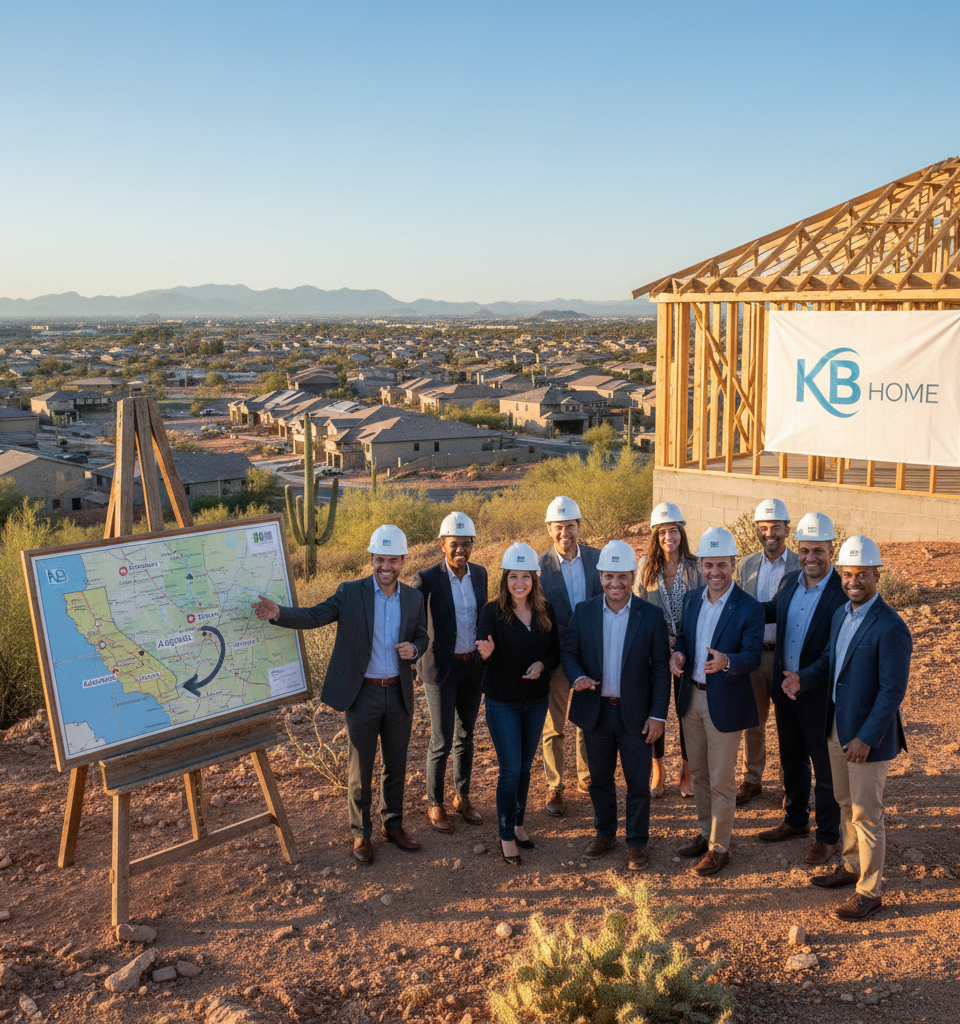
TEMPE, AZ – March 26, 2024 – KB Home (NYSE: KBH), a prominent U.S. homebuilder, has announced its decision to relocate its corporate headquarters from Los Angeles, California, to Tempe, Arizona, effective in the spring of 2027. The move, characterized by company executives as a strategic initiative to bolster operational efficiency and leverage favorable market dynamics, underscores a growing trend of businesses seeking more advantageous operating environments.
This marks a significant organizational shift for the Fortune 500 company, which has been headquartered in Los Angeles for decades. The decision to transplant its central operations to the burgeoning Phoenix metropolitan area reflects a calculated effort to optimize resources and streamline processes. While the corporate nerve center will shift, KB Home has affirmed its commitment to its established California markets, intending to retain all six of its divisions within the state, ensuring continued presence in a historically robust housing landscape.
Few specific financial details regarding the cost of the move or potential savings have been publicly disclosed, but company statements emphasize 'efficiency gains' as a primary driver. The relocation will likely involve a gradual transition of certain corporate functions and personnel over the next three years. KB Home, which built 13,037 homes in 2023 with an average selling price of $480,900, generated total revenues of $6.4 billion last year. The company's diverse operational footprint spans 15 states, with a notable presence in Texas, Florida, and Arizona, all states experiencing significant population and economic growth.
The relocation places KB Home in the heart of what has become one of the nation's most dynamic housing markets. Phoenix, with its robust job growth, relatively lower cost of living compared to Southern California, and expanding infrastructure, offers a compelling environment for a major homebuilder. This move could potentially foster closer ties with suppliers and subcontractors within a region known for its construction industry activity. Furthermore, it aligns with a broader corporate migration trend observed in recent years, where companies are reevaluating their geographic footprints in pursuit of talent, lower operational costs, and access to new markets.
Industry analysts are weighing in on the implications. "This move by KB Home is a smart strategic play," commented Dr. Robert Shiller, Nobel laureate and housing market expert. "Southern California, while a large market, presents significant operational challenges, including high costs of doing business and regulatory hurdles. Moving to Arizona positions them to better serve the Sun Belt's rapid growth while potentially reducing overhead." Analysts at leading investment banks suggest that the move could positively impact KB Home's long-term profitability and shareholder value, though the transitional period might present short-term logistical challenges. The concentration of construction talent and a more business-friendly regulatory climate in Arizona are frequently cited as attractive factors.
The coming years will see KB Home meticulously planning and executing this substantial relocation. The company will need to manage the transition of key personnel, establish new vendor relationships in Arizona, and ensure seamless continuity of its existing operations, particularly for its California divisions. Future announcements are expected to detail the exact location of the new headquarters in Tempe, as well as any incentives potentially offered by the state of Arizona or the City of Tempe. This move could also inspire other major homebuilders or construction-related companies to re-evaluate their headquarters' locations, further solidifying the Phoenix area's reputation as a key hub for the building industry.
Ultimately, KB Home's strategic shift to Tempe reflects a forward-looking approach to business in a competitive and evolving housing market. By prioritizing efficiency and strategically leveraging the attributes of a high-growth region, the company aims to solidify its position as a national leader in homebuilding well into the future, all while retaining a strong operational commitment to its long-standing California markets.