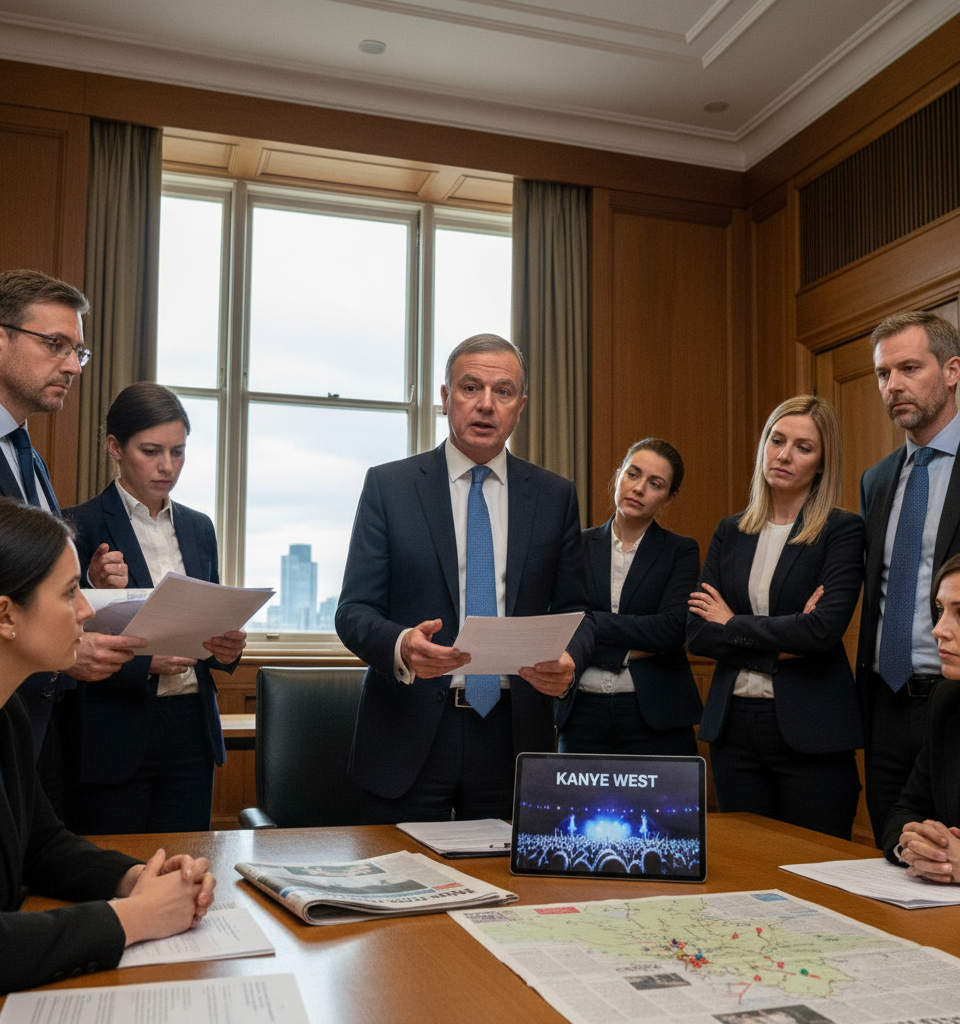
LONDON – Sir Keir Starmer, leader of the Labour Party, has publicly conveyed his "concern" over the possibility of American rapper Kanye West, also known as Ye, performing at UK festivals. The remarks come amid growing scrutiny of West's past conduct, which includes a series of widely condemned antisemitic and offensive statements made in recent years. Starmer's intervention highlights the increasing pressure on event organizers and venues to consider the broader implications of booking artists with controversial public profiles.
West's history of inflammatory rhetoric has drawn significant criticism globally, leading to widespread condemnation from advocacy groups, public figures, and former collaborators. His past utterances, particularly those targeting the Jewish community, have resulted in a significant backlash, including the termination of major brand partnerships and a decline in public approval. The potential for his appearance at high-profile UK events raises questions about accountability and the platform offered to individuals associated with hate speech.
Background of Controversy
Kanye West's controversies intensified throughout 2022 and 2023, with numerous instances of antisemitic remarks made across various platforms, including social media, interviews, and public appearances. These comments led to his suspension from several social media platforms and the severing of his long-standing and lucrative partnership with Adidas, as well as deals with Gap and Balenciaga. The financial and reputational fallout for the artist has been substantial, underscoring the severe consequences of his rhetoric.
The global entertainment industry has grappled with how to respond to artists whose creative output is celebrated but whose personal conduct generates widespread condemnation. The reported interest in booking West for UK festivals signals a complex dilemma for promoters balancing artistic appeal with public responsibility and potential legal or ethical liabilities. Starmer's statement places a prominent political voice firmly on the side of caution and ethical consideration, reflecting broader societal anxieties.
Implications for UK Festivals
For UK festival organizers, the prospect of booking Kanye West introduces a multifaceted challenge. On one hand, West remains a globally recognized figure with a significant fanbase, capable of drawing large crowds. On the other, his presence could trigger protests, negative media attention, and potentially alienate other artists, sponsors, and attendees. The ethical considerations extend beyond mere commercial viability, touching on the values and inclusivity that festivals often strive to embody.
Major festivals typically invest heavily in their public image and brand safety. Associating with an artist widely criticized for hate speech could jeopardize long-term relationships with advertisers, local councils, and even the broader community. The perceived legitimization of such an artist, even purely through platform provision, could lead to accusations of complicity or insensitivity, potentially impacting ticket sales and future event licensing.
The Role of Political Scrutiny
Sir Keir Starmer's public expression of concern elevates the discussion beyond mere entertainment news, placing it firmly within the realm of political and social discourse. His comments underscore a growing expectation from political leaders for cultural institutions to uphold certain ethical standards. This political scrutiny could prompt festival organizers to thoroughly review their talent acquisition policies and consider the broader societal impact of their bookings, rather than focusing solely on artistic merit or commercial draw.
The debate surrounding West's potential appearances is emblematic of a larger conversation about freedom of expression versus accountability for harmful speech. While artistic freedom is a cherished value, many argue that it does not extend to hate speech that targets specific communities. Starmer's stance reflects a significant segment of public opinion that believes individuals who propagate divisive and hateful rhetoric should not be afforded uncritical platforms.
Looking ahead, the response of UK festival organizers will be keenly watched. Should West's appearances be confirmed, it is likely to ignite further public debate and potentially calls for boycotts or protests. Conversely, a decision by organizers to avoid booking him could be seen as an affirmation of a commitment to ethical standards and inclusivity, albeit potentially at the cost of a high-profile draw. The situation underscores the increasing weight of moral and ethical considerations in the contemporary entertainment landscape. The outcome will set a precedent for how the British cultural sector navigates the complexities of controversial artists in an era of heightened social awareness.