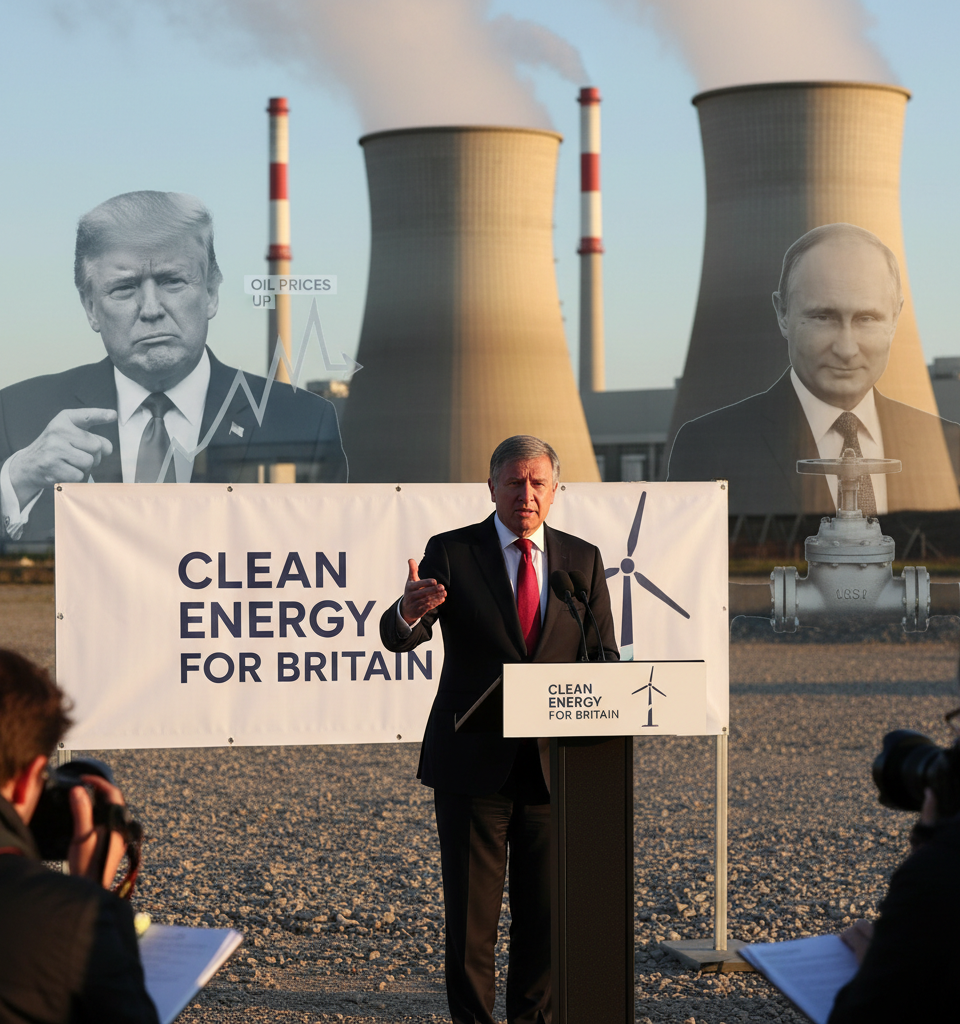
Keir Starmer, the leader of the Labour Party, has expressed profound exasperation with the impact of global geopolitical actors, specifically citing Donald Trump and Vladimir Putin, on the United Kingdom's escalating energy costs. Starmer's statement underscores a deepening concern within British political circles regarding the nation's vulnerability to international conflicts and their immediate economic consequences for households and industries.
The Labour leader's comments arrive at a critical juncture, as the global energy market is currently experiencing significant upheaval. The catalyst for this latest surge is the effective closure of the Strait of Hormuz by Iran, a strategic maritime chokepoint vital for the transit of a substantial portion of the world's oil supply. This decisive action by Iran is a direct consequence of an ongoing war with the United States and Israel, which has intensified regional tensions and disrupted established trade routes.
Geopolitical Tensions Stoke Energy Crisis
The Strait of Hormuz, a narrow waterway connecting the Persian Gulf with the Arabian Sea, is arguably the most strategically important oil transit choke point in the world. Its closure by Iran, in response to the escalating conflict with the U.S. and Israel, has immediately tightened global oil supplies, creating an acute "oil supply crunch." This reduction in available crude oil has, in turn, triggered a sharp upward trajectory in global energy prices, with ripple effects anticipated across various economies.
Starmer's frustration highlights the perceived external pressures on the UK economy, particularly its energy sector. The confluence of a major geopolitical conflict leading to the disruption of a vital energy artery, coupled with the long-standing volatility attributed to figures like Putin in the European energy market, presents a formidable challenge for British policymakers. The Labour leader's pointed remarks suggest a growing political imperative to address the nation's energy security and mitigate the effects of international instability.
Economic Fallout and Domestic Implications
The immediate economic implication for the UK is a further strain on household budgets and business operating costs. Higher oil prices translate directly into increased fuel costs for transport, elevated utility bills for heating and electricity, and inflationary pressures across supply chains. Industries reliant on energy-intensive processes, from manufacturing to agriculture, are expected to face significant financial burdens. This situation risks exacerbating an already challenging economic environment and could potentially dampen consumer spending and investment.
The broader market impact is undoubtedly negative, with significant volatility anticipated in commodity markets. Traders and investors are closely monitoring developments in the Middle East, as the duration and intensity of the conflict will dictate the longevity of the oil supply crisis. This uncertainty creates an adverse environment for long-term planning and investment in the energy sector, both domestically and internationally.
The Quest for Energy Security
Starmer's sentiment reflects a broader national conversation around energy independence and resilience. The UK, still heavily reliant on imported energy, especially fossil fuels, finds itself particularly susceptible to global price shocks. This latest crisis is likely to reinvigorate debates on accelerating the transition to renewable energy sources, investing in domestic energy production, and exploring alternative supply chains to reduce reliance on volatile regions. The government will face increasing pressure to outline concrete strategies to shield consumers and businesses from such external shocks.
Looking ahead, the immediate focus will be on diplomatic efforts to de-escalate the conflict in the Middle East and secure the reopening of the Strait of Hormuz. Failure to do so swiftly could lead to prolonged energy price hikes, with severe consequences for global economic stability. Domestically, the UK government is expected to explore all available options, including emergency energy relief measures and potential strategic oil releases, to cushion the impact on its citizens and industries. The situation underscores the intricate and often precarious link between global geopolitics and the daily lives of ordinary citizens, placing energy security firmly at the top of the political agenda.