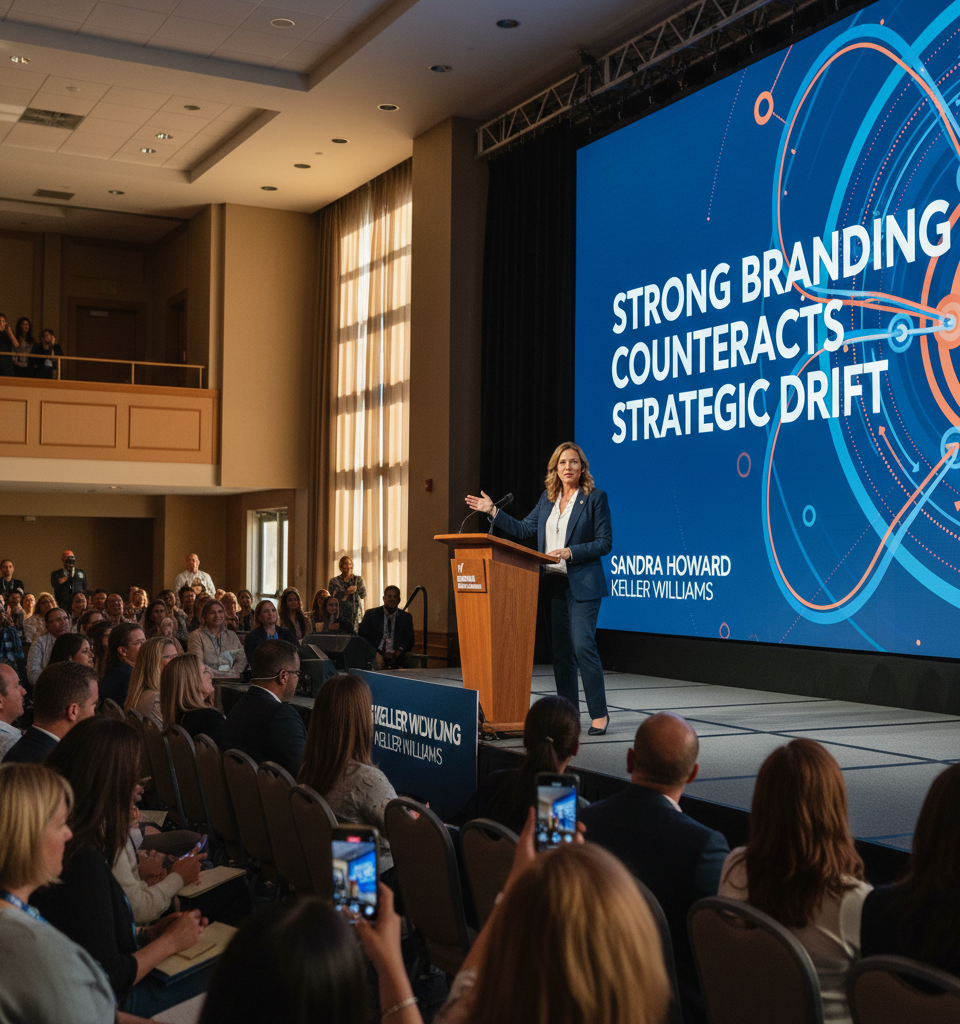
Austin, TX – In a recent address, Sandra Howard, Head of Strategic Growth at Keller Williams (KW), underscored the critical role of strong brand identity in safeguarding real estate companies against strategic drift, particularly during periods of market volatility. Her insights, delivered amidst fluctuating housing market conditions and rising interest rates, highlighted how an uncertain economic environment disproportionately impacts firms lacking a clear, well-defined brand purpose and market positioning.
The Imperative of Branding in a Fluid Market
The discussion arrives at a pertinent time for the real estate sector. The past two years have seen significant shifts, transitioning from a hyper-competitive seller's market fueled by historically low interest rates to one characterized by cooling demand, increasing inventory, and rising mortgage costs. This rapid change has placed immense pressure on brokerages and agents to justify their value proposition more effectively than ever before. Historically, boom cycles can mask inefficiencies and a lack of strategic focus, as general market buoyancy lifts all boats. However, as Howard emphasized, a challenging market acts as a crucible, testing the core strength and resilience of an organization's brand.
Unpacking Strategic Drift and Its Symptoms
Howard defined strategic drift as a gradual, almost imperceptible deviation from a company's original goals and vision, often resulting from a failure to adapt to or strategically resist external pressures. She identified several common symptoms of drift in real estate firms: a dilution of service offerings, inconsistent messaging, declining agent retention, and a confused market perception. "When the market tightens, every dollar spent on marketing, every hour invested in agent training, and every client interaction must be purposeful," Howard stated. "Without a compelling brand narrative, companies risk becoming commoditized, losing their unique selling proposition, and ultimately, their market share." She stressed that strong branding acts as an internal compass, guiding decision-making and ensuring all efforts align with the company's core mission.
Industry Impact: Differentiating in a Crowded Field
The impact of weak branding is particularly acute in the highly fragmented real estate industry, where the barriers to entry can appear relatively low. Thousands of independent brokerages and national franchises compete fiercely for agents and listings. In a market where a typical home sale may involve a 5-6% commission, competition is fierce. Companies that fail to articulate what makes them unique – whether it's their technological stack, unique training programs, community involvement, or specialized market focus – will struggle to attract and retain top talent, and more importantly, discerning clients. Howard pointed to examples where smaller, niche brands with intensely loyal followings have outperformed larger, more generic competitors during downturns due to their clear identity and value proposition.
Expert Consensus on Brand Resilience
Industry analysts largely echo Howard's sentiments. Dr. Mark Greene, a real estate economist, noted, "In a volatile market, brand equity becomes a firm's most valuable intangible asset. It provides psychological assurance to clients and a sense of belonging to agents, critical factors when external uncertainties are high." Experts suggest that companies should regularly audit their brand identity, ensuring it remains relevant and resonant with their target audience. This includes consistent messaging across all channels – from digital platforms to physical office spaces – and an unwavering commitment to brand values, even when faced with short-term financial pressures.
Proactive Strategies for Brand Fortification
To prevent strategic drift, Howard advocated for proactive brand fortification. This involves a clear articulation of the company's mission, vision, and values; consistent investment in brand building and marketing; robust internal communication to ensure all stakeholders embody the brand; and a commitment to continuous innovation that aligns with the brand promise. She emphasized that a strong brand is not just a logo or a slogan but the sum total of every experience an agent or client has with the company. For Keller Williams, this commitment is evident in their agent-centric model and extensive training programs, which reinforce their brand as a knowledge and growth platform.
The Path Forward: Agility and Authenticity
Looking ahead, the real estate market is expected to remain dynamic, with potential interest rate fluctuations and evolving consumer expectations. Companies that embrace agility in their operations while steadfastly adhering to an authentic brand identity will be best positioned for long-term success. Howard's message serves as a clarion call for real estate leaders to revisit their fundamental brand strategies, ensuring their core identity is robust enough to withstand the inevitable ebbs and flows of the market. The differentiation and resilience it offers are no longer merely advantageous; they are essential for survival and growth in the years to come.