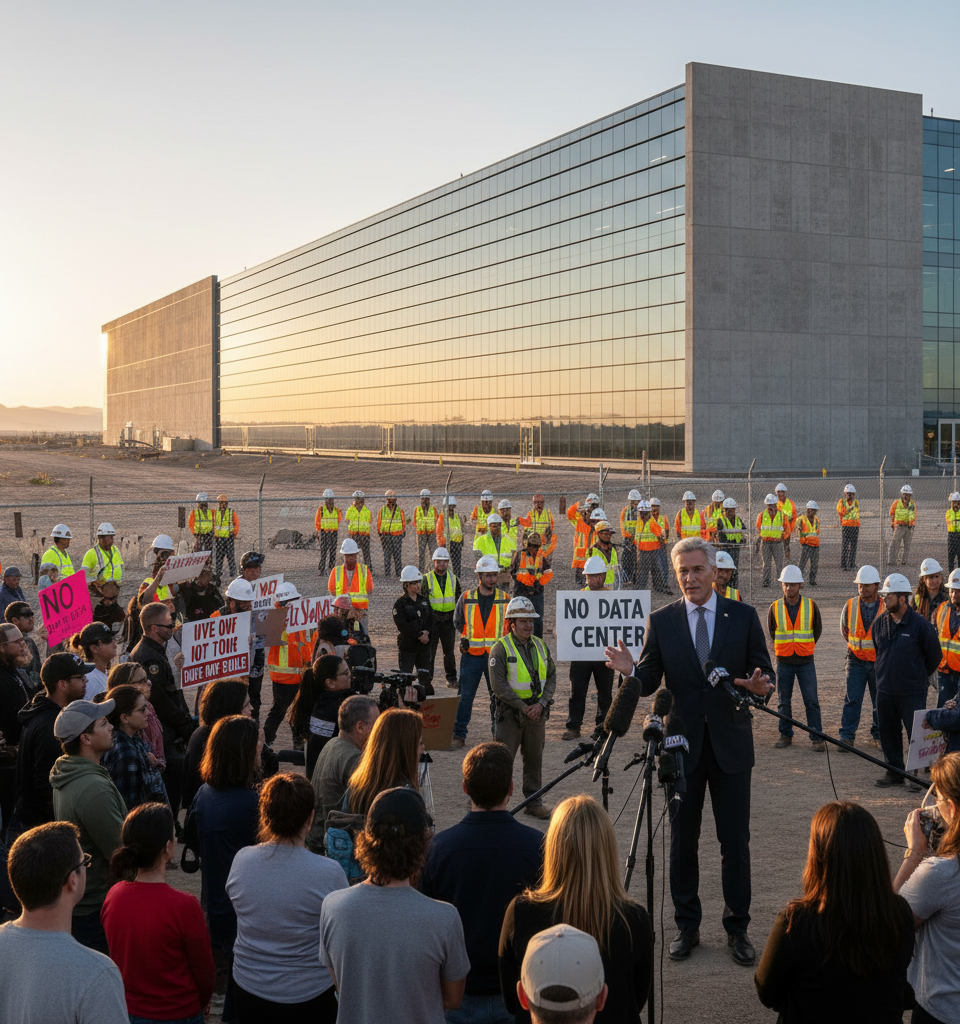
Kevin O'Leary, the renowned investor and "Mr. Wonderful" from ABC's Shark Tank, has vociferously defended his role in a massive military data center project planned for Utah. The facility, poised to become the largest of its kind in the U.S., is a critical infrastructure initiative aimed at bolstering national defense capabilities through advanced data processing and storage. However, its ambitious scale has sparked considerable local contention regarding resource consumption and community impact.
Project Context and National Significance
This undertaking isn't merely a commercial venture; it's intricately linked to national security. The data center is designed to support the U.S. military's burgeoning data needs, from intelligence gathering to logistical operations and advanced cybersecurity defenses. The reliance on such facilities underscores a broader geopolitical trend where data sovereignty and processing power are becoming as crucial as traditional military might. The chosen location in Utah is largely due to factors such as existing infrastructure, cooler climate for energy efficiency, and potentially less seismic activity compared to other regions.
Key Details and Investor Involvement
O'Leary's involvement through his investment vehicle, O'Leary Ventures, highlights a growing trend of private sector engagement in critical national infrastructure. While specific financial figures for the entire project remain under wraps, data centers of this magnitude often involve investments scaling into the billions of dollars. The facility is expected to span millions of square feet, housing countless servers requiring immense amounts of electricity and, critically, water for cooling. Local reports indicate an anticipated water consumption equivalent to a small city, a point of significant contention in the arid Western state.
Environmental Concerns and Community Opposition
The primary opposition stems from community groups and environmental advocates who cite concerns over the project's ecological footprint. Utah, a state frequently grappling with drought conditions, faces immense pressure on its limited water resources. Critics argue that diverting vast quantities of water for data center cooling is unsustainable and irresponsible, especially when residential and agricultural sectors already face usage restrictions. Noise pollution, increased traffic, and the visual impact of such a colossal facility are also frequently raised by residents who fear their rural landscape will be irrevocably altered. Local town hall meetings have seen emotional pleas from residents urging reconsideration or relocation of the project.
Economic Promises Versus Local Costs
Proponents, including O'Leary, highlight the economic benefits, such as job creation during construction and operation, along with significant tax revenues for the state and local municipalities. O'Leary has emphasized the project's strategic importance and its role in creating high-paying tech jobs. However, opponents counter that these benefits may not outweigh the long-term environmental and social costs, questioning whether the jobs will primarily go to local residents or require specialized skills bringing in outside workers. The debate encapsulates a broader national struggle between economic development, technological advancement, and environmental stewardship.
Expert Perspectives and Industry Trends
Industry experts acknowledge the military's legitimate need for robust data infrastructure but suggest that future projects might need to integrate more advanced sustainable cooling technologies, such as air-side economization or even liquid cooling, to mitigate water usage. Analysts point to a rising trend of hyperscale data centers facing increased scrutiny, pushing developers to innovate in areas of energy efficiency and resource conservation. The Utah project could set a precedent for how such large-scale, sensitive facilities are developed and integrated into local communities moving forward, potentially influencing future regulatory frameworks.
The Road Ahead: Potential Revisions and Ongoing Dialogue
The project is currently navigating various regulatory approvals and community feedback processes. While O'Leary remains steadfast in his defense, the intensity of local opposition could force revisions to the original plans, particularly concerning water management and environmental impact mitigation strategies. Future developments will likely involve continued dialogue between developers, local authorities, and community representatives, potentially leading to compromises that seek to balance national security imperatives with local environmental concerns and community well-being. The outcome in Utah could serve as a blueprint, or a cautionary tale, for similar infrastructure projects across the nation.