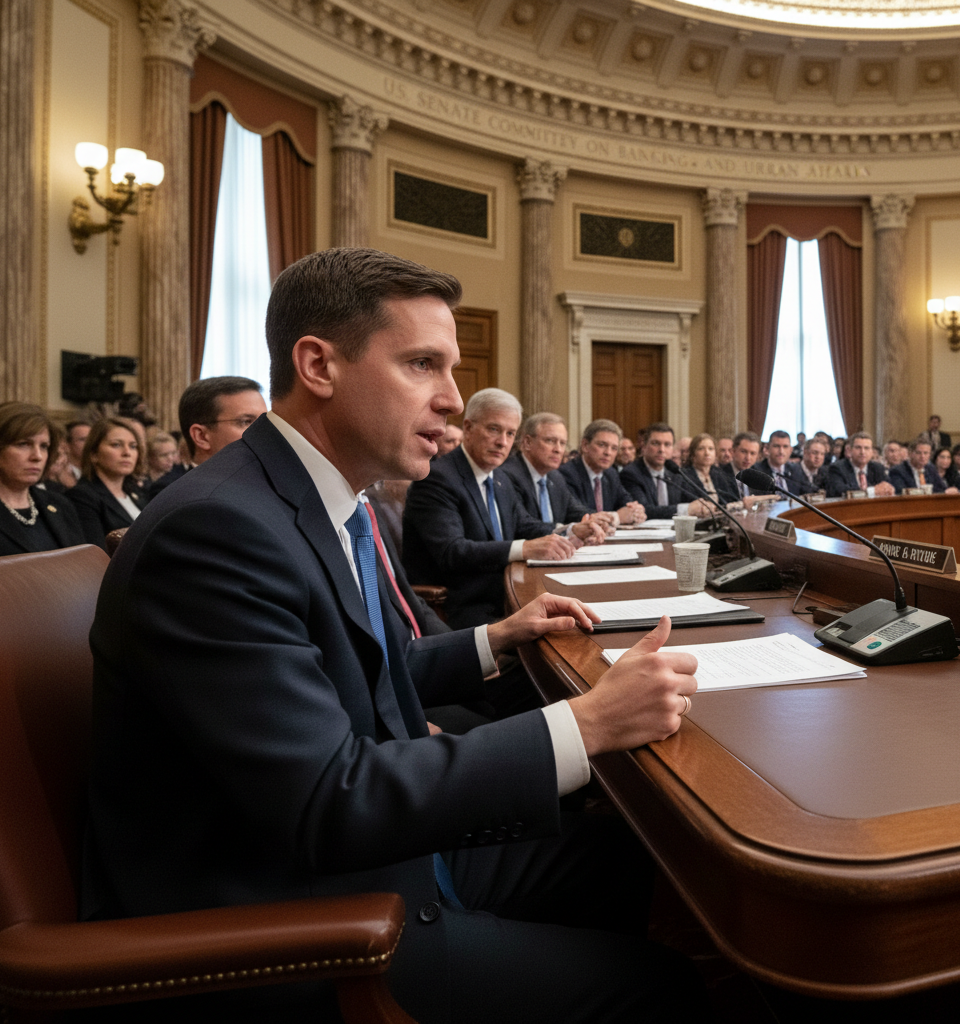
Kevin Warsh, a former Federal Reserve governor, is widely anticipated to secure Senate approval as the next Chair of the Federal Reserve, a position that would arguably make him the most influential central banker globally. His confirmation hearing before the Senate Banking Committee recently highlighted a critical dilemma facing Warsh, lawmakers, and the Federal Reserve itself: the preservation of its independence from political influence. Republican Senator John Kennedy of Louisiana directly confronted Warsh with the pointed question, "Are you going to be the president’s human sock puppet?" This query underscores pervasive concerns about the potential politicization of the Fed, particularly under an administration that has often expressed strong opinions on monetary policy.
Context and Background: The Fed's Crucial Autonomy
S. economy. Since its establishment in 1913, the Fed has operated with a degree of independence from executive and legislative branches, allowing it to make monetary policy decisions based on economic data and analysis rather than short-term political pressures.
This independence is codified, in part, by the lengthy terms of its governors and chair, designed to insulate them from electoral cycles. However, recent administrations have shown a greater willingness to publicly comment on Fed policy, raising concerns among economists and policy experts about the potential erosion of this vital separation. The question posed to Warsh is not merely rhetorical; it reflects a deep-seated anxiety about whether the institutional integrity of the Fed can withstand increasing political scrutiny and potential pressure.
Key Details: Warsh's Stance and Senate Scrutiny
While Warsh's full response to Senator Kennedy's query is crucial, his past statements and record suggest a nuanced approach to the Fed's role. As a former governor during a period of significant economic upheaval, Warsh has experienced firsthand the complexities of central banking. His tenure coincided with the 2008 financial crisis, offering him unique insight into unconventional monetary policies. Sources close to the confirmation process emphasize Warsh's commitment to data-driven decision-making and his understanding of the Fed's dual mandate – maximum employment and price stability. However, specific details of his proposed policy shifts or approaches to navigating political pressures remain a subject of intense speculation and will be closely watched during his likely tenure.
Industry and Market Impact: Navigating Uncertainty
Financial markets generally react strongly to changes in Federal Reserve leadership, given the institution's profound impact on interest rates, inflation, and economic growth. A new Fed chair brings an element of uncertainty, as market participants attempt to decipher their policy preferences and philosophy. Should Warsh pursue a more hawkish or dovish stance than his predecessor, it could trigger significant shifts in bond yields, stock valuations, and currency markets. For example, a perception that Warsh is more inclined to raise interest rates to combat inflation could lead to a strengthening dollar and potentially temper equity market rallies. Conversely, a prolonged period of low rates might be seen as supportive for risk assets but could also fuel inflation concerns.
Expert Perspective: Balancing Independence and Accountability
Economists and central banking experts widely agree that the Fed's independence is a cornerstone of sound monetary policy. Dr. Janet Yellen, a former Federal Reserve Chair, has frequently reiterated the importance of shielding the institution from political interference. "The Fed's ability to act decisively, often unpopularly, is contingent on its political insulation," she remarked in a recent interview. However, some argue that public accountability also plays a role, and a constructive dialogue with elected officials can be beneficial, provided it doesn't cross into direct policy influence. Analysts at major investment banks, such as Goldman Sachs, have noted that Warsh's background, including his time on the White House National Economic Council, could offer a valuable bridge between the Fed and the executive branch, provided he maintains a clear boundary on policy decisions.
What's Next: A Defining Era for the Fed
Upon his expected confirmation, Kevin Warsh will face immediate challenges. These include navigating persistent inflation pressures, assessing the impact of global supply chain disruptions, and managing the ongoing recovery from recent economic shocks. His leadership will also be crucial in shaping the Fed's communication strategy, ensuring clarity and predictability in its monetary policy signals. Furthermore, the question of the Fed's independence will likely continue to be a recurring theme, with every major policy decision scrutinized for any hint of political influence. Warsh's tenure could prove to be a defining era for the Federal Reserve, determining whether the institution can successfully preserve its long-held autonomy in an increasingly charged political landscape, thereby reaffirming its critical role in maintaining economic stability.