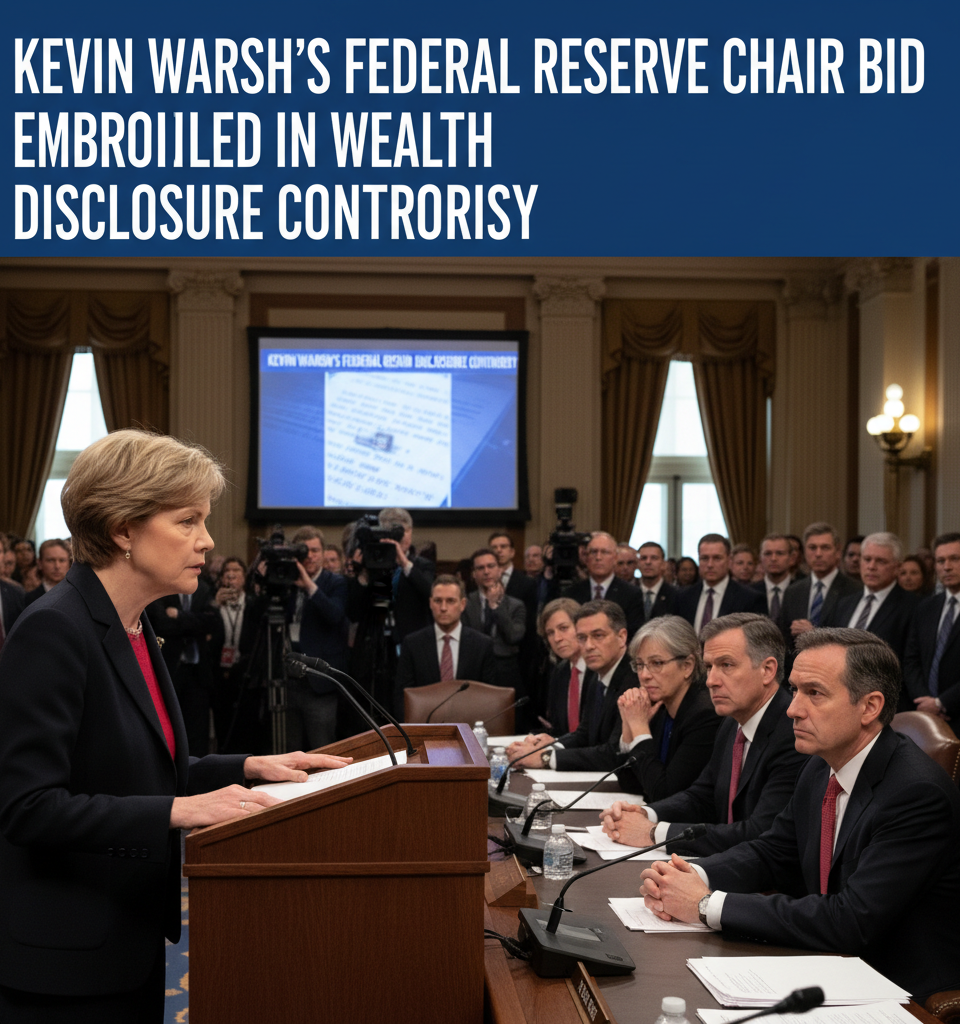
WASHINGTON D.C. — Kevin Warsh, a leading candidate to become the next chair of the Federal Reserve, is facing intense scrutiny regarding the completeness and transparency of his financial disclosures. Senator Elizabeth Warren (D-Mass.) has publicly raised concerns, flagging potential inconsistencies and what she describes as a lack of detail in Warsh's filings, which could complicate his path to leading the nation's central bank amidst calls for heightened ethical standards.
This development takes place against a backdrop of increased congressional and public demand for transparency from high-ranking political appointees, especially those managing critical economic institutions like the Federal Reserve. The Fed, responsible for setting monetary policy and maintaining financial stability, operates with immense power, making the financial probity of its leaders paramount. Warsh's candidacy is particularly noteworthy given his prior tenure on the Fed's Board of Governors during the 2008 financial crisis and his subsequent lucrative career in the private sector.
Senator Warren's concerns focus on specific omissions or ambiguities within Warsh's Office of Government Ethics (OGE) Form 278e, which is designed to disclose a nominee's assets, liabilities, and income sources before Senate confirmation. While specific details of the alleged omissions remain under wraps, Warren's office has indicated that they relate to the full scope of Warsh's financial holdings, particularly his involvement with private equity firms and hedge funds post-2011. This period was marked by significant personal wealth accumulation for Warsh, which, while not inherently problematic, demands meticulous documentation to avoid perceived or actual conflicts of interest.
Should Warsh's nomination advance, the Senate Banking Committee would undoubtedly delve deeply into these disclosures. The committee, tasked with vetting Fed nominees, historically scrutinizes candidates' financial backgrounds to ensure impartiality in monetary policy decisions. A cloud of financial disclosure questions could significantly prolong a confirmation hearing, potentially delaying critical leadership at a time when the Fed is navigating a complex economic landscape characterized by inflation concerns and global economic uncertainties.
Financial experts and governance watchdogs are weighing in on the implications. "Any ambiguity in financial disclosures for a role as sensitive as Federal Reserve Chair is a red flag," noted Dr. Eleanor Vance, an economic ethics professor at Georgetown University. "The public and Congress need absolute confidence that the individual leading the Fed is free from conflicts that could sway their decisions, consciously or unconsciously, in favor of personal gain or specific private interests." Industry observers suggest that even minor discrepancies could be magnified, especially given the post-financial crisis emphasis on regulatory oversight and transparency.
The coming weeks will be crucial for Warsh's potential nomination. The White House, which has been considering Warsh as a frontrunner, will likely need to address these concerns head-on, either by seeking clarification from Warsh or by evaluating the robustness of his candidacy. The Senate Banking Committee will undoubtedly demand exhaustive answers during any potential confirmation proceedings, ensuring a thorough examination of his financial history. The outcome will not only determine the next Fed Chair but also send a powerful signal about the standards of transparency expected from senior government officials.
The stakes are high, not just for Warsh, but for the credibility of the Federal Reserve and the broader trust in governmental institutions. Any perception of impropriety could undermine the public's confidence in the Fed's independence and its ability to act solely in the national economic interest. The careful review by Congress underscores the principle that the immense power of the Fed chair demands an equally immense level of public accountability.
The controversy also highlights the broader challenge facing individuals transitioning from lucrative private sector careers to high-profile public service. The intricate web of investments, partnerships, and advisory roles often held by such individuals necessitates meticulous and transparent disclosure to avoid ethical quagmires. This incident serves as a reminder of the heightened scrutiny placed on nominees for positions of unparalleled economic influence.