Industry Impact: A Paradigm Shift in AI Management
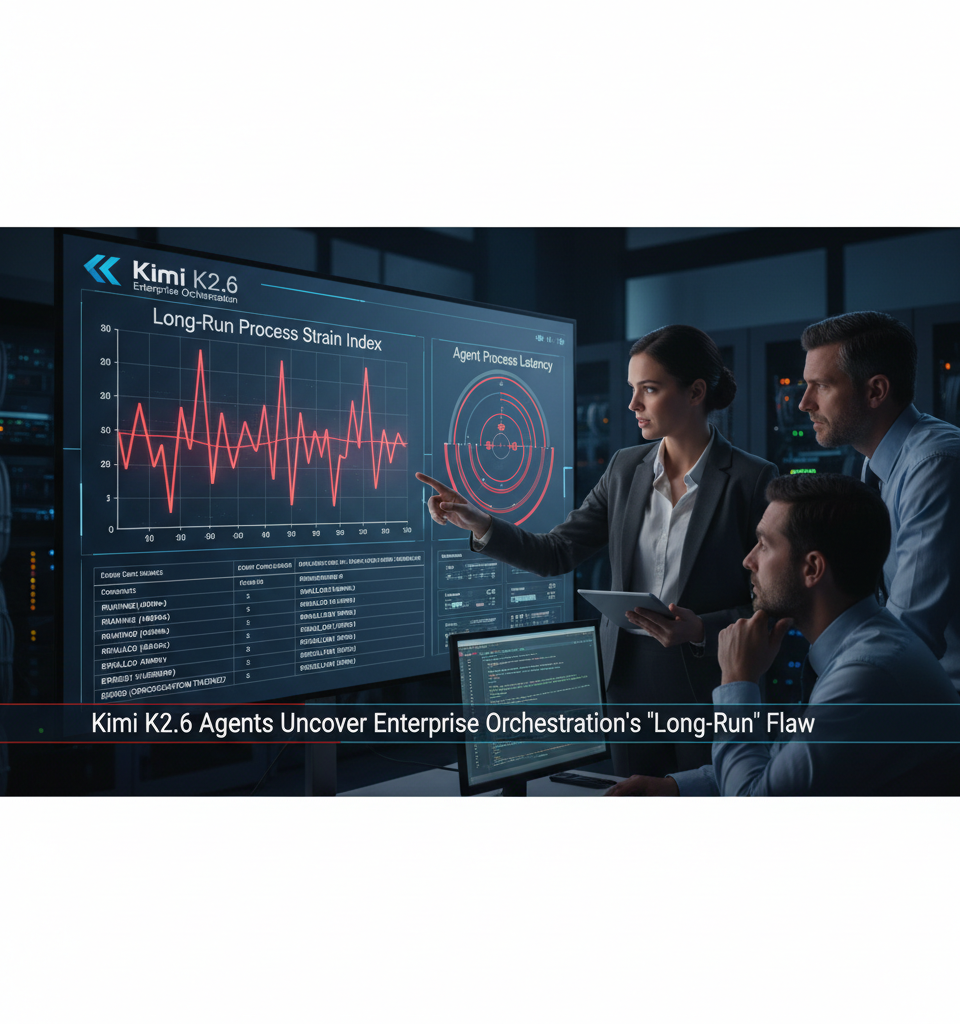
The inability of current orchestration frameworks to seamlessly manage these persistent agents creates significant operational overhead and scalability challenges. Enterprises adopting Kimi K2.6-like technologies face increased complexity in monitoring, resource allocation, error recovery, and state management. This directly impacts the total cost of ownership (TCO) for AI deployments and inhibits the seamless integration of these powerful, long-running agents into core business processes. Industries reliant on complex, multi-step AI processes – such as drug discovery, financial modeling, and advanced manufacturing simulations – are particularly affected, where agent persistence can unlock unprecedented levels of automation and insight. Industry analysts are keenly observing this evolving challenge. "The 'seconds to minutes' assumption embedded in most orchestration tools is a ticking time bomb for enterprise AI," states Dr. Eleanor Vance, lead AI architect at Synapse Technologies. "As agents become more autonomous and their tasks more intricate and prolonged, the enterprise needs solutions that can manage statefulness, graceful interruption, and dynamic resource scaling over days, not just cycles. This isn't just about longer uptime; it's about a fundamental shift in AI's role from a task executor to a persistent digital colleague."
Expert Perspectives: Reimagining Orchestration for Persistence
Experts agree that a fundamental re-architecture of orchestration frameworks is necessary. Current solutions often lack robust mechanisms for persistent state management, intelligent checkpointing, failure recovery tailored for long-running processes, and dynamic resource allocation that can adapt to changing computational demands over extended periods. The need for advanced observability tools that can track agent progress, interact with ongoing tasks, and provide granular control without interrupting their flow is becoming paramount. This will likely necessitate new standards for agent interoperability and communication protocols designed for extended, concurrent operations.
The Road Ahead: Towards "Always-On" Orchestration
Looking ahead, the market is poised for significant innovation in advanced orchestration solutions. We can anticipate the emergence of next-generation platforms specifically designed for "always-on" AI agents, featuring enhanced capabilities in distributed state management, intelligent scheduling, proactive resource scaling, and sophisticated error handling for long-duration tasks. Investment in open-source projects and proprietary solutions addressing these gaps is expected to surge over the next 12-24 months. Furthermore, cloud providers will likely introduce specialized services tailored for persistent AI agent deployment, offering optimized infrastructure and managed services. The Kimi K2.6 agent's endurance is not merely an engineering feat; it's a clarion call, signaling a new era of AI operations where persistence is not an edge case, but a core architectural requirement.