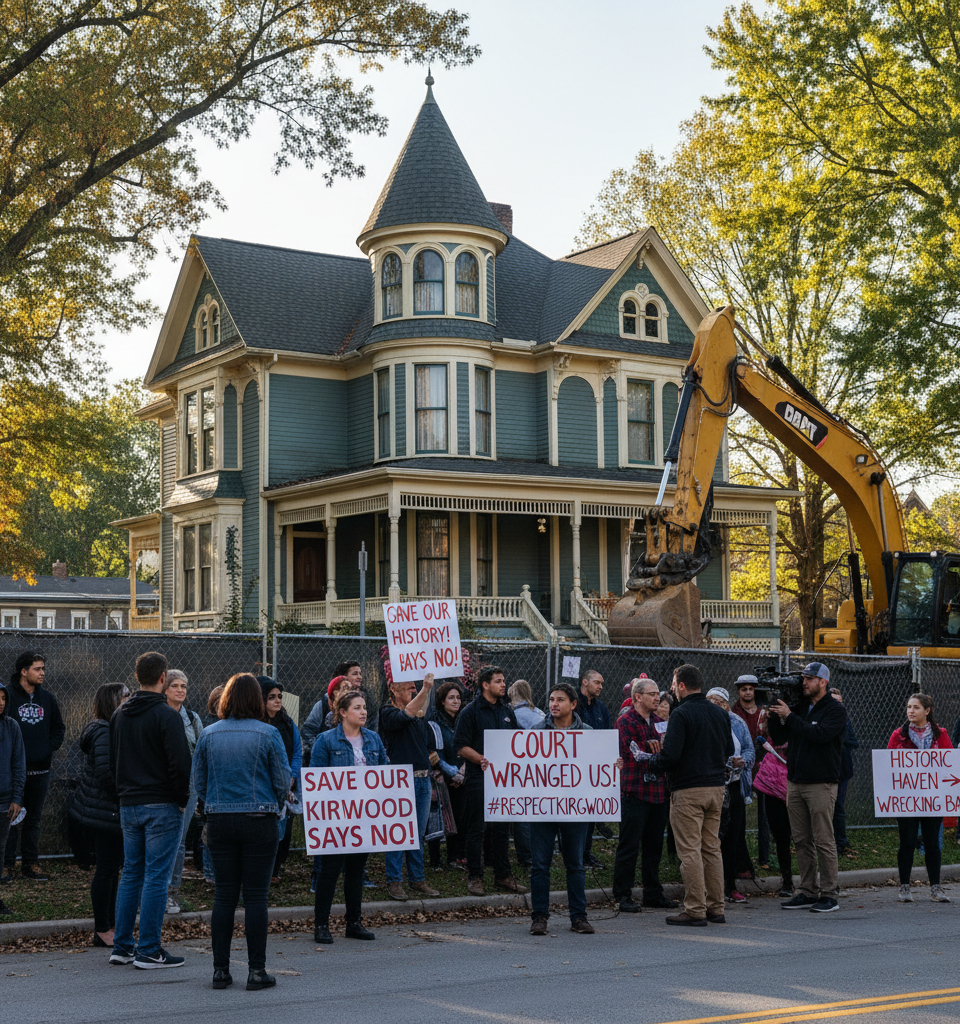
Impact on Preservation in St. Louis County
The ruling sends ripples through the broader St. Louis County real estate market and preservation landscape. Developers may now view similar historic properties as less risky for acquisition and redevelopment, potentially accelerating the removal of older homes in desirable areas. This scenario could lead to a 'tear-down' phenomenon, where smaller, older homes are replaced by larger, more contemporary structures, fundamentally altering neighborhood aesthetics and potentially displacing long-term residents due to rising property values and taxes. Local preservation commissions, often operating with limited legal precedent and resources, may find their authority diminished in the wake of such a definitive court decision.
Expert Insights on Urban Development and Heritage
Urban planning experts are closely watching the aftermath. Dr. Eleanor Vance, a professor of urban studies at Washington University in St. Louis, commented, "This case perfectly illustrates the ongoing conflict between economic development pressures and the often-intangible value of historical assets. Without stronger, legally defensible preservation ordinances that go beyond mere delay tactics, cities will continue to lose their unique character to infill development. The economic argument for preservation, showcasing heritage tourism and property value stability, needs to be as robust as the development profitability argument."
What Lies Ahead for Kirkwood and Beyond While the immediate future for the
Kirkwood home appears grim, the battle for historic preservation within the community is far from over. Local activists are now regrouping, planning to lobby the Kirkwood City Council for stronger, more robust preservation legislation that can withstand legal challenges. This might include exploring options for designating entire historic districts with stricter controls or establishing a dedicated fund for purchasing and renovating at-risk properties. The outcome of these efforts will likely influence preservation strategies in other St. Louis County municipalities facing similar development pressures, serving as a bellwether for the region's approach to its architectural legacy. The focus will undoubtedly shift to pre-emptive measures to identify and protect properties before they become targets for redevelopment, rather than reactive efforts after a demolition permit is sought.