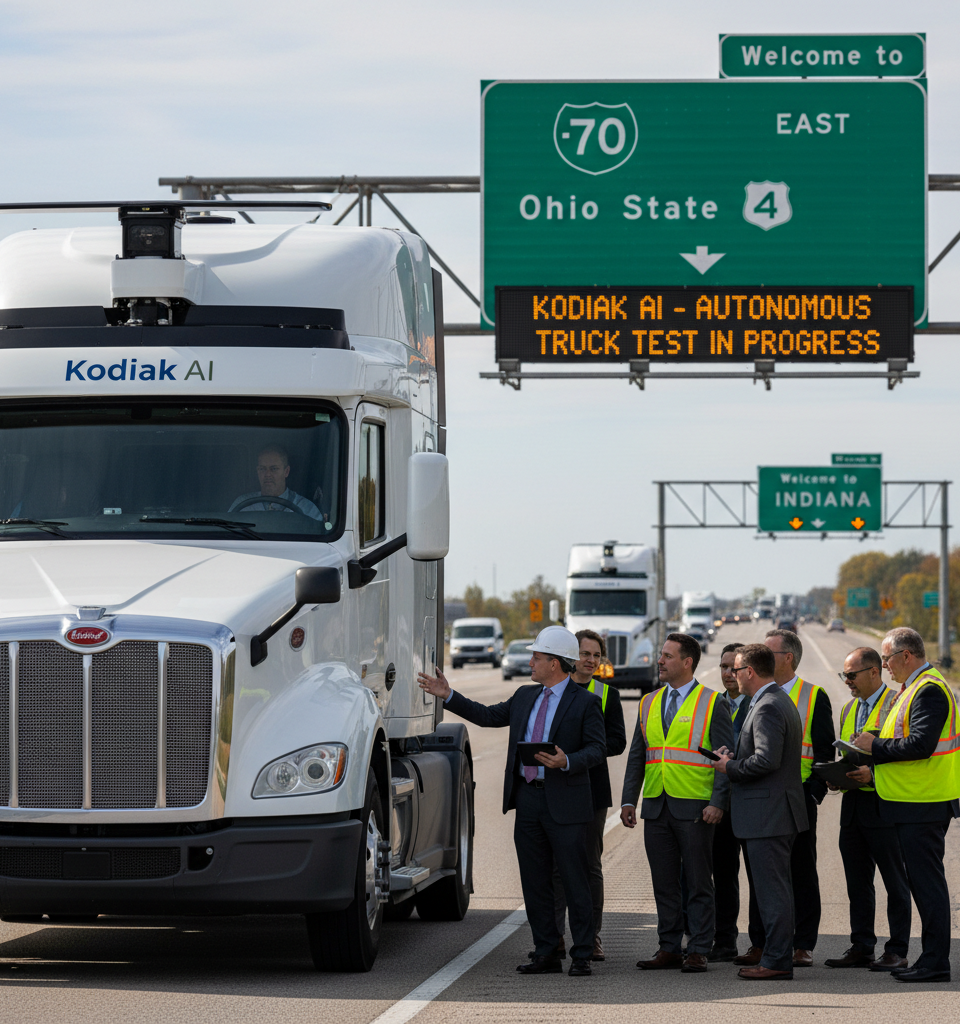
COLUMBUS, OH – Kodiak Robotics, a leading innovator in autonomous trucking technology, has officially initiated and successfully concluded its inaugural driverless truck operations outside the Sun Belt, marking a significant milestone for the industry. The company completed a series of Level 4 autonomous tests on Interstate 70 across Ohio and Indiana, meticulously observed by state transportation officials, including representatives from Ohio's advanced mobility initiative, DriveOhio. This expansion into the colder, more varied climate of the Midwest signifies a critical step in proving the versatility and readiness of autonomous freight for nationwide deployment.
Historically, autonomous vehicle testing has predominantly occurred in the Sun Belt states, such as Arizona, Texas, and California, owing to their predictable weather patterns and fewer regulatory hurdles. Kodiak's strategic pivot to the Midwest, a region characterized by its harsh winters, snow, and ice, directly addresses one of the most persistent challenges facing autonomous technology: all-weather operational capability. This move not only underscores Kodiak's confidence in its technology but also provides invaluable real-world data under conditions that mimic a substantial portion of the U.S. freight network.
The recent tests involved Kodiak's Level 4 autonomous trucks, which are designed to operate without human intervention under specific conditions, navigating complex interstate environments. Ohio Governor Mike DeWine highlighted the significance of these trials, stating, "Autonomous technology has the potential to make our roads safer and more efficient." The collaboration with DriveOhio and state departments of transportation demonstrates a growing willingness among state regulators to embrace and facilitate the development of cutting-edge transportation solutions. Key metrics under evaluation during these tests included the system’s performance in varying light conditions, adverse weather simulations, and interaction with diverse traffic scenarios.
This geographical expansion carries profound implications for the broader logistics and trucking industry. The ability of autonomous trucks to operate reliably across varied climates and terrains is crucial for realizing the economic benefits of self-driving freight, including reduced operating costs, improved fuel efficiency, and the potential to alleviate the persistent driver shortage. By proving their technology's robustness outside the Sun Belt, Kodiak is paving the way for more efficient long-haul routes that traverse diverse weather zones, ultimately enhancing supply chain resilience and predictability across the entire continental United States.
Industry analysts are keenly observing Kodiak's advancements. Dr. Sarah Chen, a senior researcher in autonomous systems at the Institute of Transportation Studies, noted, "Moving into the Midwest validates the maturity of Kodiak's perception and decision-making systems. The challenge of inclement weather is a major hurdle. Successfully navigating these conditions dramatically expands the addressable market for autonomous freight and accelerates the timeline for widespread commercialization." This shift from ideal conditions to more challenging operational environments is seen as a necessary evolution for the entire autonomous driving sector.
Looking ahead, Kodiak Robotics plans to leverage the insights and data gathered from its Ohio and Indiana operations to further refine its autonomous driving stack. The company has indicated intentions to deepen its engagement with Midwest logistics partners, potentially establishing operational hubs within the region. Future developments will likely focus on expanding the operational design domain (ODD) to encompass an even wider array of weather events and road conditions, moving closer to a 'driver-out' commercial deployment model across critical freight corridors. The success in the Midwest is a blueprint for similar expansions into other challenging geographical regions, thereby accelerating the nationwide integration of autonomous trucking within the next decade.
This strategic move by Kodiak Robotics not only demonstrates technical prowess but also signals a maturing industry poised to deliver on its promise of transforming freight logistics. The collaboration with state governments underscores a multi-stakeholder approach to safely and effectively integrate autonomous technologies into the national transportation infrastructure, setting a precedent for future innovations in automated mobility.