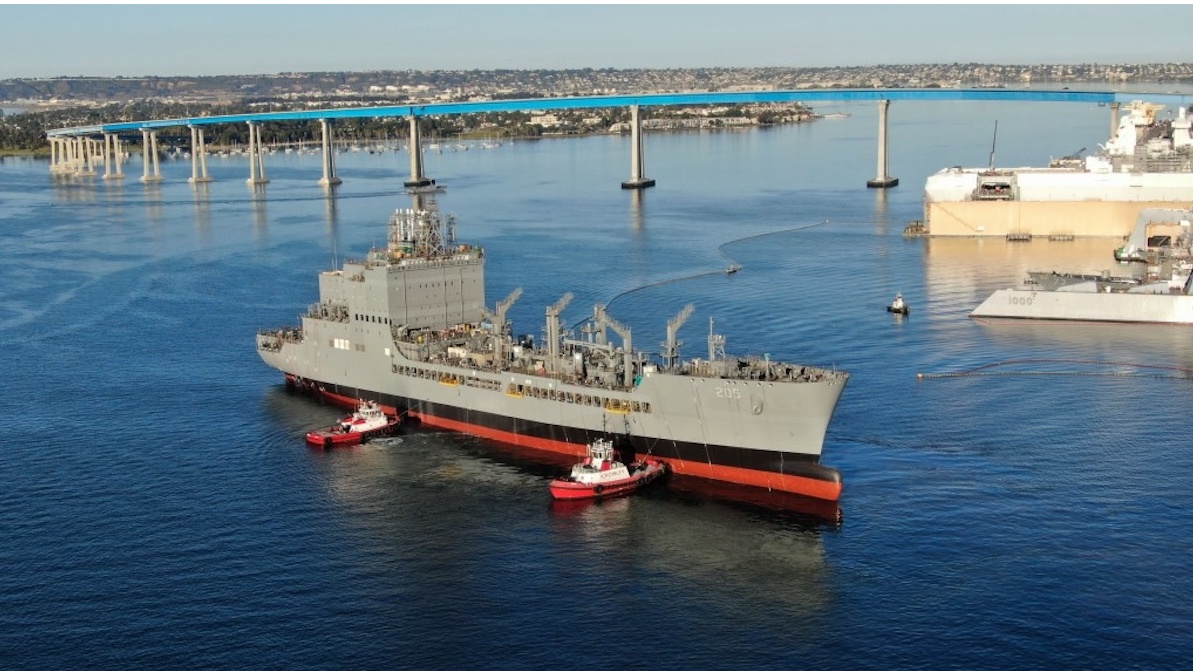
WASHINGTON D.C. — In a landmark development for naval defense and international industrial collaboration, a U.S. shipbuilding facility under South Korean ownership has secured its inaugural contract with the United States Navy. This pivotal agreement tasks a major Korean industrial giant with the critical design phase of the Navy's next-generation supply ships, marking a significant milestone in defense procurement and a strategic expansion of foreign investment within the U.S. defense industrial base. The deal, announced recently, underscores the deepening economic and strategic ties between the two allied nations, with implications reverberating across the maritime and defense sectors.
This contract is not merely a financial transaction; it represents a strategic acknowledgement of global shipbuilding capabilities and a notable departure from traditional U.S. Navy procurement strategies. For decades, the construction and design of critical naval assets have predominantly been awarded to domestically owned and operated firms. The decision to tap into the expertise of a South Korean-owned entity for a foundational element of future naval logistics highlights an evolving landscape where technical proficiency and cost-effectiveness are paramount, irrespective of national ownership, within allied frameworks. This move is particularly salient given the current geopolitical climate and the imperative for the U.S. Navy to modernize its fleet capabilities rapidly.
The specifics of the agreement entail the South Korean conglomerate, whose U.S. subsidiary operates the shipyard, undertaking the initial design phase for the new class of supply vessels. While financial details of this specific design contract have not been publicly disclosed, such preliminary design awards typically range from tens of millions to over a hundred million dollars, laying the groundwork for multi-billion dollar construction contracts. These supply ships are essential for projecting naval power globally, providing fuel, ammunition, and provisions to warships at sea, thereby extending their operational range and endurance. The successful design will be critical to the operational readiness of the future U.S. fleet.
The implications for the broader shipbuilding industry are substantial. This contract could open doors for increased foreign direct investment in the U.S. defense sector, particularly from allied nations with advanced industrial capabilities. It also signals a potential shift in how the U.S. Navy addresses its shipbuilding backlog and modernization goals, potentially fostering more competitive bidding environments and introducing innovative approaches from international partners. U.S. shipyards, facing challenges in capacity and skilled labor, might see this as a mixed blessing – an opportunity for collaboration and technological exchange, but also increased competition.
Defense analysts and industry experts are closely watching this development. Dr. Elaine Chao, a maritime defense strategist, commented, "This contract is a clear indicator that the U.S. Navy is prioritizing cutting-edge design and efficiency, and is willing to cast a wider net to achieve its strategic objectives. It reflects both the high regard for South Korean shipbuilding prowess and a pragmatic approach to optimizing defense spending. It could set a precedent for future collaborations, especially in specialized vessel categories." Others point out the economic benefits of such partnerships, including job creation in the U.S. through foreign investment, and the transfer of advanced manufacturing knowledge.
Looking ahead, the success of this design phase will be critical. Should the South Korean-led design prove effective and meet the rigorous specifications of the U.S. Navy, it could position the shipyard favorably for subsequent construction contracts. This might lead to significant investments in the U.S.-based shipyard, including facility upgrades and workforce expansion. Furthermore, this partnership could serve as a blueprint for future collaborations across various defense manufacturing sectors, solidifying the operational interoperability and industrial interdependence between the U.S. and its key allies, particularly in the Indo-Pacific region. The longer-term impact could reshape the global naval shipbuilding landscape for critical support vessels for decades to come, enhancing the Navy's capabilities to maintain a robust global presence.