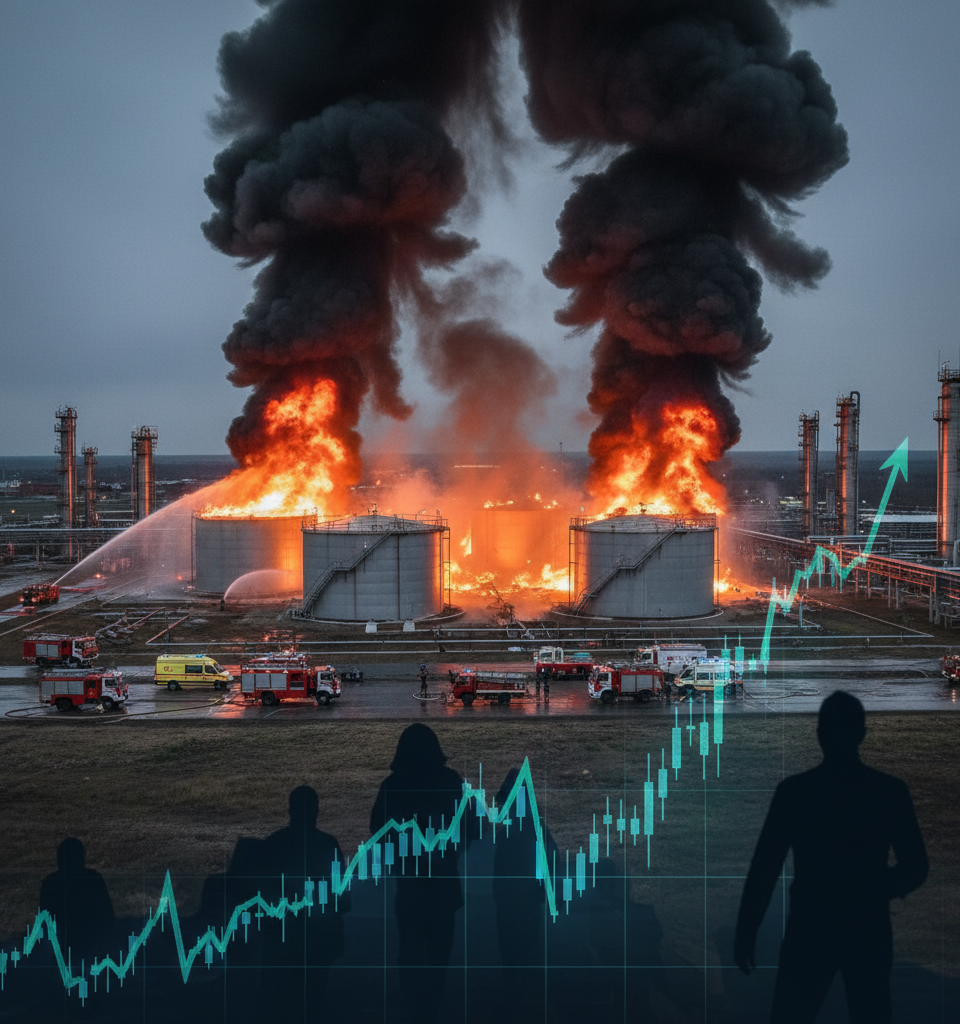
The escalating conflict in Eastern Europe continues to pose significant and unpredictable risks to global supply chains and energy markets, directly impacting input costs, shipping routes, and the operational stability for businesses with international dependencies. Companies reliant on global sourcing or cross-border logistics must factor in this persistent volatility as they navigate inventory management and strategic planning.
Overnight, Kyiv experienced a substantial missile barrage, underscoring the ongoing and intensified nature of the conflict. This attack comes as Ukrainian forces persist in their strategic targeting of Russian oil infrastructure, with reports of a significant fire at the Ilsky refinery in Russia's Krasnodar region. This latest series of reciprocal attacks marks a sustained and concerning escalation in the conflict's intensity, extending the theater of engagement to critical energy assets.
Escalation and Strategic Targeting
The missile strikes on Kyiv represent a direct response to Ukraine's continued focus on disrupting Russia's energy capabilities. The reported fire at the Ilsky refinery, a key facility in the Krasnodar region, highlights Ukraine's strategy of using drone and missile attacks to target Russian oil production and refining capacity. This approach aims to degrade Russia's ability to fund its war efforts and to exert economic pressure. The Ilsky refinery is a significant regional player, and any sustained disruption to its operations could have ripple effects on local and potentially wider fuel supplies.
This pattern of attacks on energy infrastructure is not new but has seen a marked increase in both frequency and ambition. Ukrainian forces have been systematically targeting Russian refineries and storage depots, often employing long-range drones. These operations are part of a broader strategy to undermine Russia's military logistics and economic resilience. The Kremlin, in turn, has consistently responded with strikes on Ukrainian cities and energy infrastructure, creating a dangerous cycle of escalation.
Impact on Energy Markets and Shipping
The targeting of oil infrastructure has immediate implications for global energy markets. While the direct impact on global crude prices from a single refinery fire might be localized, the cumulative effect of continuous strikes on Russian facilities introduces significant uncertainty. Russia is a major global energy supplier, and any threat to its export capacity, whether through damage to refineries or "shadow fleet" operations, can lead to price volatility and supply concerns. The mention of the "shadow fleet" indicates ongoing efforts to circumvent sanctions and transport Russian oil, a critical component of Russia's economic lifeline, which itself is now becoming a potential target.
For businesses involved in international trade, particularly those shipping goods that rely on maritime transport, the escalating conflict presents additional challenges. Increased risks in key shipping lanes, potential disruptions to oil supplies, and the rising cost of fuel for transport are direct consequences. Insurers may also reassess premiums for vessels operating in or near conflict zones, adding to operational costs.
Expert Analysis and Future Outlook
Analysts note that both sides appear committed to their respective strategies, suggesting that the current level of intensity is likely to persist. The targeting of civilian infrastructure, as seen in the Kyiv barrage, is a grim indicator of the widening scope of the conflict. The ongoing attacks on Russian refineries are viewed as a calculated risk by Ukraine, aiming to impose costs on Russia despite the inevitable retaliatory strikes.
Looking ahead, the continuation of these reciprocal strikes could further destabilize regional energy flows and international shipping. The effectiveness of Ukraine's strategy against Russian oil infrastructure will depend on its ability to sustain these attacks and bypass evolving Russian air defenses. Conversely, Russia's response capacity will determine the extent of damage inflicted on Ukrainian urban centers and critical infrastructure. The international community continues to watch these developments closely, with concerns mounting over the broader economic and geopolitical fallout from this sustained escalation.