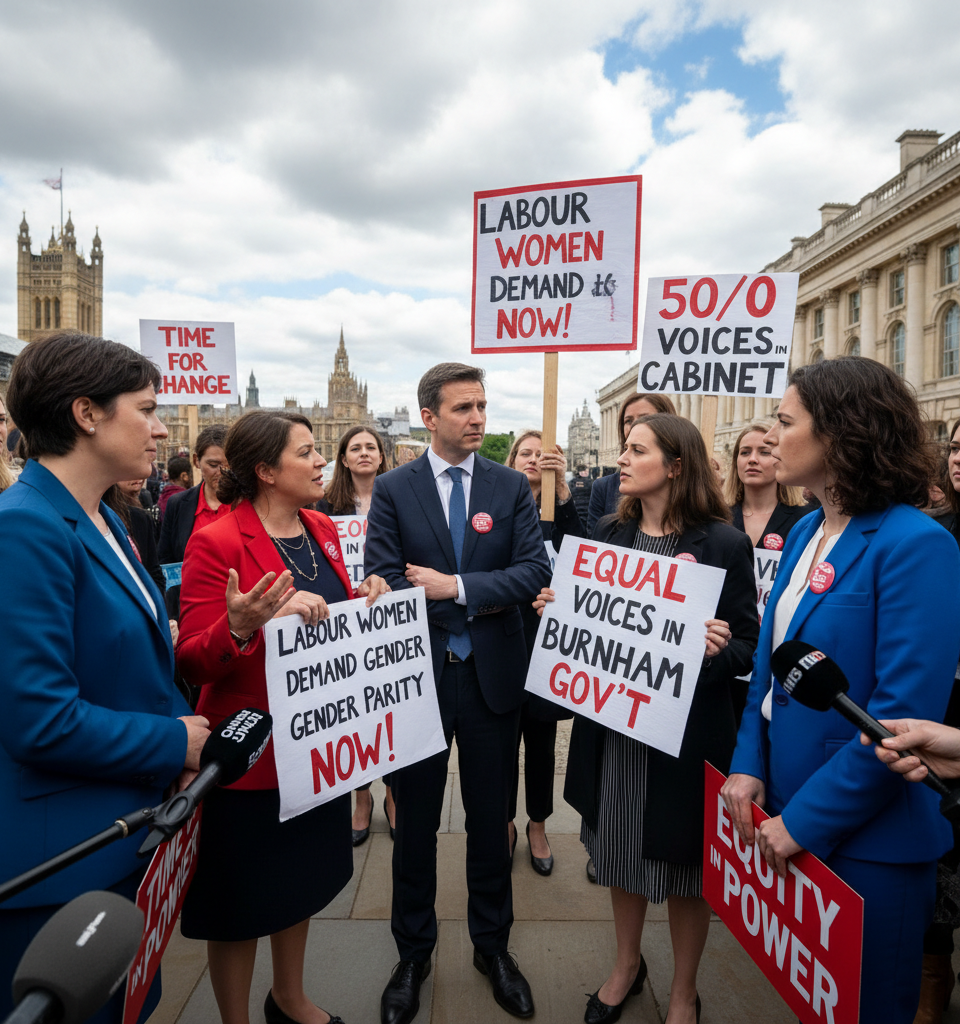
Leading female Labour MPs are intensifying pressure on potential future Prime Minister Andy Burnham, urging him to ensure that at least half of all governmental positions are occupied by women. This demand, emerging from within the party's own ranks, signals a clear intent for a future Labour administration to set a precedent for gender equality at the highest echelons of power.
The push for gender parity highlights a long-standing commitment within the Labour Party to address systemic inequalities. Historically, the representation of women in British politics, particularly in ministerial roles, has lagged significantly behind that of men. Proponents of this initiative argue that a 50% target is not merely symbolic but crucial for ensuring diverse perspectives in policy-making and reflecting the composition of the electorate.
The call for equal representation comes at a pivotal moment for the Labour Party, which is currently positioning itself as a progressive force for social change. Elevating women to key governmental roles would be seen as a tangible demonstration of this commitment, potentially bolstering the party's appeal among women voters and those concerned with social justice. While specific numbers of MPs involved in this push have not been disclosed, the collective message suggests a significant internal drive.
Historical Context of Gender Representation
The United Kingdom has seen gradual but slow progress in gender representation within its government. While the number of female MPs has increased over recent decades, reaching ministerial and cabinet levels in equal measure remains a challenge. The last general election saw more women elected to Parliament than ever before, yet parity in powerful governmental roles continues to be an aspirational goal rather than a reality. This initiative by Labour women MPs directly confronts this historical imbalance, aiming for a proactive rather than reactive approach to equality.
Implications for Future Policy and Public Perception
Should Burnham agree to and implement such a policy, the implications for future governmental policy and public perception would be profound. A government with half of its positions held by women could lead to a greater focus on issues traditionally affecting women, such as childcare, workplace equality, and healthcare. Furthermore, it would send a powerful message globally about the UK's commitment to gender equality, potentially influencing other nations and international organizations.
Beyond policy, the move could significantly reshape the public’s perception of political leadership, presenting a more diverse and representative image of power. It challenges traditional notions of who holds authority and could inspire greater participation from women and girls in civil and political life. This internal party pressure could force a re-evaluation of candidate selection and promotion processes within the Labour Party itself, ensuring a pipeline of qualified women for future roles.
The Path Forward for Burnham
For Andy Burnham, this proposition presents both an opportunity and a challenge. Embracing the 50% target would solidify his progressive credentials and resonate with a key demographic within and beyond the Labour Party. However, it could also necessitate difficult decisions regarding appointments, potentially requiring him to bypass established male figures for equally qualified, or even less experienced, female counterparts. The implementation of such a policy would also require careful planning to ensure that appointments are based on merit while actively striving for gender balance.
This demand signals a potential shift in how future Labour governments might be constructed and operated. It lays down a marker for gender equality that could redefine political expectations in the UK. The coming months will reveal how Burnham responds to this significant internal pressure and what commitments he is prepared to make regarding gender parity in a prospective Labour administration.