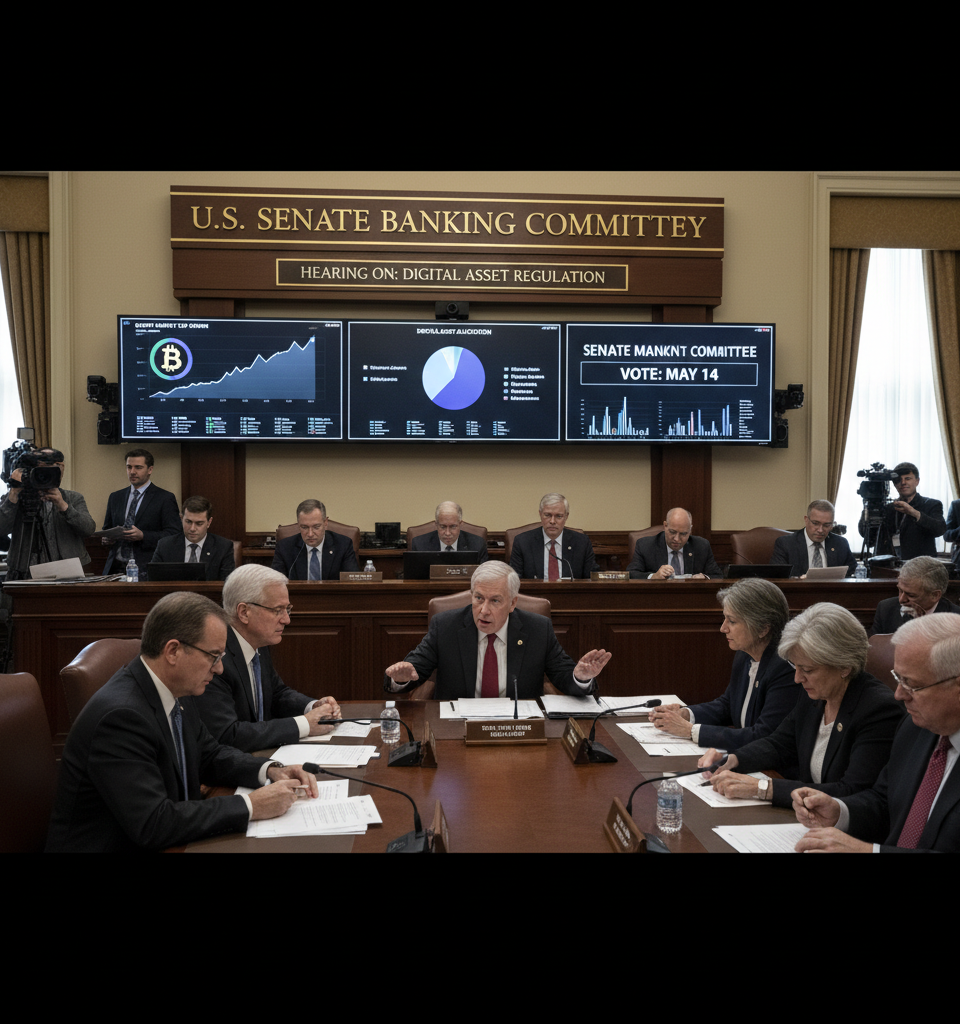
The U.S. Senate Banking Committee is set to hold a crucial vote on May 14 on a landmark cryptocurrency bill, marking a significant moment for the digital asset industry's quest for regulatory certainty. The legislation, considered the industry's top priority, aims to define the oversight responsibilities for various digital assets, potentially moving some assets from the purview of the Securities and Exchange Commission (SEC) to the Commodity Futures Trading Commission (CFTC).
Context and Background
This legislative effort arrives after years of calls from the cryptocurrency sector for transparent and consistent rules. Currently, the regulatory landscape for digital assets in the United States remains fragmented and often contentious, with multiple agencies asserting jurisdiction, leading to what many in the industry describe as regulation by enforcement. The absence of a bespoke framework has been cited as a hindrance to innovation and a driver of capital flight to more accommodating jurisdictions. Previous attempts at comprehensive crypto legislation have stalled, underscoring the political and technical complexities involved in crafting rules for a rapidly evolving technological domain.
Key Details
The bill in question focuses on establishing clear lines of authority, primarily by classifying certain digital assets as commodities, thereby placing them under the CFTC's jurisdiction, while others would remain under the SEC's purview if deemed securities. Proponents argue this distinction is vital for fostering innovation while protecting consumers and investors. Specifics of the bill's language, including proposed definitions for decentralized autonomous organizations (DAOs) and stablecoins, have been vigorously debated. Anonymous sources close to the committee suggest the bill incorporates feedback from a wide range of stakeholders, aiming for a balanced approach. While the exact vote count remains uncertain, its progression to the committee stage signals growing bipartisan recognition of the need for decisive action on crypto regulation.
Industry and Market Impact
For the cryptocurrency market, the implications of this bill are profound. A clear regulatory framework could unlock institutional investment, enhance market liquidity, and provide much-needed confidence for both established financial players and burgeoning startups. Many companies have expressed frustration over the current regulatory ambiguity, citing it as a major obstacle to growth and expansion within the U.S. A favorable vote could see a surge in investor sentiment and potentially attract significant capital inflows. Conversely, a failure to advance the bill, or its passage in a modified, less industry-friendly form, could prolong the current uncertainty, potentially leading to continued stagnation or even a migration of crypto innovation offshore.
Expert Perspective
Legal and economic experts are closely watching the developments. "This vote is probably the most significant legislative test for crypto in the Senate this year," stated one prominent analyst at a leading financial research firm, who requested anonymity due to ongoing client advisory roles. "The challenge lies in balancing investor protection with fostering innovation in a sector that doesn't fit neatly into existing regulatory boxes." Others emphasize the importance of the bill's language regarding stablecoins, highlighting potential implications for monetary policy and financial stability. "A well-defined stablecoin framework could transform how digital payments are made," commented Dr. Lena Chang, an economist specializing in digital currencies at a prestigious university.
What's Next
Should the bill successfully pass the Senate Banking Committee, it would then move to the full Senate for consideration. This process could involve further amendments, debates, and potentially a lengthy floor vote. Even if it clears the Senate, it would still need to be reconciled with any similar legislation passed by the House of Representatives, a process that can be complex and time-consuming. The path forward is undoubtedly challenging, but the May 14 vote represents a critical juncture that could either pave the way for a more structured U.S. crypto market or further underscore the persistent political hurdles facing digital asset legislation.