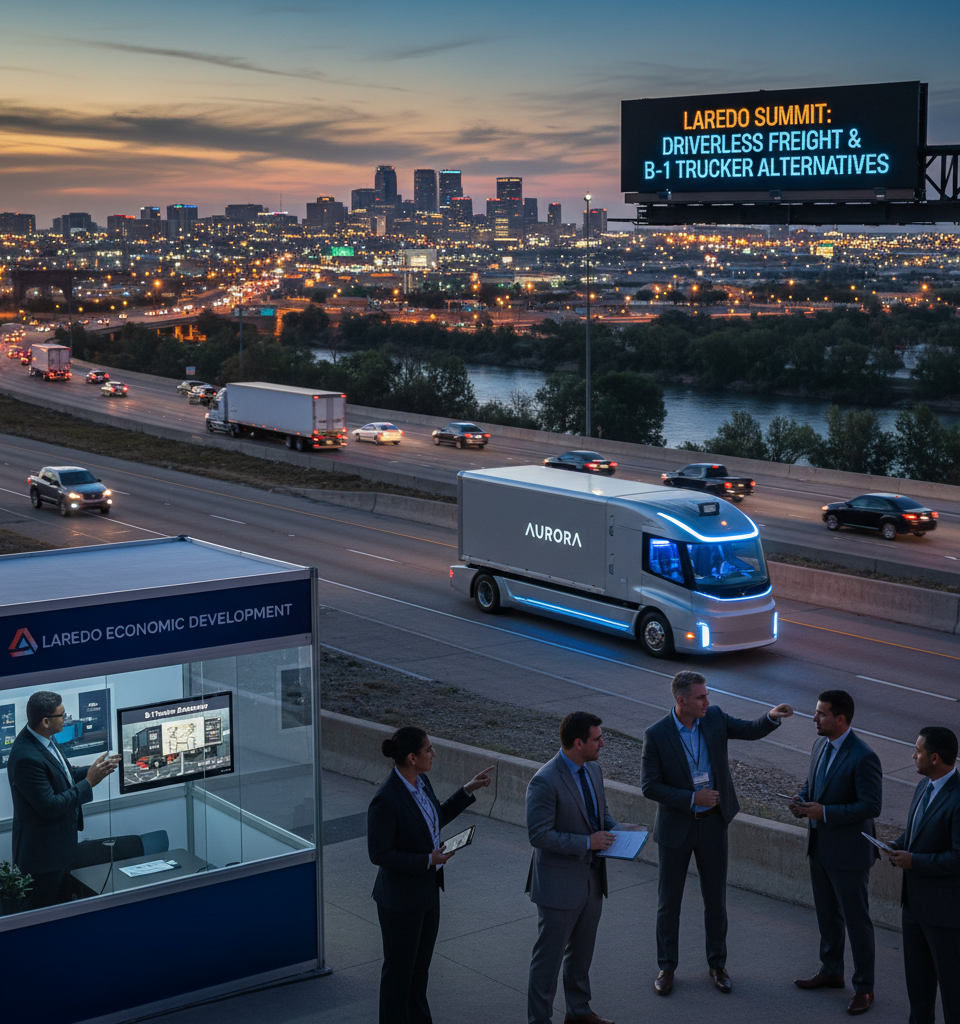
Amidst a backdrop of increasing cross-border trade and evolving logistics demands, a prominent summit in Laredo recently focused on critical discussions surrounding the future of freight movement in the Borderlands Mexico region. Key topics included the feasibility and implications of establishing driverless freight corridors and exploring alternative solutions for truckers operating under B-1 visas.
These discussions are particularly salient given the current dynamic and expanding economic activity along the U.S.-Mexico border. The push for automated solutions and alternative labor models reflects an industry grappling with efficiency, cost reduction, and the complexities of international trade regulations. The long-standing role of Laredo as a pivotal customs port amplifies the significance of these deliberations, potentially shaping the future of cross-border logistics.
Advancing Freight Automation and Workforce Solutions
The central tenets of the Laredo summit's agenda revolved around innovation in freight transportation. The concept of driverless freight corridors represents a futuristic vision aimed at streamlining the movement of goods, reducing transit times, and potentially mitigating labor shortages within the trucking sector. While the specifics of such corridors, including regulatory frameworks, infrastructure requirements, and phased implementation, remain subjects of extensive debate, their potential to revolutionize supply chains is undeniable.
Concurrently, the summit addressed the challenges and opportunities associated with B-1 visa truckers. This segment of the workforce plays a crucial role in cross-border logistics, and discussions explored potential alternatives and enhancements to their operational models. This could include examining new visa categories, technology-driven solutions to optimize their routes and compliance, or exploring how automation might complement rather than fully replace human drivers in specific scenarios.
Broader Economic Landscape and Strategic Expansions
The Laredo summit's focus on future logistics solutions is set against a vibrant economic backdrop marked by significant capital investments and expansions in the Borderlands Mexico region. One notable development is Cadogan Tate's expansion into the Southwest United States, evidenced by its recent acquisition in Phoenix. This move signifies growing demand for specialized logistics services and infrastructure to support an expanding economic footprint in the region.
Furthermore, the manufacturing sector continues to see substantial investment. Toyo's plans for a $357 million solar manufacturing expansion in Houston underscore the region's increasing importance as a hub for both traditional and green industries. Such large-scale industrial projects generate considerable freight volume, intensifying the need for efficient and innovative transportation solutions discussed at the Laredo summit.
Implications for Supply Chains and Regional Development
The outcomes of these discussions could have profound implications for the efficiency, cost-effectiveness, and reliability of supply chains linking the U.S. and Mexico. Successful implementation of driverless corridors could lead to reduced operational costs, faster border crossings, and a more predictable freight environment. However, it also raises questions about job displacement, the need for new skill sets in the logistics workforce, and the robustness of cybersecurity measures required for autonomous operations.
For regional development, advancements in freight technology and improved workforce solutions could further cement the Borderlands Mexico region's status as a critical artery for North American trade. Attracting further investment in manufacturing and logistics infrastructure will likely hinge on the ability to demonstrate forward-thinking, adaptable, and efficient transportation networks. The debates in Laredo represent an early, yet crucial, step in charting this evolving landscape.
Looking Ahead: A Path Towards Future Logistics
The Laredo summit serves as a strong indicator of the industry's proactive approach to addressing the evolving challenges and opportunities in cross-border trade. While the transition to driverless freight corridors and the recalibration of human-based logistics models will be complex, the ongoing dialogue and strategic planning efforts are essential. Further discussions will likely focus on pilot programs, international agreements, and significant infrastructure upgrades necessary to realize these ambitious visions. The integration of advanced technologies and alternative labor strategies promises to reshape the logistical arteries of the U.S.-Mexico border, underpinning future economic growth and trade relations.