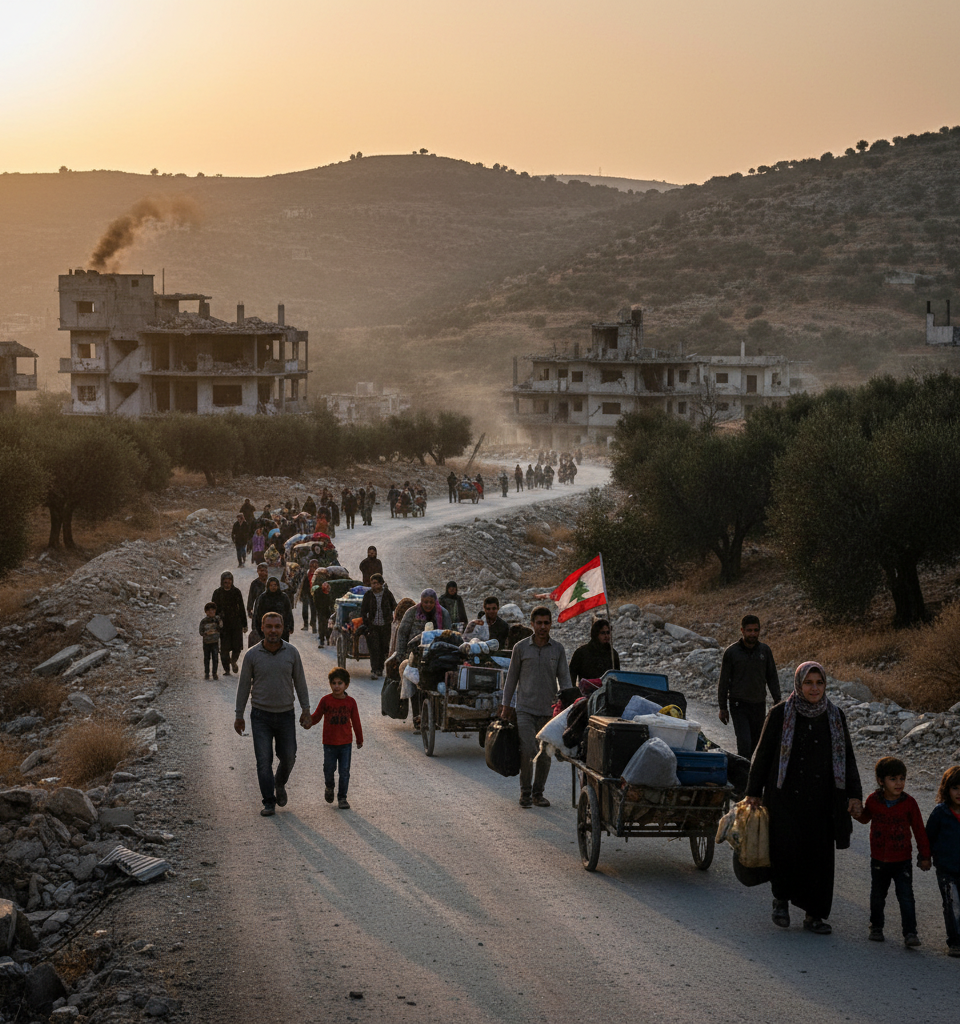
BEIRUT, LEBANON – May 19, 2026 – Lebanon is grappling with a profound humanitarian emergency as escalating hostilities between Israeli forces and Hezbollah have led to the displacement of approximately one million people. This massive internal migration is reshaping the social and economic fabric of the nation, with entire communities uprooted and grappling with the immediate and long-term consequences of the conflict. The rapid deterioration of the security situation has left countless Lebanese citizens facing an uncertain future, as their homes and livelihoods are imperiled by the intensifying cross-border engagements.
The current wave of displacement marks a critical juncture in the long-standing tensions between Lebanon and Israel, particularly involving the Iran-backed militant group Hezbollah. While sporadic clashes have been a feature of the border region for decades, the recent surge in violence has reached a scale that is unprecedented in recent memory, triggering a widespread exodus from southern Lebanon and other affected areas. This internal displacement compounds existing challenges within a nation already struggling with a severe economic crisis and political instability, placing immense pressure on limited resources and strained infrastructure.
Unprecedented Displacement Numbers
The sheer volume of displaced individuals, estimated at one million, represents a significant portion of Lebanon's total population. These numbers underscore the severity of the conflict's impact, as families abandon their towns and villages, seeking refuge in safer regions further north or with relatives in less affected urban centers. The rapid movement of such a large population creates immediate logistical nightmares, including ensuring adequate shelter, food, and medical supplies for those who have lost everything. Humanitarian organizations on the ground are stretched thin, struggling to meet the burgeoning demands of this sudden influx of displaced persons.
Economic and Social Fallout
The economic ramifications of this mass displacement are severe and far-reaching. Agricultural lands, particularly in the fertile south, lie abandoned, threatening critical food supplies and the livelihoods of farming communities. Businesses have shuttered, and economic activity in conflict zones has ground to a halt, exacerbating Lebanon's already dire financial situation. Furthermore, the social fabric of both host communities and those displaced is under immense strain. Schools and healthcare facilities are overwhelmed, and the psychological toll on civilians, particularly children, who have witnessed the destruction of their homes and the trauma of displacement, is immeasurable. The long-term implications for national cohesion and development are substantial.
International Concern and Regional Stability
The escalating conflict between Israel and Hezbollah, and its devastating humanitarian consequences, has drawn significant international attention. World leaders and regional powers are watching the situation closely, fearful that an uncontrolled escalation could destabilize the broader Middle East. The interplay of regional dynamics, including Iran's influence and the ongoing Israeli-Palestinian conflict, adds layers of complexity to the current crisis. Diplomatic efforts are reportedly underway to de-escalate tensions and secure a cessation of hostilities, but progress remains elusive as both sides appear entrenched in their positions.
The Human Cost of Conflict
The most poignant aspect of this crisis is the profound human cost. Images emerging from Lebanon depict a nation transformed: temporary shelters housing families, children playing amidst ruins, and lines of people seeking assistance. These scenes illustrate the immediate reality for those uprooted by the conflict, offering a stark glimpse into their daily struggles. For many, the prospect of returning home remains distant and uncertain, contingent upon a sustained cessation of hostilities and significant reconstruction efforts. The future for these displaced individuals is fraught with challenges, epitomizing the broader fragility of peace in the region.
Uncertain Prospects for Return
The question of when, or if, the one million displaced Lebanese will be able to return to their homes looms large. Extensive damage to infrastructure, coupled with the lingering threat of renewed conflict and unexploded ordnance, presents formidable obstacles to a safe and sustainable return. Rebuilding efforts will require substantial international aid and a stable political environment, neither of which is guaranteed at this juncture. As the conflict continues to unfold, the immediate focus remains on humanitarian assistance, but the long-term challenge of permanent resettlement and national recovery grows more daunting with each passing day. The international community is increasingly aware that without a durable resolution, this catastrophic displacement could leave permanent scars on Lebanon.