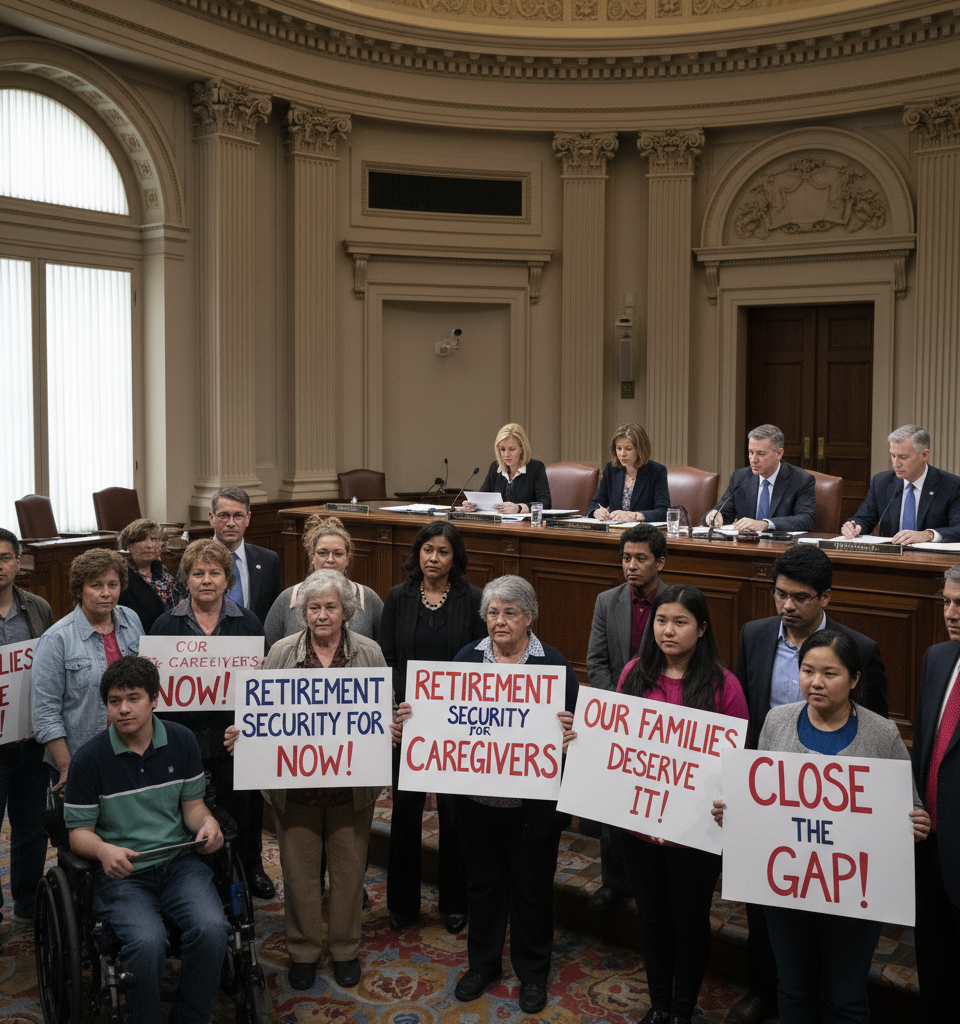
The Unseen Economic Toll of Caregiving
The necessity for legislative action stems from the profound economic impact of informal caregiving. Recent data from AARP reveals that roughly one in ten U.S. adults actively cares for a parent aged 65 or older, with additional significant shares providing care for spouses or partners. These responsibilities often necessitate reduced work hours, part-time employment, or complete withdrawal from the workforce. The financial strain is immense: a 2023 report from the National Alliance for Caregiving and AARP estimated that family caregivers spend an average of $7,200 annually out-of-pocket on care-related expenses, a figure that can jump to over $12,000 for those caring for individuals with dementia. These sacrifices directly undermine caregivers' ability to contribute to Social Security and employer-sponsored retirement plans, creating a gaping hole in their long-term financial security.
Proposed Solutions and Key Figures Among the legislative proposals gaining traction is the "Social Security Caregiver Credit
Act," which aims to provide Social Security credits for caregivers, acknowledging their unpaid labor's societal value. Another significant bill, the "Workplace Retirement Flexibility Act," seeks to enhance portability of retirement savings and offer tax incentives for employers to provide more flexible work arrangements for caregivers. Representative John Doe (D-CA) stated, "We must recognize the invaluable, yet often economically punishing, role family caregivers play. Our proposals aim to provide concrete financial relief and ensure these dedicated individuals aren't left behind in retirement." Senator Jane Smith (R-TX) echoed this sentiment, adding, "This isn't a partisan issue; it's about supporting families and ensuring that selflessness doesn't lead to poverty in old age."
Broad Economic and Societal Ramifications
The economic implications extend beyond individual caregivers. The societal cost of relying on informal caregiving without adequate support mechanisms is substantial. As the U.S. population ages, the demand for care is projected to surge. Without policy changes, the strain on families and public assistance programs will intensify. The American Association of Retired Persons (AARP) estimates that the value of informal caregiving in the U.S. exceeds $600 billion annually, surpassing the combined spending on home care and nursing home services. This unpaid labor is a cornerstone of the healthcare system, and its erosion through caregiver burnout or financial ruin would have catastrophic consequences for the nation.
Expert Analysis: A Ticking Time Bomb Economists and elder care policy experts largely view the current situation as a ticking time bomb. Dr. Sarah Chen, a senior fellow at the Institute for Public Policy
Research, notes, "The retirement gap for caregivers isn't just about fairness; it's a structural problem threatening the stability of our social safety net. If we don't address this now, we'll see a massive increase in older adults dependent solely on means-tested government programs, straining an already overburdened system." She emphasizes that proactive measures like caregiver credits and flexible retirement options are far more cost-effective than reactive poverty alleviation programs down the line.
The Path Forward: Advocacy and Bi-Partisan Momentum
The immediate next steps involve robust debate in congressional committees and continued advocacy from caregiver organizations. The bipartisan nature of the current legislative push offers a promising outlook, though the specifics of funding and implementation remain subject to negotiation. Advocates are pushing for these proposals to be included in broader legislative packages, such as annual appropriations bills or stand-alone acts as congressional calendars permit. The momentum suggests that policymakers are increasingly recognizing the urgency of this issue, aiming to enact reforms within the next two years. The eventual success or failure of these initiatives will significantly shape the financial landscape for millions of current and future family caregivers, and by extension, the broader national economy.