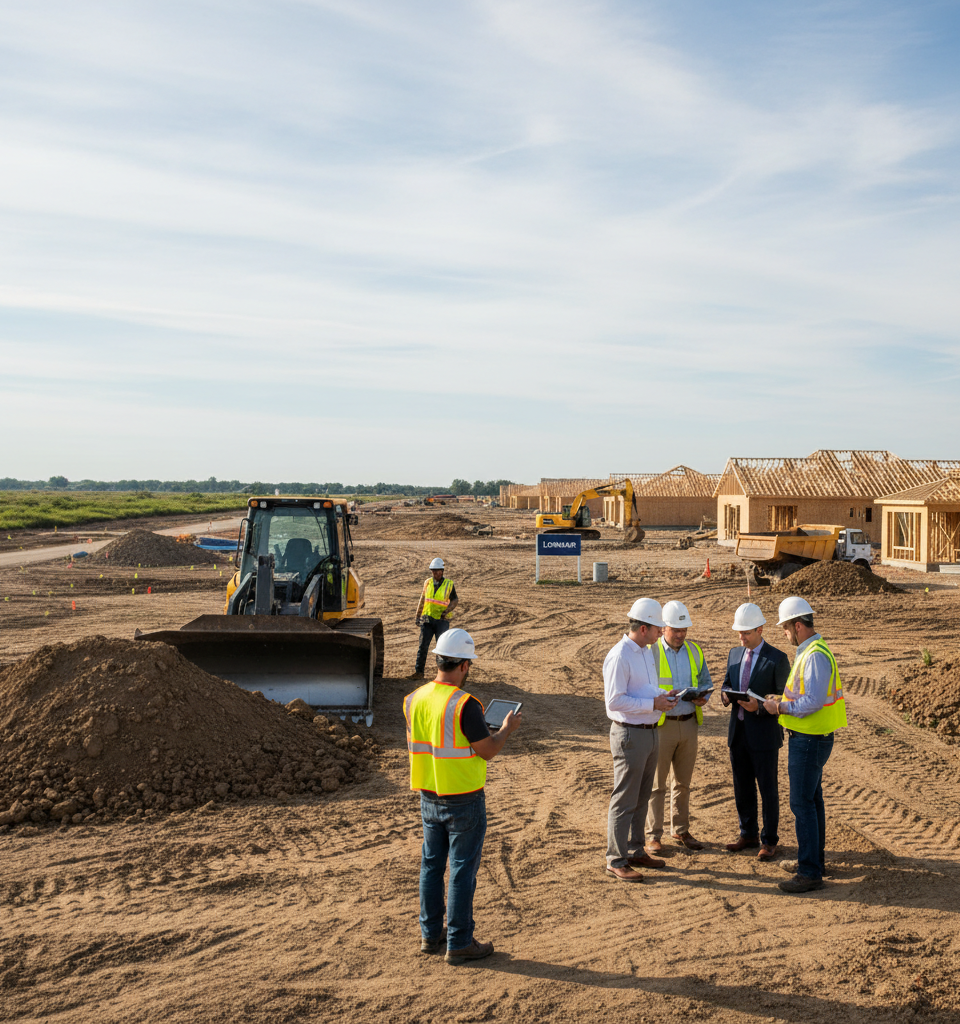
As the financial community awaits Lennar's impending 10-K filing, potentially arriving as soon as Thursday, significant investor attention is converging on a singular, critical concern: the full extent of the company's financial exposure within its land bank. This forthcoming regulatory document is poised to be scrutinized for how much recognized and unrecognized financial risk may reside within the prominent homebuilder's significant land holdings.
This heightened focus on Lennar's land bank comes at a time when the broader housing market is experiencing various pressures, from fluctuating material costs to evolving buyer demand and interest rate sensitivities. A homebuilder's land inventory represents a substantial asset and, simultaneously, a considerable potential liability. The valuation, carrying costs, and development timelines associated with these land parcels directly impact a company's financial health, making transparency regarding this exposure paramount for investors assessing future performance and risk profiles.
Investor Concerns Mount Over Land Portfolio
The central question orbiting Lennar’s imminent 10-K filing revolves around gaining clarity on the precise scale and nature of its land bank holdings. Investors are particularly keen to understand the company's strategies for managing this substantial asset base in the current economic climate. This includes insights into land acquisition costs, development expenditure, and potential write-downs or impairments that may be necessary. The market is seeking assurances that Lennar's accounting practices fully reflect the contemporary value and potential future obligations tied to its undeveloped and partially developed land parcels.
The concerns are not merely about the absolute size of the land bank but also its composition. Investors will be looking for details on land that is optioned versus owned, the geographical distribution of these holdings, and the timeline for their development and monetization. The aging of land inventory can lead to increased carrying costs and potential obsolescence if market conditions shift significantly. Therefore, the 10-K is expected to provide a granular view into these aspects, allowing for a more informed assessment of Lennar’s operational efficiency and risk management capabilities.
Broader Industry Implications and Future Outlook
Lennar, as one of the largest homebuilders in the United States, often sets precedents and provides an indicative measure for the health of the entire industry. The level of transparency and the financial details revealed in its 10-K regarding land bank exposure could subsequently influence how investors perceive other major homebuilders. Should the filing reveal unexpected insights or necessitate re-evaluations, it could precipitate broader market movements and shifts in investor sentiment across the housing sector. Analysts will be closely examining Lennar’s disclosures for any signs that might indicate a recalibration of land strategy or a more cautious approach to future acquisitions, which could signal a longer-term trend for the industry.
Looking ahead, the information contained within Lennar's 10-K will be instrumental in shaping near-term investment decisions and longer-term strategic outlooks. The document will not only confirm or allay current investor anxieties but also provide crucial data points for financial models and projections. Investors will be dissecting the footnotes and management's discussion and analysis (MD&A) sections for any forward-looking statements or qualitative assessments that offer clues about the company's confidence in its land strategy and ability to navigate potential market headwinds. The disclosures are expected to serve as a bellwether for how large-scale homebuilders are adapting to prevailing economic conditions and positioning themselves for sustained growth.