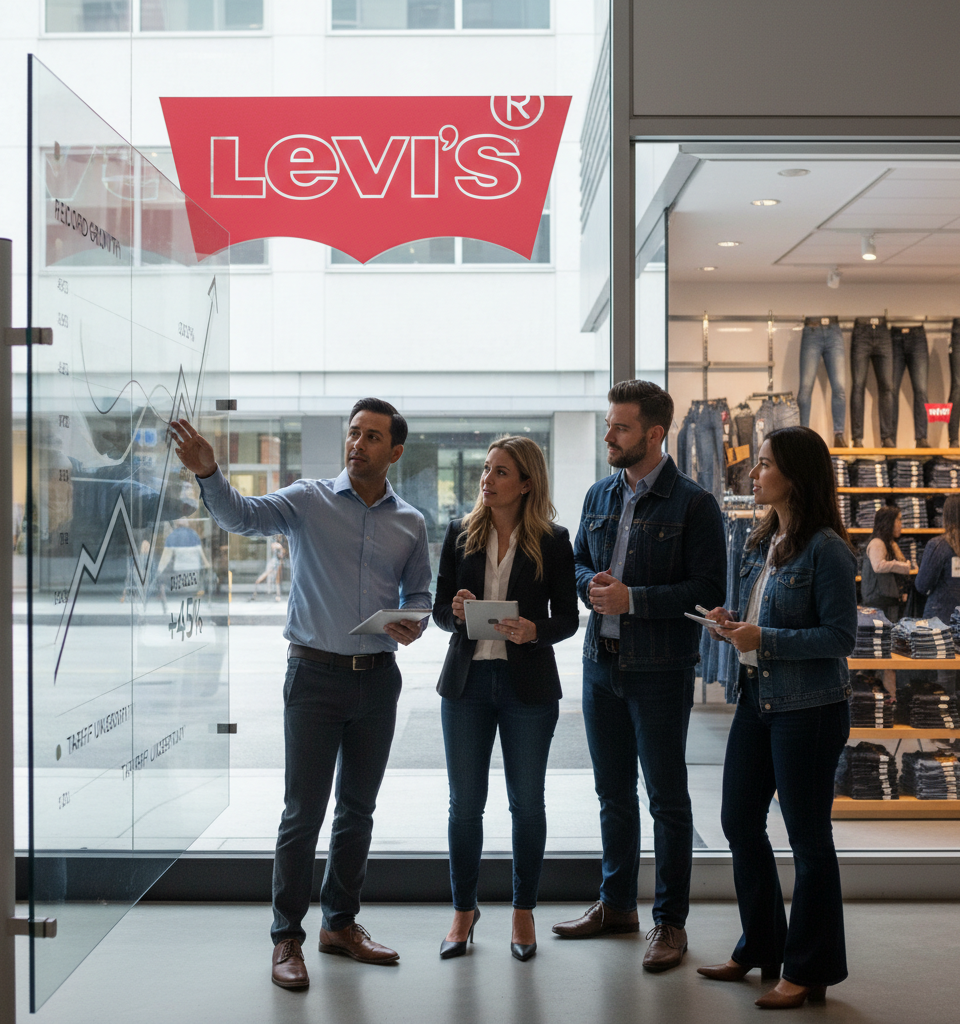
SAN FRANCISCO, CA – October 8, 2024 – Levi Strauss & Co. (NYSE: LEVI) today announced a powerful third-quarter performance that has significantly outstripped analyst projections, underscoring the denim giant's successful strategic pivot towards direct-to-consumer (DTC) sales. The venerable American apparel manufacturer reported a substantial jump in both top and bottom-line figures, prompting an upward revision of its full-year financial outlook, a move that notably excludes potential impacts from recent tariff hikes imposed by former President Donald Trump's administration.
This robust financial disclosure arrives at a critical juncture for retail, with many legacy brands grappling with evolving consumer preferences and the rise of digital commerce. Levi Strauss's ability to not only adapt but thrive in this environment is a testament to its aggressive investment in its own e-commerce platforms and company-owned stores. This quarter marks a historic milestone for the company, as its direct-to-consumer sales channels collectively accounted for more than half of its total revenue, a clear indicator of a fundamental shift in its distribution model and a direct engagement strategy with its customer base.
For the third quarter, Levi Strauss reported adjusted earnings per share of $0.40, significantly exceeding the LSEG consensus estimate of $0.35. Revenue for the period climbed to $1.62 billion, comfortably surpassing analysts' expectation of $1.58 billion. This revenue growth was particularly pronounced in its DTC segment, which saw an impressive increase, reflecting strong online sales and robust performance from its global network of company-owned stores. The company’s brand power, coupled with innovative product lines and effective marketing campaigns targeting diverse demographics, has been instrumental in driving this uplift.
Industry analysts are closely monitoring Levi Strauss's strategic trajectory, particularly its insulation from wholesale volatility. "Levi's robust DTC performance demonstrates a savvy responsiveness to modern retail dynamics," commented Sarah Jenkins, a retail sector analyst at Global Market Insights. "By controlling more of its sales channels, Levi Strauss gains greater pricing power, deeper customer insights, and improved inventory management, all of which contribute to healthier margins." This shift not only mitigates reliance on third-party retailers but also allows the company to cultivate a more direct and personalized relationship with its consumers, fostering brand loyalty and capturing a larger share of the profit margin.
The broader apparel market is characterized by intense competition and rapid technological advancements. Levi Strauss's success in bolstering its DTC presence positions it advantageously against both traditional rivals and fast-fashion insurgents. This strategy mirrors a trend across the retail industry where brands are increasingly bypassing intermediaries to establish direct channels, seeking to enhance profitability and gather invaluable first-party data. The company's disciplined approach to inventory and supply chain management has also played a crucial role, allowing it to navigate global logistical challenges more effectively than some of its peers.
Looking ahead, Levi Strauss has raised its full-year revenue growth forecast to a range of 7% to 8%, up from its previous projection. However, the company has explicitly stated that this revised guidance does not incorporate any potential financial repercussions from the latest round of tariffs, particularly those targeting goods imported from China. This cautious stance highlights a significant macroeconomic uncertainty that continues to loom over the global retail supply chain. The potential for elevated import costs could pressure margins, although the company's diversified manufacturing base and strong brand equity may offer some buffer against these headwinds.
Company executives have emphasized their commitment to ongoing innovation in product design, sustainable manufacturing practices, and continued investment in digital capabilities to further enhance the DTC experience. They anticipate leveraging data analytics to personalize marketing efforts and optimize product offerings, ensuring that Levi’s remains a leader in the competitive apparel market. The focus on expanding its women’s apparel and athletic wear lines also signals a broader strategy to capture new market segments and diversify its revenue streams beyond its iconic denim core.
The market has reacted positively to Levi Strauss's earnings report, with its stock experiencing an uptick in post-market trading. This financial strength provides the company with greater flexibility to invest in research and development, expand its global footprint, and potentially pursue strategic acquisitions. As the retail landscape continues its rapid evolution, Levi Strauss's strategic pivot towards direct consumer engagement appears to be a well-timed and highly effective maneuver to secure long-term growth and resilience.