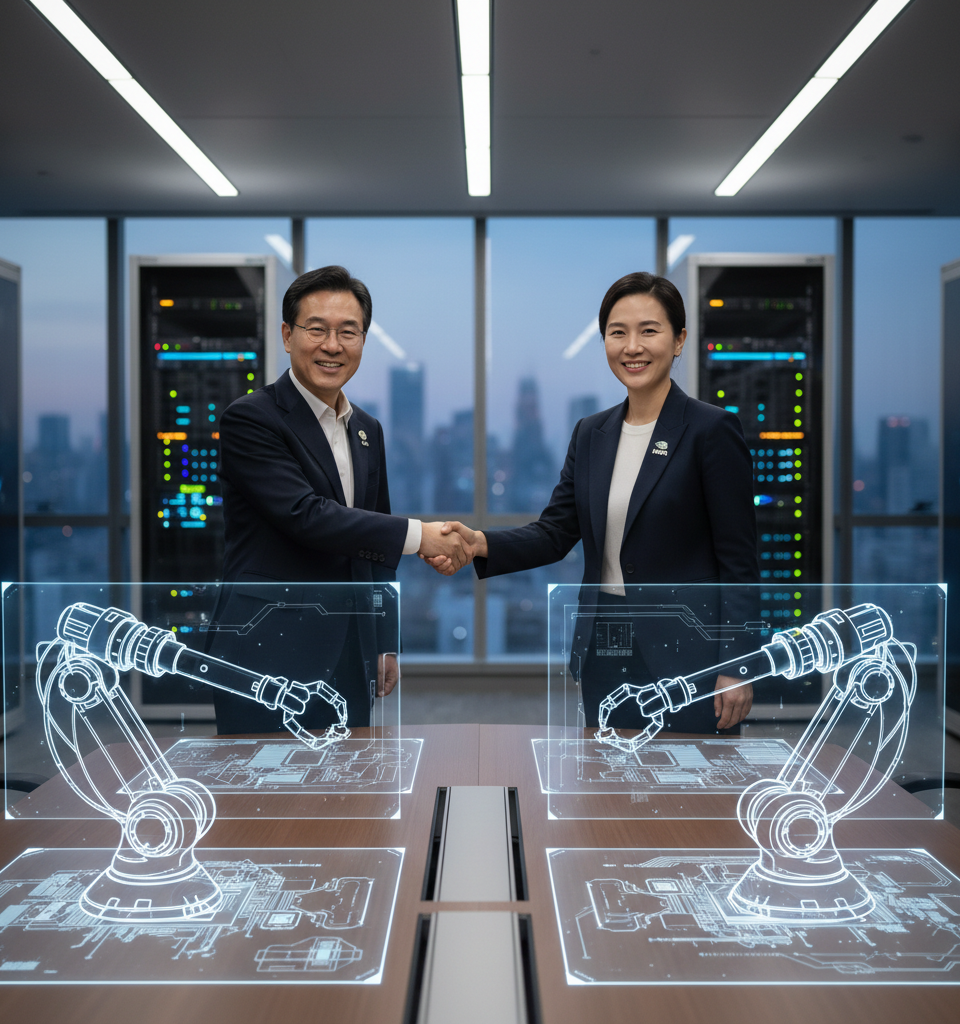
LG Electronics has confirmed ongoing high-level discussions with Nvidia regarding a potential strategic collaboration across three critical technological frontiers: robotics, artificial intelligence (AI) data centers, and future mobility solutions. The talks, reportedly initiated following a visit and subsequent engagement with Madison Huang of Nvidia, underscore LG's ambition to significantly deepen its commitment to and capabilities in "physical AI" – the application of AI within real-world physical systems and devices. For Nvidia, this represents an opportunity to further embed its powerful AI computing platforms into the vast consumer electronics ecosystem, leveraging LG's manufacturing prowess and market reach at a pivotal moment when physical AI is transitioning rapidly from research laboratories to commercial deployment and factory floors.
This burgeoning partnership arrives amidst a global race for technological dominance, particularly in AI and its tangible applications. LG, a multinational conglomerate known for its diverse portfolio ranging from home appliances and consumer electronics to automotive components, has explicitly stated its intention to evolve beyond traditional manufacturing into a solutions provider leveraging smart technologies. Pairing with Nvidia, a company synonymous with GPU-accelerated computing and AI, could provide LG with the foundational processing power and AI frameworks necessary to realize its vision for intelligent robots, autonomous vehicles, and next-generation data infrastructure.
The discussions highlight a broader industry trend where hardware manufacturers are increasingly seeking deep collaborations with powerful AI platform providers to imbue their products with advanced intelligence. While specific terms of the potential agreement remain under wraps, LG Electronics' public confirmation on Wednesday indicates the seriousness and advanced stage of these discussions. Sources close to the negotiations suggest that the collaboration could involve Nvidia's graphic processing units (GPUs) and AI software platforms becoming integral components in LG’s future robotic products, smart factory solutions, and AI-powered data management systems.
For instance, in robotics, Nvidia's Jetson platform could power LG's service robots, enhancing their perceptual capabilities and autonomous decision-making. In mobility, Nvidia's Drive platform could be crucial for LG’s automotive component division, LG Vehicle Component Solutions (VS) Company, which is a major supplier to global automakers. The implications of a successful LG-Nvidia partnership extend far beyond the two companies, potentially reshaping segments of the consumer electronics, robotics, and automotive industries.
For the robotics sector, a combined effort could accelerate the development and deployment of more sophisticated, AI-driven robots in both industrial and domestic environments. In the AI data center space, LG’s involvement could lead to optimized hardware solutions tailored for specific AI workloads, offering new competitive alternatives. Moreover, this collaboration would intensify competition within the burgeoning “physical AI” market, pushing rivals to seek similar high-profile alliances or invest more heavily in their own AI capabilities.
Industry analysts view this potential alliance as a strategic masterstroke for both companies. "LG is making a very clear play to move up the value chain by embedding more intelligence into its products, and Nvidia is the undisputed leader in providing the computational horsepower for AI," commented Dr. Eleanor Vance, a lead analyst at TechInsights. "
This isn't just about LG buying chips; it's about deep engineering collaboration that could yield truly innovative products. We expect to see LG's capabilities in areas like autonomous navigation and predictive maintenance in appliances receive a significant boost." Dr. Vance also noted that such a partnership underscores the growing importance of AI as a core competency for any major hardware manufacturer aiming for future relevance.
Looking ahead, a formal announcement detailing the scope and structure of the partnership could materialize in the coming months, pending the finalization of negotiations. Should the collaboration proceed, it would likely involve joint research and development initiatives, shared intellectual property, and potentially integrated product roadmaps. This could pave the way for a new generation of LG products that are "AI-native," meaning AI is fundamental to their design and function, rather than an add-on feature.
The initial focus areas — robotics, AI data centers, and mobility — are merely the beginning, with potential for expansion into smart homes, healthcare, and other sectors where LG has a significant presence and where AI can offer transformative benefits. The strategic alignment with Nvidia is not just about technology; it's also about market positioning. As the AI landscape matures, securing access to powerful AI platforms and talent becomes paramount.
This partnership positions LG to attract top-tier AI engineering talent and gives it a distinct advantage in a market increasingly defined by intelligence and connectivity. Competitors, especially in the appliance and automotive components space, will undoubtedly be watching closely to discern the strategic competitive advantages that this alliance might unlock for LG in the rapidly evolving physical AI arena. This is particularly true as the global market for AI in robotics alone is projected to reach approximately $30 billion by 2026, making LG's move exceptionally timely.